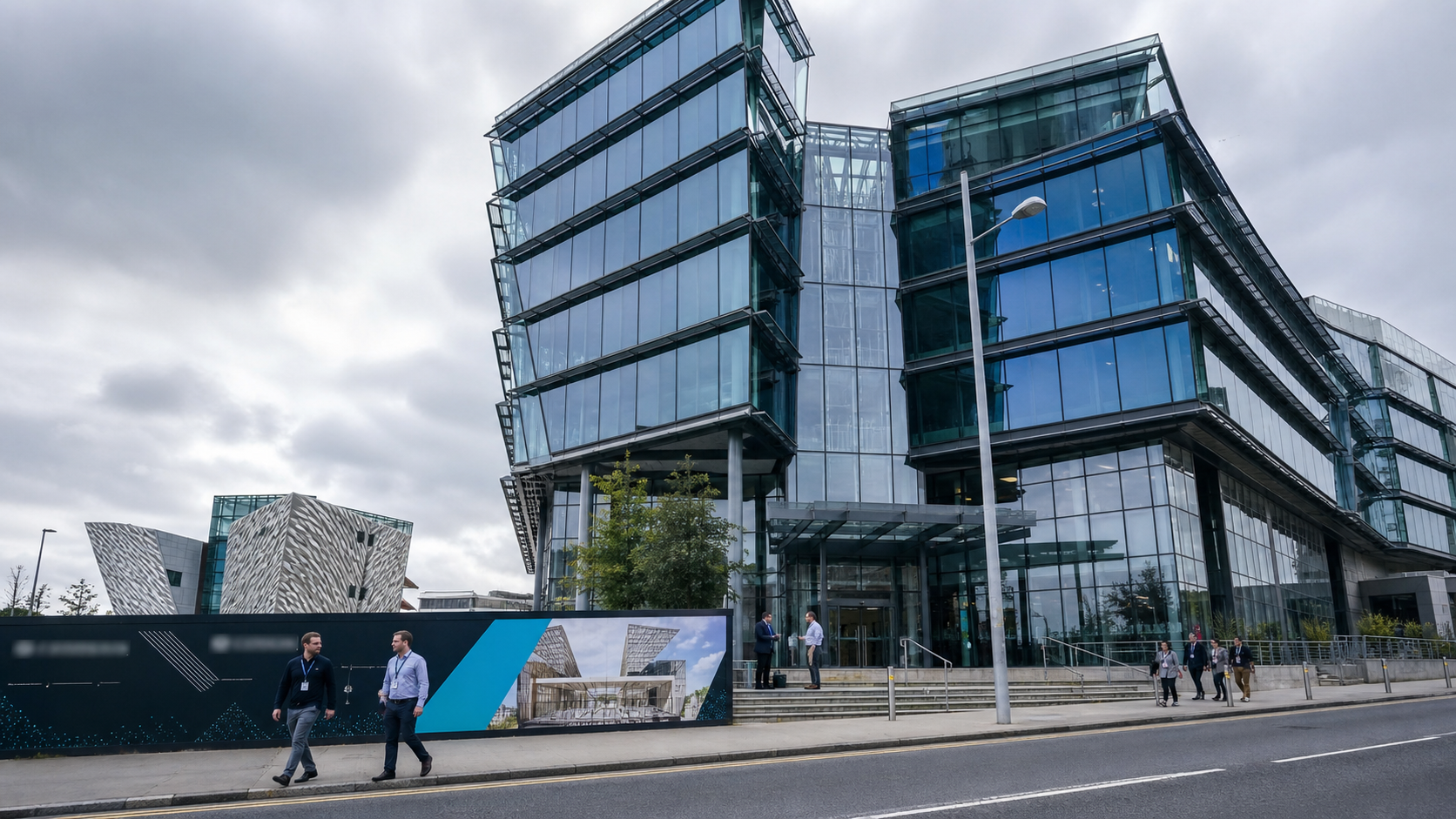
Citigroup Plans Major Belfast Office Revamp with New Glass Atrium as Bank Adapts Titanic Quarter HQ for Hybrid Working
Citigroup has lodged a planning application with Belfast City Council to transform its Gateway headquarters in the Titanic Quarter, with plans for a new glass-covered atrium, approximately 19,000 square feet of campus-style space, and a 25% reduction in desk numbers to reflect the bank's hybrid working policy. The revamp, which will see the number of workspaces reduced from approximately 1,650 to 1,240, is designed to create a more attractive and flexible environment that encourages staff to return to the office through improved amenities rather than increased density.
Background
Citigroup has been a significant presence in Belfast since 2009, when it established its Gateway headquarters at 60 Sydenham Road in the Titanic Quarter. The bank purchased the building outright in 2019, a move that signalled its long-term commitment to its Belfast operations. With approximately 3,700 employees in Northern Ireland, Citigroup is one of the largest private sector employers in the province, and its presence in the Titanic Quarter has been a cornerstone of the area's development as a major business district.
The Gateway building has served the bank well for 17 years, but the shift to hybrid working patterns that accelerated during and after the pandemic has fundamentally changed how the space is used. Average office occupancy rates have fallen significantly from pre-pandemic levels, and the bank has been assessing how to reconfigure its Belfast headquarters to better reflect the reality of how its employees now work. The planning application lodged with Belfast City Council represents the outcome of that assessment.
The Titanic Quarter, where the Gateway building is located, has undergone remarkable transformation since the early 2000s. Once a derelict shipyard site, it is now home to the Titanic Belfast visitor attraction, the SSE Arena, the Belfast Metropolitan College campus, and a growing cluster of technology and financial services companies. Citigroup's investment in its headquarters is a vote of confidence in the quarter's continued development as a premium business location.
Key Developments
The centrepiece of the proposed revamp is a new glass-covered atrium that will transform an underutilised outdoor courtyard into a multi-level internal space designed to improve connectivity between the building's surrounding floors and "activate" the internal environment. The atrium will be complemented by approximately 19,000 square feet of new campus-style space, including breakout areas, collaboration zones, health and wellbeing facilities, and a new cafeteria.
The reduction in desk numbers — from approximately 1,650 to 1,240, a decrease of around 400 workspaces — reflects the bank's hybrid working policy and the lower average occupancy rates that have become the norm across the financial services sector. The bank has been careful to frame this reduction not as a downsizing of its Belfast operations but as a reconfiguration that prioritises quality of workspace over quantity. The design philosophy is to encourage staff to come to the office because the environment is genuinely better than working from home, rather than because they are required to be there.
The plans also include a reduction in basement car parking spaces from 95 to 79, alongside the addition of space for 80 bicycles and upgraded shower and changing room facilities to support active commuting. The emphasis on cycling infrastructure reflects broader trends in Belfast's transport planning and the growing number of employees who commute by bicycle to the Titanic Quarter.
Why It Matters
Citigroup's investment in its Belfast headquarters is significant for several reasons. At a time when some multinational employers have been reducing their footprints in Northern Ireland — PayPal's announcement of 164 redundancies at its Blanchardstown operation is a recent example of the pressures facing the sector — Citigroup's commitment to a major capital investment in its Belfast base sends a positive signal about the province's attractiveness as a location for financial services employment.
The hybrid working model that the revamp is designed to support has become the dominant pattern across the financial services sector globally, and Belfast's ability to attract and retain employers who are adapting to this model is important for the city's economic future. The Titanic Quarter's development as a premium business district has been one of the success stories of Belfast's post-conflict economic regeneration, and continued investment by anchor tenants like Citigroup is essential to maintaining its momentum.
For context, Citigroup is simultaneously undertaking a major £1.5 billion redevelopment of its London headquarters, with staff moves beginning in the second quarter of 2026. The Belfast project is distinct from the London revamp and represents a localised strategy to modernise the bank's Northern Ireland operations in a way that reflects the specific needs and working patterns of its Belfast workforce.
Local Impact
For the 3,700 Citigroup employees based in Belfast, the revamp promises a significantly improved working environment when the project is complete. The new atrium and campus-style spaces are designed to facilitate the kind of collaborative, informal working that is difficult to replicate in a traditional office layout, and the improved cycling and active commuting facilities will be welcomed by staff who travel to the Titanic Quarter by bicycle. The planning application will be assessed by Belfast City Council in the coming months, and subject to approval, construction is expected to begin in 2027. The Titanic Quarter's management body has welcomed the investment as further evidence of the area's growing status as a world-class business destination.
What's Next
Belfast City Council will assess the planning application in the coming months. Subject to planning approval, Citigroup expects to begin construction work on the revamp in 2027, with completion anticipated in 2028. The bank has indicated that it will work closely with its Belfast employees throughout the design and construction process to ensure that the finished building meets their needs. The project is expected to create significant construction employment in Belfast during the build phase.