Children's Spinal Surgery Waiting List Falls Below 200 as CHI Reports Progress
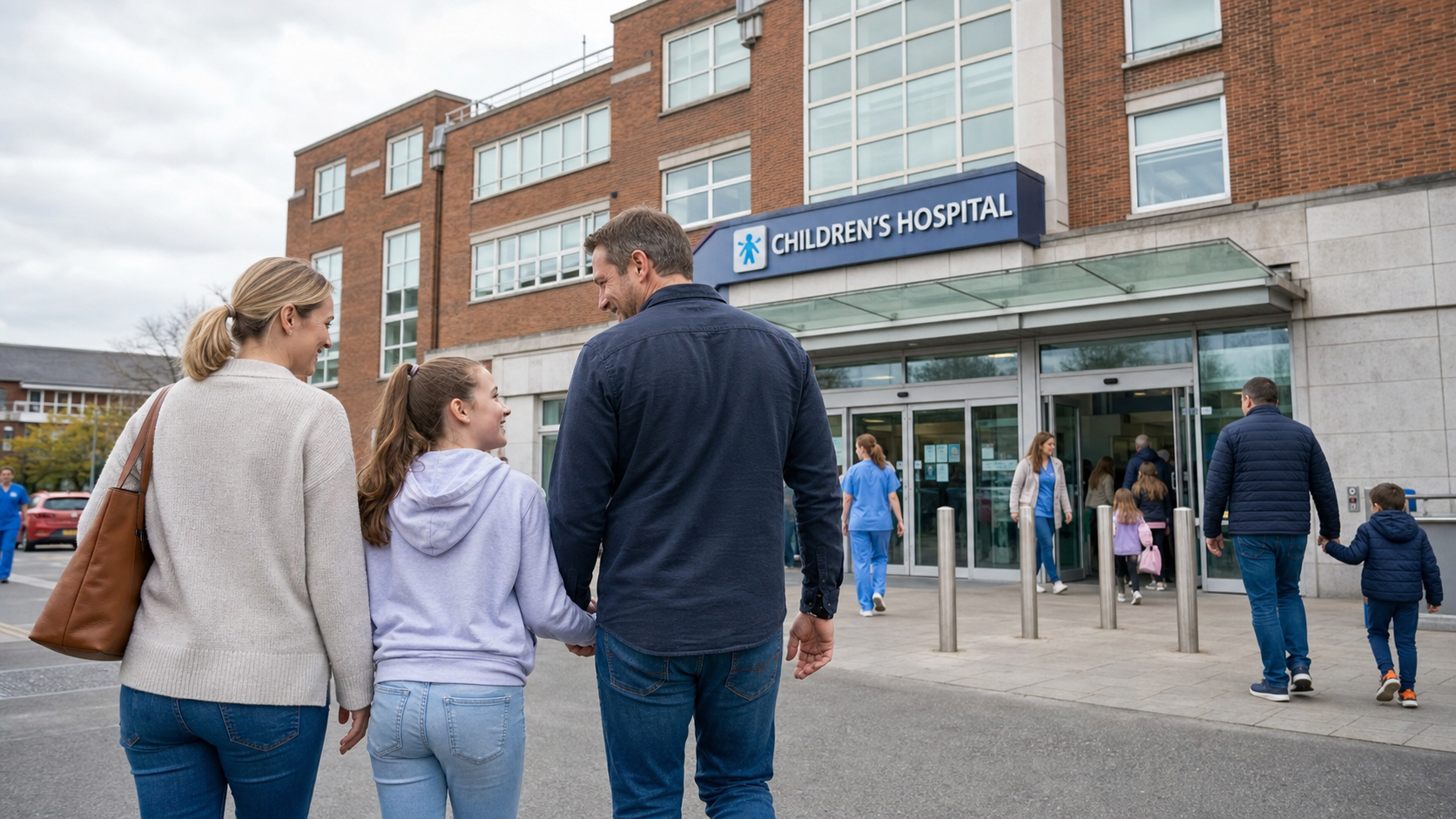
Children's Health Ireland has confirmed that the number of children and young people on the spinal surgery waiting list has fallen to 199 — below the symbolic threshold of 200 for the first time in several years — with 279 surgeries performed between January and August 2026 and the average wait for an outpatient appointment cut to 3.9 months, nearly half the 7.4-month average recorded at the same point in 2025.
Background
Paediatric spinal surgery — primarily for conditions such as scoliosis, kyphosis, and other spinal deformities — has been one of the most politically and emotionally charged areas of Irish healthcare for more than a decade. Families of children with progressive spinal conditions have campaigned vigorously for faster access to surgery, arguing that delays allow deformities to worsen to the point where more complex and risky procedures are required, and that the physical and psychological impact on children of waiting months or years for treatment is profound.
The waiting list reached its peak in the mid-2010s, when hundreds of children were waiting for surgery and some were waiting for more than two years. A series of government commitments, additional funding, and the development of new surgical capacity at Children's Health Ireland at Crumlin and Temple Street have gradually reduced the numbers, though progress has been slower and more uneven than families and advocacy groups had hoped.
The opening of the new National Children's Hospital — delayed for years by cost overruns and construction challenges — is expected to provide a significant boost to surgical capacity when it becomes fully operational, though the timeline for full commissioning remains a subject of ongoing discussion.
Key Developments
The figures published by CHI on Friday show that 279 spinal surgeries were performed between January and August 2026, while 229 new procedures were added to the waiting list over the same period — a net reduction that has brought the total below 200 for the first time in years. Among those currently on the list, seven patients have been waiting between 12 and 15 months, two between 18 and 24 months, and one between 24 and 36 months.
The outpatient waiting list — the queue for a first consultant appointment, which precedes any decision about surgery — has also improved significantly. The number of patients waiting for an outpatient appointment stood at 431 at the end of July 2026, a reduction of more than 22% compared to the 557 patients waiting at the same point in 2025. The average wait time of 3.9 months compares favourably with the 7.4-month average of a year ago.
CHI management confirmed that all patients are prioritised based on clinical factors including the size of the spinal deformity, the presence of co-morbidities, the patient's age, and remaining growth potential. The organisation has set a target of 540 procedures by the end of 2026, a figure that would represent a significant increase on previous years.
Why It Matters
The reduction in the waiting list is genuinely significant, but it must be understood in context. A waiting list of 199 children still represents 199 families living with the anxiety and uncertainty of knowing that their child needs surgery and is waiting for it. For children with progressive conditions, every month of delay can mean a worsening of their deformity and a more complex surgical challenge. The progress reported by CHI is real, but the work is not done.
The broader question of why Ireland took so long to develop adequate paediatric surgical capacity — and why the new National Children's Hospital has taken so much longer and cost so much more than planned — remains one of the most important accountability questions in Irish healthcare. The families who campaigned for years for faster access to surgery deserve not just improved waiting times but a clear explanation of how the system failed them and what has been done to ensure it does not fail the next generation of children with spinal conditions.
Local Impact
For families across Ireland — from Dublin and Cork to Galway and Donegal — the improvement in waiting times is welcome news, though many will reserve judgement until they see it reflected in their own children's experience. CHI at Crumlin and Temple Street serve the entire country, meaning that families from every county are affected by the performance of these services. The HSE's commitment to maintaining the current pace of improvement through the remainder of 2026 will be closely monitored by patient advocacy groups including Scoliosis Ireland, which has been one of the most persistent and effective voices in campaigning for better services.
What's Next
CHI has committed to publishing updated waiting list figures on a monthly basis for the remainder of 2026, providing families and advocacy groups with regular visibility of progress. The target of 540 procedures by year end will require the maintenance of current surgical throughput and the avoidance of the disruptions — staff illness, equipment failures, theatre closures — that have historically caused waiting lists to spike. The Department of Health is expected to publish a review of paediatric surgical capacity in the autumn, which will set out the plans for further improvement in 2027 and beyond.