Child Trafficking Significantly Under-Identified in Ireland as IHREC Warns of Digital Grooming Crisis
The Irish Human Rights and Equality Commission has published a landmark report warning that child trafficking is significantly under-identified in Ireland, with only 10 formal victim identifications in 2024 and 18 in 2025 — figures the commission says bear no relation to the true scale of the problem — as social media, messaging apps, and online gaming are increasingly used to groom, recruit, and control children.
Background
Child trafficking is one of the most serious and least visible forms of organised crime operating in Ireland. Unlike drug trafficking or other forms of criminality that leave physical traces, the exploitation of children often occurs in plain sight — in care settings, in schools, in online spaces — without being recognised for what it is. Children who are trafficked into criminal activity, sexual exploitation, or forced labour are frequently processed through the justice system as offenders rather than identified as victims, a failure of recognition that compounds the harm they have already suffered.
Ireland's formal victim identification system has consistently produced numbers that experts regard as implausibly low. The 10 identifications recorded in 2024 and 18 in 2025 represent a tiny fraction of what researchers and frontline practitioners believe to be the actual scale of child trafficking in the country. The IHREC's report, titled Child Trafficking and ICT-Facilitated Child Trafficking in Ireland, is the most comprehensive examination of this issue to date, drawing on consultations with statutory agencies, NGOs, law enforcement, and survivors.
The report arrives at a moment of particular urgency. The Sexual Offences and Human Trafficking Act 2024 provided for the establishment of a National Referral Mechanism — a structured, multi-agency pathway for identifying and supporting trafficking victims — but the mechanism has not yet been enacted, more than two and a half years after the legislation was passed.
Key Developments
The IHREC's chief commissioner Liam Herrick described the failure to enact the National Referral Mechanism as a "serious concern," warning that the state risks retreating from its obligations to protect the most vulnerable children in Irish society. "The NRM is a crucial framework," Herrick said. "The fact that it has not been commenced is not a technical delay — it is a failure of political will that is leaving children exposed."
The report identifies children in state care and unaccompanied minors as facing the highest levels of risk, with significant protection gaps in both groups. It also warns that while no Irish nationals were among the formally identified victims in 2024 or 2025, this does not indicate an absence of trafficking among Irish children — rather, it suggests that Irish children are particularly likely to be missed by current identification processes, often because their exploitation is misidentified as delinquency or anti-social behaviour.
The digital dimension of child trafficking has grown substantially in recent years. The report documents the increasing use of social media platforms, messaging applications, and online gaming environments to groom, recruit, and exert control over children. The IHREC has called for improved digital investigation capacity within An Garda Síochána and specialised training for professionals across healthcare, education, and youth services.
Why It Matters
The IHREC report is a damning indictment of Ireland's child protection system, not because the system is staffed by uncaring people, but because it is structurally ill-equipped to identify and respond to a form of exploitation that is deliberately designed to be invisible. Children who are trafficked into drug dealing, for example, are typically arrested and charged rather than identified as victims — a response that punishes the exploited rather than the exploiter and makes it less likely that the child will ever receive the support they need.
The failure to enact the National Referral Mechanism is particularly difficult to justify. The legislation has been on the statute books for over two years. The mechanism would provide a clear, multi-agency pathway for identifying victims and connecting them with appropriate support. Its absence means that identification continues to depend on the knowledge and instincts of individual practitioners rather than a systematic, rights-based process.
Local Impact
Across Ireland's major urban centres — Dublin, Cork, Limerick, and Galway — frontline workers in Tusla, the HSE, and voluntary organisations report encountering children whose circumstances suggest exploitation but who do not meet the narrow criteria for formal victim identification. In Dublin's north inner city and in areas with significant migrant populations, the gap between suspected and identified trafficking is particularly acute. The IHREC has called on the Justice Minister to commence the National Referral Mechanism without further delay and to provide adequate resources for the training and capacity building that effective implementation will require.
What's Next
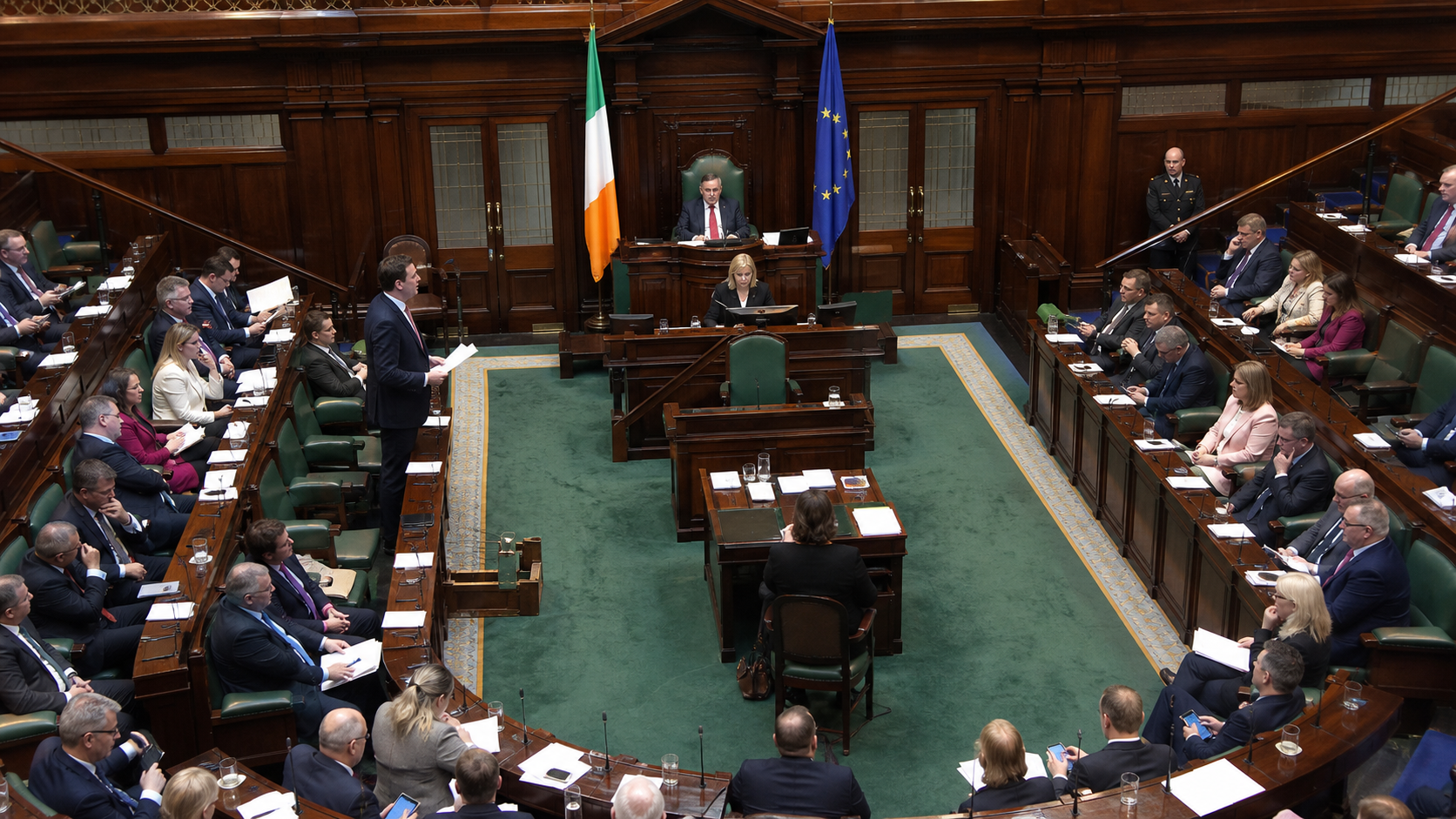
The IHREC has written to the Minister for Justice calling for the immediate commencement of the National Referral Mechanism and for a comprehensive review of the identification and support systems for child trafficking victims. The commission has also called for increased investment in digital investigation capacity within An Garda Síochána's Garda National Protective Services Bureau. A Dáil debate on the report is expected in the coming weeks, with opposition parties likely to press the government on the timeline for enacting the NRM.