Central Bank Projects 3% Irish Growth in 2026 as Tech Job Losses and Meta Cuts Cloud Outlook
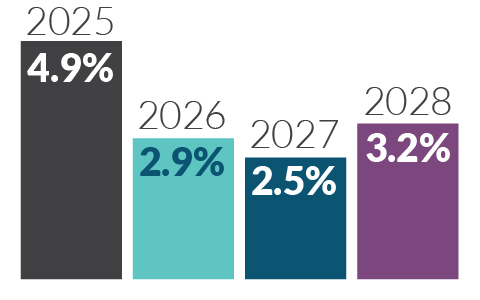
The Central Bank of Ireland has projected 3% economic growth for 2026, providing a more optimistic outlook than earlier fears of a technical recession following a sharp GDP contraction in Q1 — but the forecast is clouded by significant tech sector job losses, with Meta cutting approximately 350 Irish roles and overall tech employment down 12,700 year-on-year, even as new investment announcements from OpenText and Version 1 provide some positive counterbalance.
Background
Ireland's economic story in 2026 has been one of contradictions. The headline GDP figure — which contracted by 12.1% in the first quarter — suggested a dramatic deterioration in economic conditions, but economists and the Central Statistics Office were quick to point out that the figure reflected a statistical unwinding of pharmaceutical export front-loading rather than a genuine domestic recession. Modified Domestic Demand, the measure that economists regard as a more accurate reflection of the Irish economy's underlying health, grew by 0.6% in the same period.
The tech sector, which has been one of the primary drivers of Irish economic growth over the past two decades, is going through a period of significant adjustment. The wave of layoffs that began in 2022 and 2023 — driven by the correction of pandemic-era over-hiring and the impact of rising interest rates on tech company valuations — has continued into 2026, with several major employers reducing their Irish headcounts. The departure of tech workers from the Irish labour market has had knock-on effects on the housing market, the hospitality sector, and the broader economy.
At the same time, Ireland continues to attract significant foreign direct investment, and the pipeline of new investment announcements remains strong. The country's position as the European headquarters for many of the world's largest technology companies — including Google, Meta, Apple, and Microsoft — gives it a structural advantage that is not easily replicated, and the investment decisions being made by these companies in 2026 will shape the Irish economy for years to come.
Key Developments
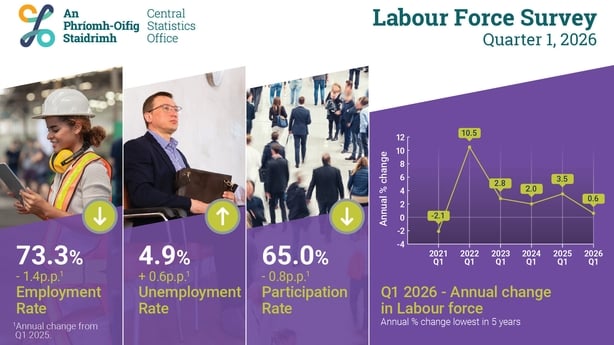
The Central Bank's projection of 3% growth for 2026 is based on Modified Domestic Demand rather than GDP, reflecting the bank's view that the headline GDP figure is distorted by the activities of multinational companies. The projection is consistent with the government's own forecasts and with the assessments of international organisations including the IMF and the OECD. The labour market remains resilient, with unemployment at near-historic lows, and consumer spending has held up better than many had feared.
Meta's decision to cut approximately 350 Irish roles is the most significant single tech sector job loss announcement of the year so far. The cuts are part of a global restructuring programme that has seen the company reduce its workforce significantly since 2022. Meta's Irish operations, which are headquartered in Dublin, employ several thousand people, and the cuts represent a significant reduction in the company's Irish headcount. The affected roles are primarily in technical and operational functions.
On the positive side, OpenText has announced the creation of 400 jobs over three years at its Irish operations, and Version 1 has opened a new Dublin headquarters and AI studio that will create 250 jobs. The AIB PMI for the tech, media, and telecoms sector stood at 54.1 in May 2026 — above the 50 threshold that indicates expansion — suggesting that the sector as a whole is still growing, even if individual companies are reducing their headcounts.
Why It Matters
The Central Bank's growth projection is significant because it provides a degree of reassurance about the Irish economy's underlying resilience. The Q1 GDP contraction had generated significant concern — both domestically and internationally — about the direction of the Irish economy, and the bank's projection of 3% growth for the full year suggests that the contraction was a statistical anomaly rather than the beginning of a sustained downturn.
The tech sector job losses are a more complex picture. On one hand, the loss of 12,700 tech jobs year-on-year is a significant development that has real consequences for the workers affected and for the communities in which they live. On the other hand, the tech sector in Ireland remains one of the most dynamic and well-paid in the economy, and the pipeline of new investment suggests that the sector's long-term trajectory remains positive.
The 319,000 households in electricity arrears at the end of March 2026 is a reminder that the economic recovery is not being felt equally across Irish society. While the headline economic indicators are positive, a significant proportion of Irish households are struggling with the cost of living, and the energy arrears figure suggests that the financial pressure on lower-income households remains acute.
Local Impact
In Dublin, where the tech sector is most concentrated, the Meta job cuts have been felt most acutely. The affected workers are primarily based in the company's Dublin offices, and the cuts have added to the sense of uncertainty that has characterised the tech sector in the capital over the past two years. However, the announcement of new jobs by OpenText and Version 1 provides some reassurance that Dublin remains an attractive location for tech investment.
In the broader Irish economy, the Central Bank's growth projection has been welcomed by business groups and trade unions as evidence that the economy is on a stable footing. The Irish Business and Employers Confederation has called on the government to use the positive economic outlook as an opportunity to invest in infrastructure and skills, arguing that the current period of relative stability provides a window for the kind of long-term investment that will determine Ireland's economic competitiveness in the decades ahead.
What's Next
The Central Bank will publish its next quarterly bulletin in September, providing an updated assessment of the Irish economy's performance and prospects. The government's mid-year economic review is expected in July, with updated forecasts for growth, employment, and the public finances. Budget 2027 will be the next major fiscal event, with the government expected to use the positive economic outlook to fund increased investment in housing, healthcare, and infrastructure. The tech sector's performance in the second half of 2026 will be closely watched, with particular attention to whether the job losses of the first half are offset by new investment announcements.
%20(6)-Nov-26-2025-02-12-55-8074-PM.png)