Carbon Tax U-Turn Looms as Government Faces Pressure to Pause Planned October Increase
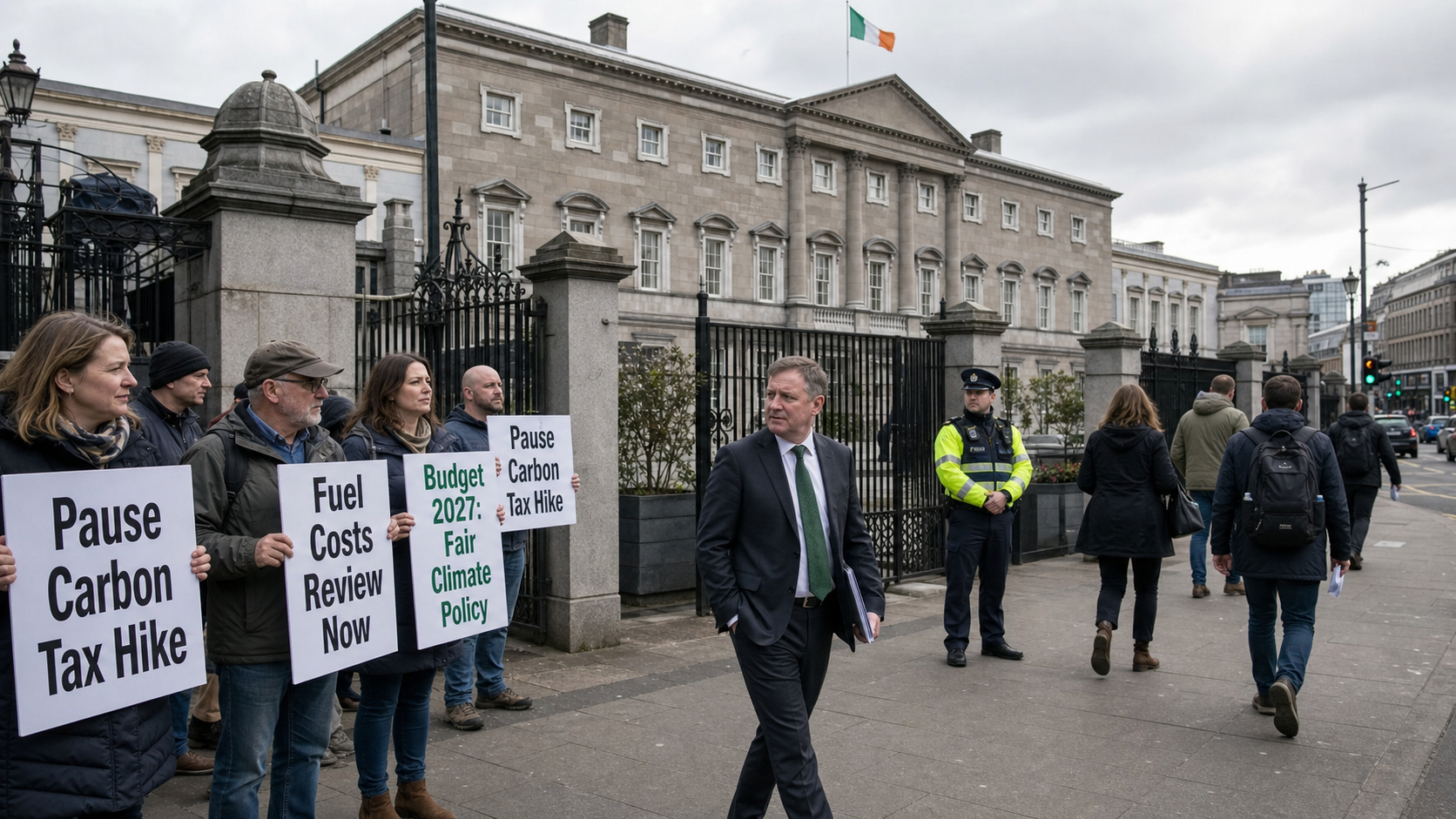
The Irish government is facing intensifying pressure to abandon its planned October carbon tax increase as Budget 2027 approaches, with industry groups demanding a comprehensive review of fuel-related costs, opposition parties warning of a fundamental U-turn on climate policy, and the Tánaiste declining to commit to the scheduled rise while insisting that decisions will be made in "real time" based on available data.
Background
Ireland's carbon tax was introduced in 2010 and has been progressively increased in successive budgets as part of the State's commitment to reducing greenhouse gas emissions and meeting its obligations under the EU's climate framework. The tax, which applies to fossil fuels including petrol, diesel, home heating oil, and natural gas, is currently set at €56 per tonne of CO₂ and is scheduled to rise annually until it reaches €100 per tonne by 2030 — a trajectory that was enshrined in legislation and presented as a cornerstone of Ireland's climate action plan.
The rationale for the carbon tax is straightforward: by making fossil fuels more expensive, the State creates a financial incentive for households and businesses to reduce their consumption and transition to cleaner alternatives. The revenue generated — which runs to several hundred million euros annually — is intended to fund climate-related investments and to provide targeted supports for lower-income households who are most exposed to the cost of the transition.
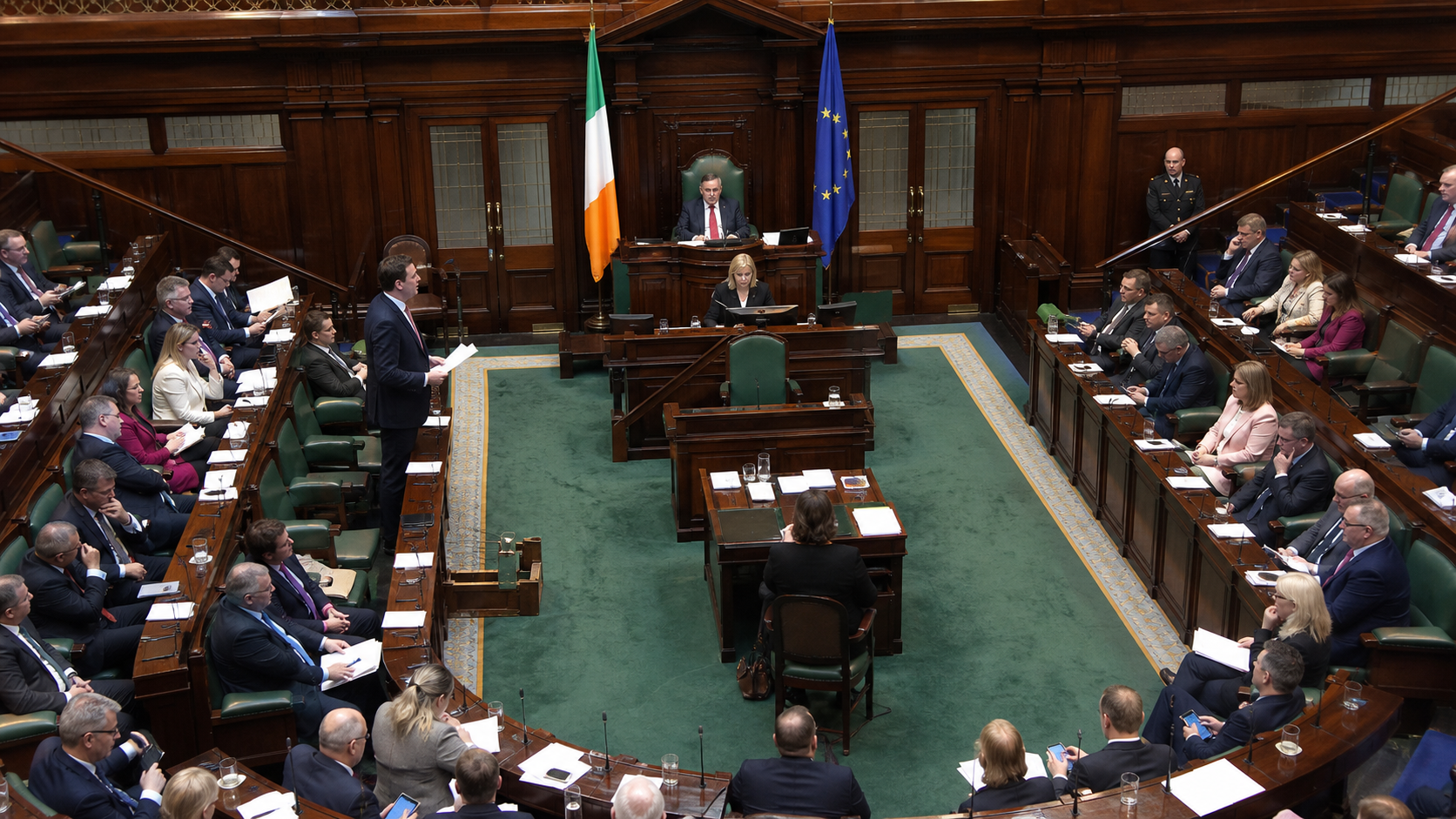
However, the political sustainability of the carbon tax has been tested repeatedly by the broader cost-of-living crisis. When energy prices surged in 2022 and 2023 in the wake of Russia's invasion of Ukraine, the government introduced a series of temporary excise duty cuts on petrol and diesel that partially offset the impact of the carbon tax. These cuts have been extended multiple times, most recently through emergency Dáil legislation in August, and they have created a situation in which the government is simultaneously committed to increasing the carbon tax and reducing fuel excise duties — a contradiction that critics argue is fiscally and environmentally incoherent.
Key Developments
The pressure on the government intensified on Monday when Fuels for Ireland, the industry body representing fuel distributors, called for a "full cost review" of the entire fuel policy system before any further carbon tax increases are implemented. The organisation argued that the government should examine the combined effect of all policy-related costs on fuel prices — including the carbon tax, excise duties, and levies — rather than making piecemeal adjustments that create confusion and uncertainty for consumers and businesses.
Tánaiste Simon Harris, speaking on the margins of the G20 Finance Ministers meeting in Asheville, North Carolina, declined to commit to the scheduled October increase, saying that the government would make decisions "in real time" based on the available data. His comments were immediately seized upon by opposition parties as evidence that a U-turn is being prepared, with Sinn Féin's finance spokesperson Pearse Doherty accusing the government of "abandoning its climate commitments for short-term political gain".
Why It Matters
The carbon tax debate goes to the heart of one of the most difficult challenges in Irish public policy: how to pursue an ambitious climate agenda while managing the distributional consequences of the transition for households and communities that are most dependent on fossil fuels. Ireland has some of the most ambitious climate targets in the EU, but it is also a country with a significant rural population that is heavily dependent on private cars and home heating oil — and where the alternatives to fossil fuels are often not yet available or affordable.
A pause or reversal of the carbon tax increase would send a damaging signal about Ireland's commitment to its climate obligations, both domestically and internationally. It would also undermine the credibility of the long-term policy framework that businesses and investors rely on when making decisions about the energy transition. At the same time, the political reality is that the government faces an election cycle in which the cost of living is the dominant concern for many voters, and the temptation to offer short-term relief at the expense of long-term policy coherence is considerable.
Local Impact
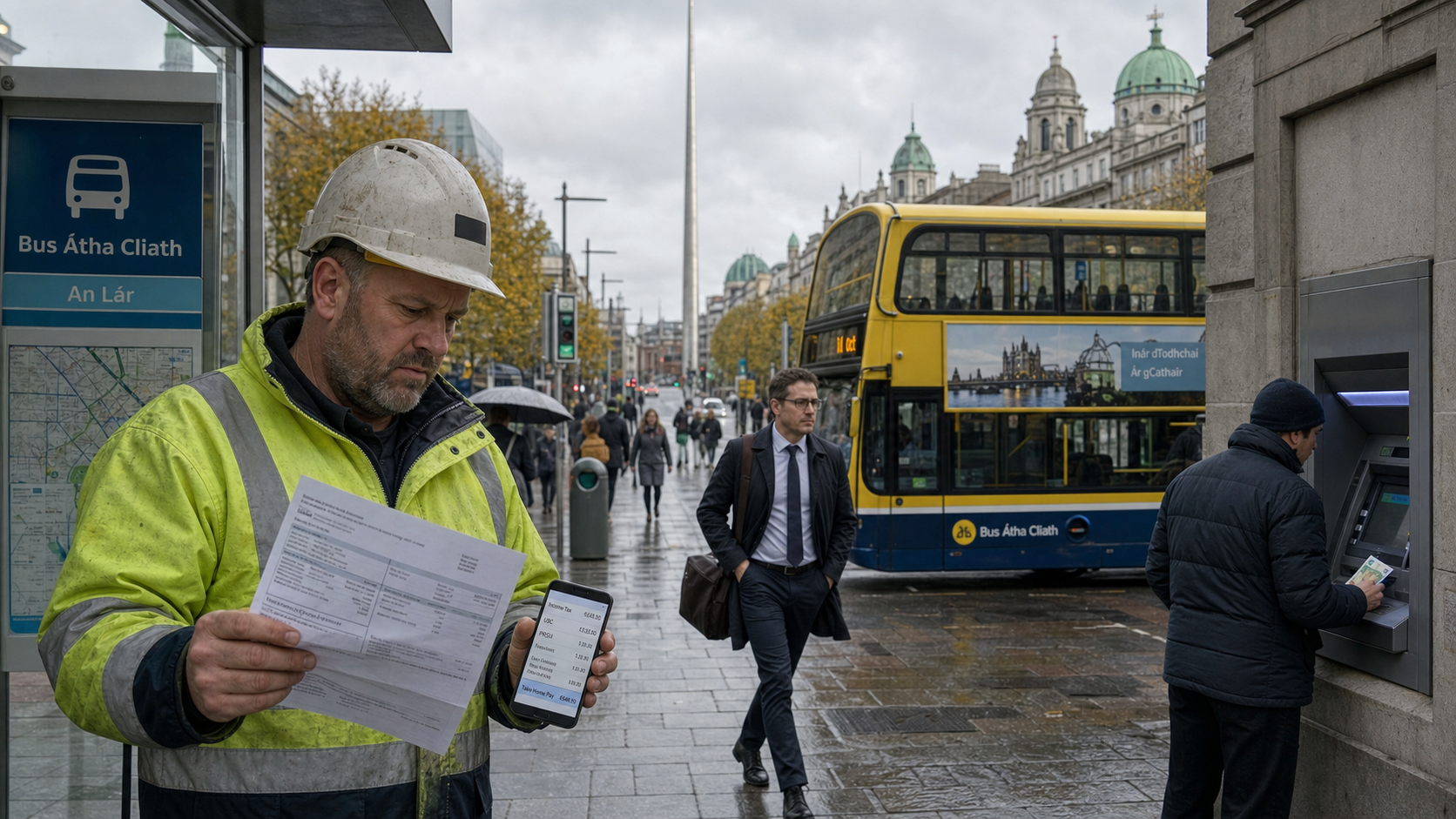
The carbon tax debate has particular resonance in rural Ireland, where households in counties such as Donegal, Mayo, Roscommon, and Kerry are disproportionately dependent on home heating oil and private cars. In these areas, the carbon tax represents a significant additional cost that falls on households with limited ability to switch to alternatives — there is no gas network, public transport is sparse, and the upfront cost of heat pumps and electric vehicles remains beyond the reach of many families. The government's targeted fuel allowance and other supports have partially offset the impact for lower-income households, but middle-income rural families have largely been left to absorb the full cost.
What's Next
Budget 2027 will be presented on 6 October, and the carbon tax decision will be one of the most closely watched elements of the package. The government has until then to decide whether to proceed with the scheduled increase, pause it for a year, or announce a broader review of fuel policy. Green Party leader Roderic O'Gorman has warned that any pause in the carbon tax trajectory would represent a serious breach of the Programme for Government commitments, and has indicated that the party would view such a move as a significant test of the coalition's integrity on climate. The coming weeks will determine whether the government holds its nerve or blinks.