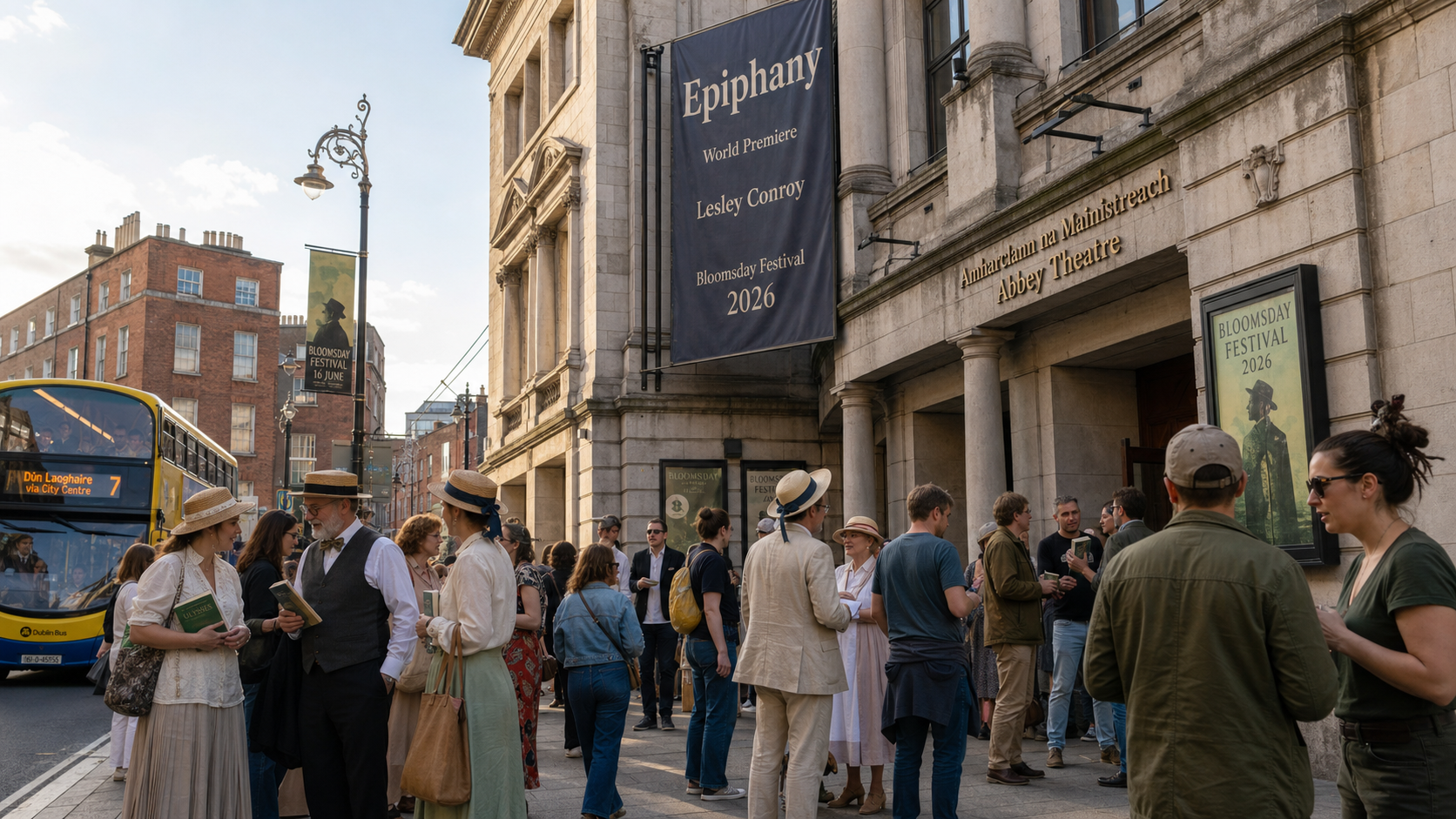
Bloomsday 2026: Dublin Animates with Joyce Celebrations as Lesley Conroy's 'Epiphany' Premieres
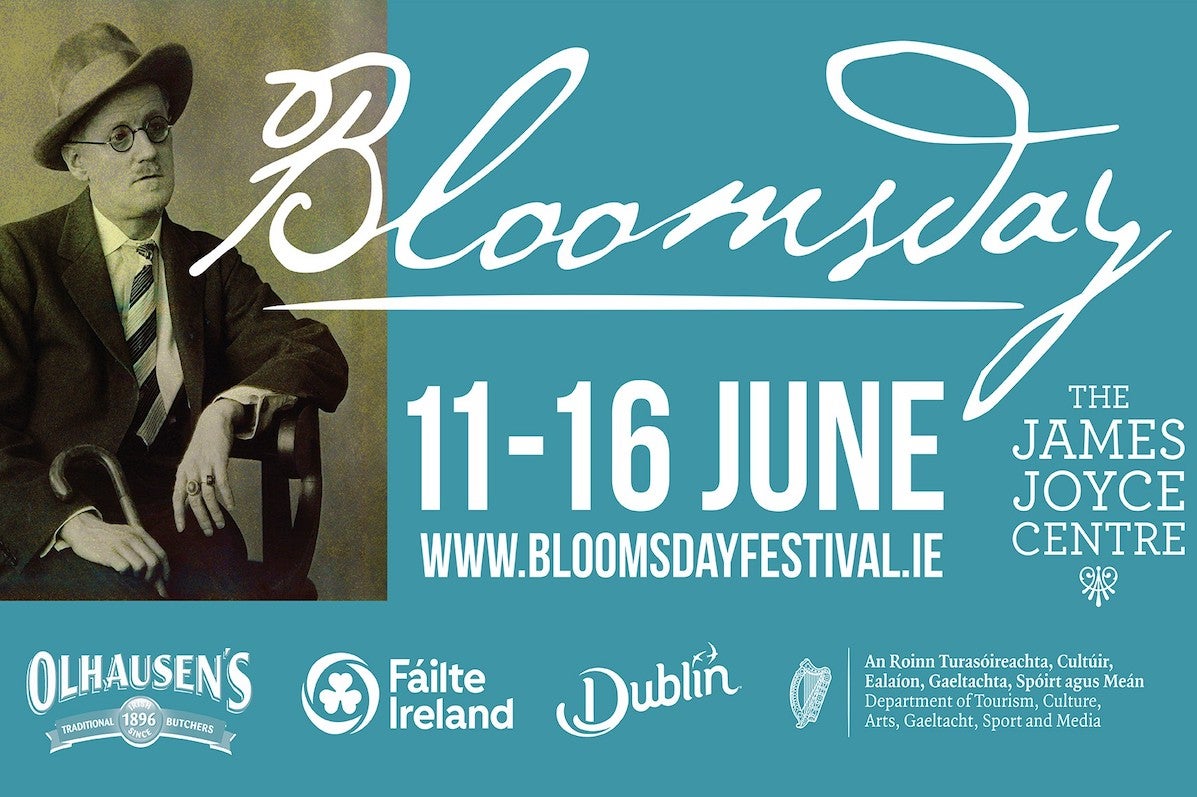
Dublin is in the grip of its annual Bloomsday fever, with the city's streets, pubs, theatres, and cultural institutions transformed into a living celebration of James Joyce's Ulysses. The 2026 festival, which runs from June 11 to 16, has drawn visitors from across the world and has produced one of its most ambitious programmes in years, headlined by the world premiere of Lesley Conroy's play Epiphany — a bold contemporary theatrical interpretation of Joyce's masterwork that has already generated significant critical attention.
Background
Bloomsday — named for Leopold Bloom, the protagonist of Ulysses, and celebrated on June 16, the date on which the novel is set — has been observed in Dublin since the 1950s, when a small group of Joyce enthusiasts first gathered to retrace Bloom's journey through the city. Over the decades, it has grown into one of the most distinctive literary festivals in the world, attracting tens of thousands of visitors annually and generating significant economic activity for the city.
The festival's appeal lies in its unique combination of high culture and popular celebration. At one end of the spectrum, there are academic conferences, theatrical productions, and scholarly readings that engage seriously with Joyce's complex and demanding text. At the other, there are costumed pub crawls, street performances, and communal readings that make the festival accessible and enjoyable for people who have never read a word of Ulysses. This breadth is both the festival's greatest strength and its most distinctive characteristic.
The 2026 festival has been particularly ambitious in its programming, reflecting a determination by the James Joyce Centre and its partners to mark the centenary of Ulysses' publication — which fell in 2022 — with a sustained programme of events that extends the celebration beyond a single year. The commissioning of Lesley Conroy's Epiphany is the centrepiece of this ambition.
Key Developments
Lesley Conroy's Epiphany, which premiered at the Project Arts Centre on Thursday evening, has been described by early reviewers as a "daring and deeply felt" engagement with Joyce's work. The play takes as its starting point the concept of the "epiphany" — the sudden moment of revelation or insight that Joyce identified as a central feature of his aesthetic — and uses it to explore the lives of contemporary Dubliners navigating a city that Joyce would recognise in some respects and find utterly transformed in others.
RTÉ Culture reported that the production has been received with considerable enthusiasm by audiences and critics alike, with particular praise for Conroy's ability to capture the rhythms and textures of Joyce's prose in a theatrical form that is accessible to audiences who may not be familiar with the source material. The play runs until June 20 and is expected to transfer to other venues later in the year.
Beyond the theatrical premiere, the festival has offered its usual rich programme of events. The annual Bloomsday breakfast at the James Joyce Centre on North Great George's Street drew hundreds of participants, with readings from Ulysses accompanied by the traditional Joycean fare of kidneys and Guinness. Walking tours of the novel's key locations — Sandymount Strand, Davy Byrne's pub, the National Library — have been fully booked throughout the festival week. And the annual costumed gathering at Sweny's Pharmacy on Lincoln Place, where Bloom purchases a bar of lemon soap in the novel, has been as colourful and convivial as ever.
Why It Matters
Bloomsday matters because it is one of the few literary festivals in the world that has genuinely penetrated popular culture. Most literary festivals are primarily events for book lovers and cultural enthusiasts; Bloomsday is something more — a civic celebration that has become part of Dublin's identity and that draws participants who would not normally describe themselves as literary. The sight of Dubliners and visitors alike dressed in Edwardian costume, reading aloud from a century-old novel in the streets of a modern European capital, is one of the most distinctive and charming spectacles in the Irish cultural calendar.
The festival also matters because it keeps Joyce's work alive and accessible in a way that academic scholarship alone cannot. Ulysses is one of the most celebrated and least read novels in the English language — a work that is universally acknowledged as a masterpiece but that many readers find intimidating or impenetrable. Bloomsday, at its best, provides a way into the novel that bypasses the intimidation and connects readers with the humanity, the humour, and the extraordinary linguistic vitality of Joyce's achievement.
The commissioning of new work like Epiphany is also significant. It demonstrates that Joyce's legacy is not merely a matter of preservation and celebration but of ongoing creative engagement — that his work continues to inspire and challenge contemporary artists in ways that keep it relevant and alive.
Local Impact
In Dublin, the economic impact of Bloomsday is significant. Hotels, restaurants, and cultural venues in the city centre report strong bookings throughout the festival week, with a significant proportion of visitors coming from overseas — particularly from the United States, where the Irish-American community has a strong tradition of Bloomsday celebration. The festival also generates significant media coverage, both domestic and international, that contributes to Dublin's reputation as a world-class cultural destination.
What's Next
The festival concludes on Monday, June 16 — Bloomsday itself — with a series of events including a public reading of the final pages of Ulysses at the James Joyce Tower in Sandycove, where the novel opens. Lesley Conroy's Epiphany continues its run at the Project Arts Centre until June 20. The James Joyce Centre is expected to announce its programme for the 2027 festival in the autumn, with plans already underway for a major international conference to mark the centenary of Joyce's death in 1941.