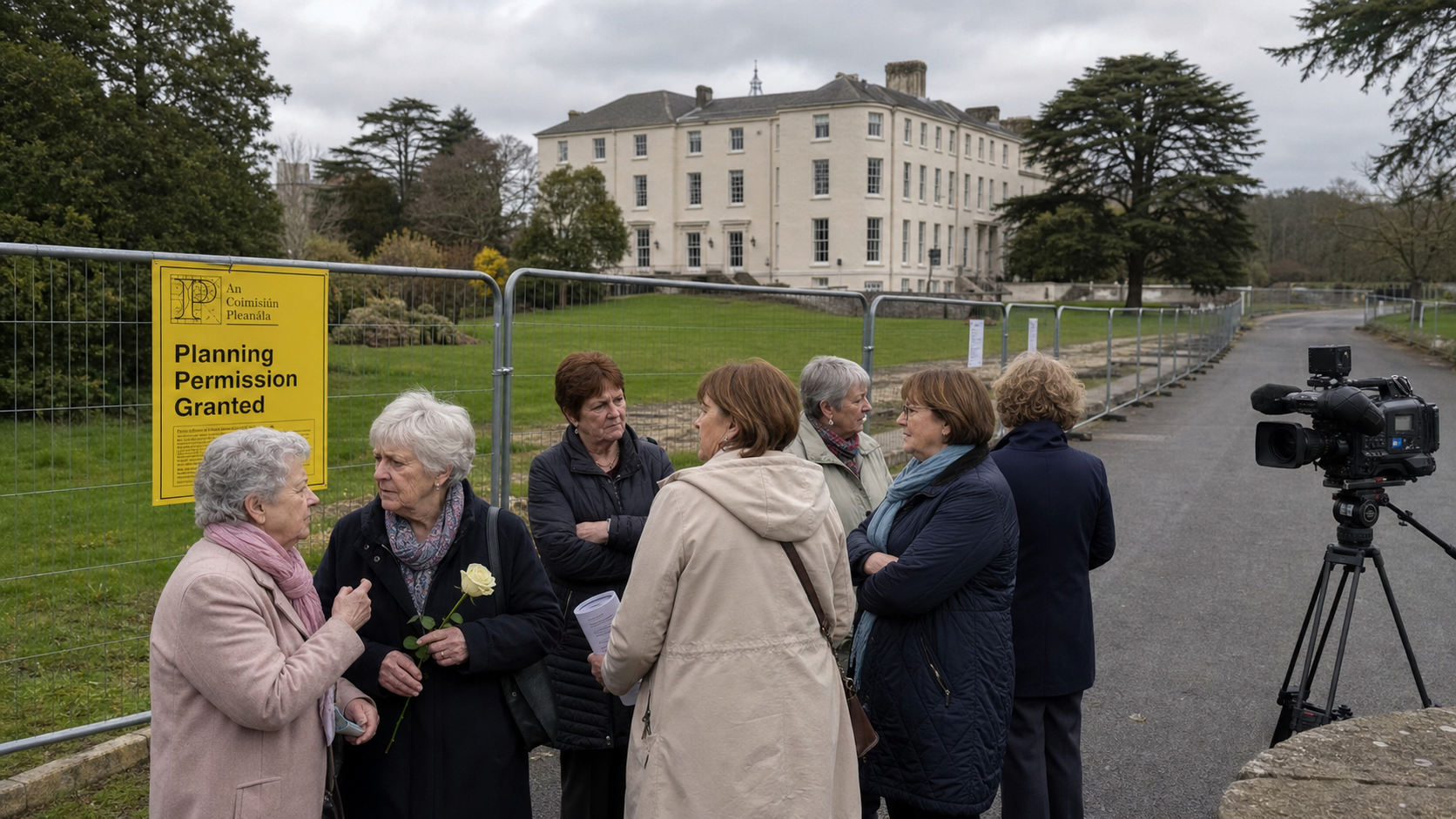
Bessborough Site Future Remains Unresolved as Minister Says 'All Options' on Table After Planning Approval
The future of the former Bessborough Mother and Baby Home site in Cork remains deeply contested after An Coimisiún Pleanála upheld planning permission for 106 apartments on grounds where an estimated 900 babies died between the 1920s and the 1990s, with Minister for Children Norma Foley insisting that "all options" remain on the table despite the conclusion of the formal planning process.
Background
The Bessborough site in Cork city is one of the most significant and painful locations in the history of the Irish State's treatment of unmarried mothers and their children. Between the 1920s and the 1990s, the Sacred Hearts of Jesus and Mary religious congregation operated a mother and baby home at Bessborough, where an estimated 900 to 923 babies and children died — a mortality rate that the 2021 Commission of Investigation into Mother and Baby Homes described as "appalling."
The site, which extends to approximately 60 acres, has been the subject of intense debate about its future since the Commission's report was published. Survivors and their advocates have consistently argued that the land should be preserved as a site of national conscience, with proper memorialisation and the possibility of further archaeological investigation to locate and identify the remains of those who died there. The prospect of residential development on the site has been described by many survivors as a profound act of disrespect.
Cork City Council granted planning permission to Estuary View Enterprises for the construction of 106 apartments on the site earlier in 2026, a decision that was appealed by the Bessborough Mother and Baby Home Support Group and local political representatives. The planning approval included specific conditions, including the requirement for a Forensic Archaeological Monitoring Strategy to oversee any excavations and the immediate cessation of work should human remains be discovered.
Key Developments
An Coimisiún Pleanála upheld the planning permission in July 2026, exhausting the formal planning appeals process and leaving the site's future in the hands of political negotiation rather than planning law. Taoiseach Micheál Martin intervened in mid-July, requesting that Cork City Council engage with the landowners to explore "all options" regarding the site — a formulation that stops short of committing to State acquisition but signals a desire to find an alternative to straightforward residential development.
Minister Foley reiterated this position on 30 July, saying that she believes nothing should be off the table. "I want to reach an accommodation that respects the concerns and the trauma of survivors and their families," she said. "The planning process has concluded, but that does not mean the conversation about this site is over." Calls have been made by Senator Laura Harmon and members of the Labour Party for the State to purchase the land through a Compulsory Purchase Order, though the government has not yet committed to this course of action.
The Cork Survivors Supporters Alliance has expressed a degree of support for the development, noting that it avoids known burial grounds and provides for a community café and a memorial area. However, the Bessborough Mother and Baby Home Support Group remains firmly opposed, arguing that the full extent of the site's burial grounds has not been established and that development poses an unacceptable risk to undiscovered remains.
Why It Matters
The Bessborough case is a test of whether the Irish State is willing to translate its expressed commitment to survivors of institutional abuse into concrete action when it conflicts with property rights and planning law. The government's response to the Commission of Investigation's report in 2021 included a formal apology and a series of commitments to survivors, but the Bessborough planning controversy suggests that the practical implementation of those commitments remains incomplete. The site is not unique in this regard — similar debates are ongoing about the future of the Tuam site in Co. Galway, where the remains of up to 796 children have been identified in a disused sewage structure. The decisions made about Bessborough will set a precedent for how Ireland treats these sites of profound historical trauma.
Local Impact
In Cork city, the Bessborough controversy has divided opinion between those who prioritise the housing need — the city faces a severe shortage of residential units — and those who argue that the site's historical significance places it beyond the reach of ordinary development considerations. The 60-acre site, located in the Blackrock area of Cork, is one of the largest undeveloped parcels of land in the city, and its development potential is considerable. For survivors and their families, many of whom live in Cork and the surrounding area, the prospect of apartments being built on the site where their relatives died and were buried is a source of ongoing anguish that no planning decision can fully resolve.
What's Next
The government is expected to engage with Cork City Council and the landowners in the coming weeks to explore whether a negotiated solution — potentially involving State acquisition of part or all of the site — is achievable. A Compulsory Purchase Order would require primary legislation and would face legal challenges from the landowners, making it a complex and time-consuming option. The Special Advocate for Survivors, Patricia Carey, is expected to publish a report on the Bessborough site in the autumn, which may provide a framework for further government action.