Belfast Harbour Scrapyard Fire Sends Smoke Across City as NIFRS Battles Blaze Involving Thousands of Tonnes of Scrap Cars
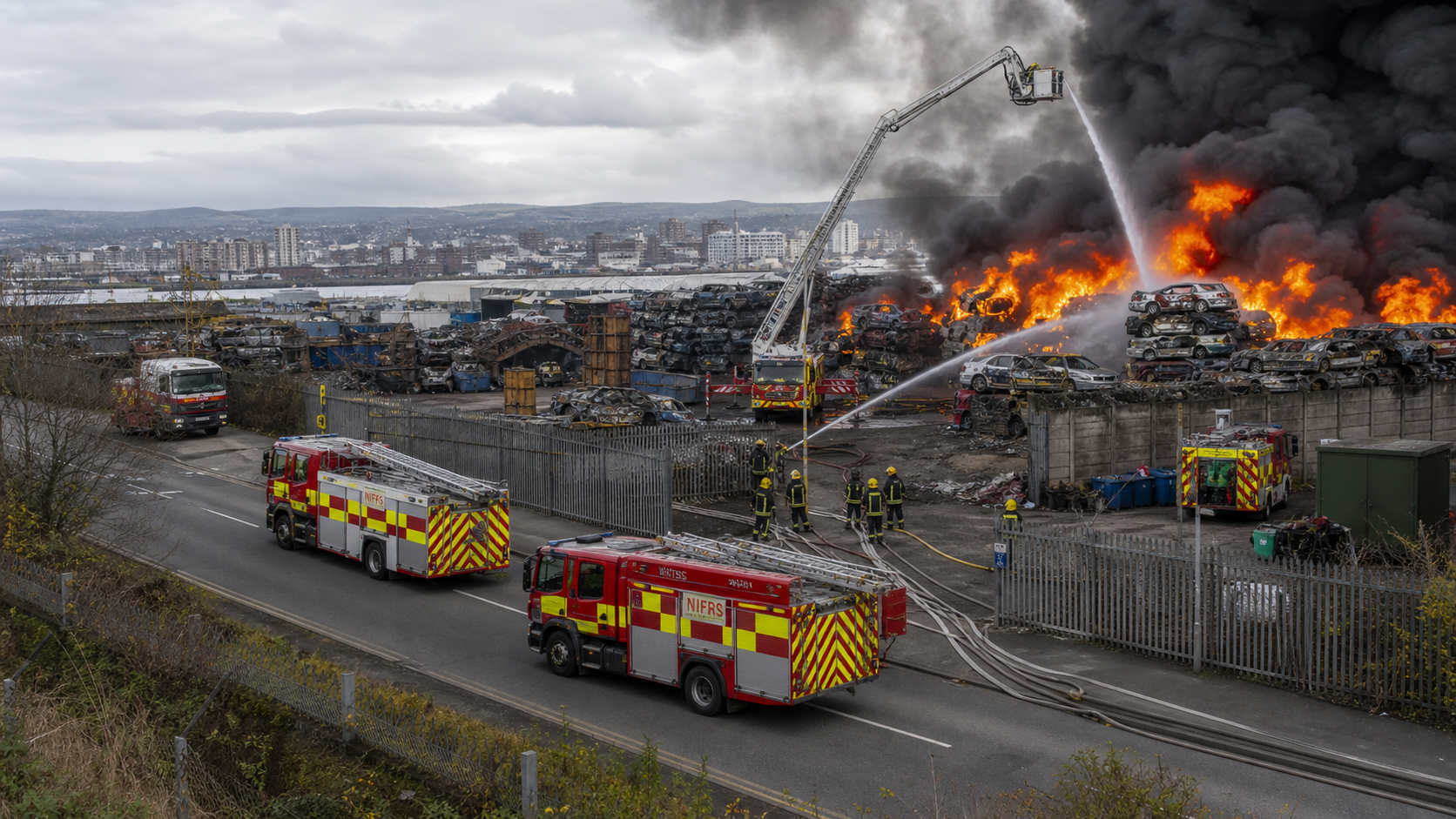
A large fire at a scrapyard in Belfast's harbour area sent thick, dark plumes of smoke billowing across the city on Wednesday afternoon, with the Northern Ireland Fire and Rescue Service deploying appliances from five stations to tackle a blaze involving thousands of tonnes of scrap vehicles that was expected to continue burning well into the night.
Background
The East Twin Road area of Belfast Harbour is one of the city's principal industrial zones, situated on the eastern shore of the River Lagan close to the Titanic Quarter. The area hosts a range of heavy industrial and logistics operations, including scrapyards, container storage facilities, and marine engineering businesses. It is a working industrial environment with limited residential population in its immediate vicinity, though it is overlooked by residential areas in east Belfast and is visible from much of the city centre.
Scrapyard fires are a recognised hazard in industrial areas, particularly during dry weather when accumulated materials can ignite more readily. The Belfast Harbour area has experienced a number of significant industrial incidents over the years, and the NIFRS maintains specific protocols for responding to fires involving large quantities of scrap metal and end-of-life vehicles, which can contain residual fuel, oil, and other flammable materials that complicate firefighting operations.
The Northern Ireland Fire and Rescue Service operates a network of stations across Belfast, with Central, Knock, Cadogan, Westland, and Carrickfergus among those with responsibility for the harbour area. The service also maintains specialist equipment, including high-volume pumps, for incidents requiring large quantities of water over extended periods.
Key Developments
The NIFRS received the initial emergency call at 12:14 PM on Wednesday, 2 September 2026. Fire appliances were dispatched from Central, Knock, Cadogan, Westland, and Carrickfergus stations, alongside a high-volume pump from Whitla. On arrival, crews found a large quantity of scrap cars well alight, with the fire spreading rapidly through the accumulated material.
The scale of the blaze generated thick, dark plumes of smoke that spread across Belfast city centre and were visible from locations throughout the city, including the Titanic Quarter, the Cathedral Quarter, and residential areas in east and north Belfast. Members of the public were advised to keep windows and doors closed if they were in areas affected by the smoke, and to avoid the immediate vicinity of the harbour.
The fire was expected to continue burning through Wednesday night, with NIFRS crews maintaining a presence at the scene to prevent the blaze from spreading to adjacent properties and to manage the ongoing risk from the large volume of burning material. The cause of the fire was under investigation.
Why It Matters
Large industrial fires in urban areas present a range of public health and environmental concerns beyond the immediate danger to life and property. The combustion of scrap vehicles releases a complex mixture of pollutants, including particulate matter, carbon monoxide, volatile organic compounds, and potentially toxic materials from vehicle components such as batteries, brake fluid, and refrigerants. The smoke plume from a fire of this scale can affect air quality across a wide area, with particular implications for people with respiratory conditions such as asthma or chronic obstructive pulmonary disease.
The Belfast Harbour area's proximity to the city centre means that smoke from incidents of this kind can affect a large number of people relatively quickly. The NIFRS's rapid deployment of resources from multiple stations reflects the seriousness with which the service treats fires in this industrial zone. The involvement of a high-volume pump from Whitla station indicates that water supply was a significant operational consideration, as is often the case in large scrapyard fires where the volume of burning material requires sustained application of water over many hours.
The incident also raises questions about fire safety standards and inspection regimes at scrapyards and other industrial sites in the harbour area, questions that are likely to be examined as part of the post-incident investigation.
Local Impact
The smoke plume affected air quality across a wide swathe of Belfast, with residents in the Titanic Quarter, Sydenham, Ballymacarrett, and parts of north Belfast reporting visibility of the smoke and, in some cases, the smell of burning. Several businesses in the immediate vicinity of the harbour were advised to close or restrict access during the afternoon. The Sydenham bypass and East Twin Road were subject to traffic management measures as emergency vehicles attended the scene. Belfast City Council's environmental health team was notified and was monitoring air quality in the affected areas. The NIFRS confirmed that no injuries were reported in connection with the fire.
What's Next
NIFRS investigators will examine the cause of the fire once the scene is safe to access. The Northern Ireland Environment Agency is expected to assess any environmental impact, particularly in relation to potential contamination of the River Lagan or Belfast Lough from firefighting water runoff. The Health and Safety Executive for Northern Ireland may also conduct an inspection of the site. A full incident report will be prepared by the NIFRS in due course.