Belfast Cuban Sandwich Factory Hit by US Sanctions Freeze as Deliveroo Payments Blocked for Months
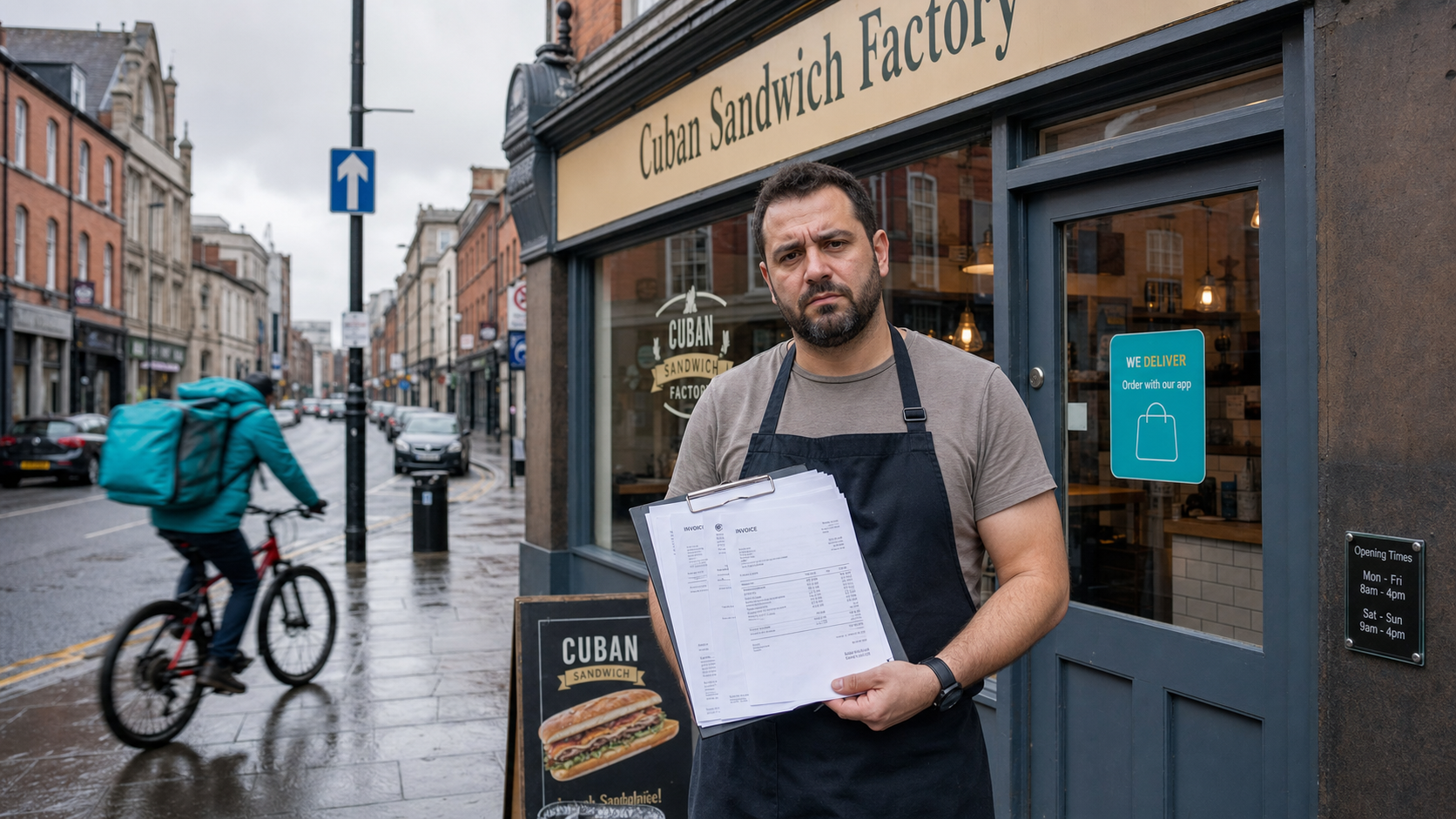
Carlos Arguelles Leblanch, the Cuban-born owner of the Cuban Sandwich Factory in Belfast, found himself more than £7,000 out of pocket after Deliveroo payments were frozen for months, with banking software apparently flagging his business due to the words "Cuba" and "factory" in its name amid tightened US economic sanctions on the Caribbean nation — a situation he describes as a surreal collision between geopolitics and a small Belfast takeaway.
Background
The Cuban Sandwich Factory has been a fixture of Belfast's food scene since 2012, when Arguelles Leblanch established the business after settling in Northern Ireland. The takeaway specialises in Cuban-style sandwiches and has built a loyal customer base in the city, operating both from its physical premises and through food delivery platforms including Deliveroo. Arguelles Leblanch, who holds UK residency, has no financial or business connections to Cuba beyond the cultural inspiration for his menu.
US economic sanctions on Cuba have been in place in various forms since the early 1960s, but the Trump administration significantly tightened their scope and enforcement in 2025 and 2026. The expanded sanctions include restrictions on financial transactions that could benefit the Cuban government or Cuban state entities, and the enforcement mechanisms rely heavily on automated banking software that scans transaction data for keywords and patterns associated with sanctioned entities or jurisdictions.
Arguelles Leblanch noted that he had faced a similar situation during the first Trump administration, when he was required to provide proof of his UK residency to resolve a payment issue. The recurrence of the problem in 2026, following the latest round of sanctions tightening, suggests that the automated compliance systems used by financial institutions have become more aggressive in their application of sanctions-related filters.
Key Developments
Arguelles Leblanch reported that Deliveroo payments ceased in mid-June 2026, leaving him unable to access funds owed for orders placed through the platform. By the time the issue came to public attention in early September, he was more than £7,000 out of pocket — a significant sum for a small independent business. The payment freeze forced him to temporarily suspend his Deliveroo operation, as the lack of cash flow made it difficult to pay staff and suppliers.
Deliveroo processes its payments through Citibank, which uses automated compliance software to screen transactions for potential sanctions violations. Arguelles Leblanch believes the software flagged his business due to the presence of the words "Cuba" and "factory" in its name, triggering an automatic block consistent with US efforts to restrict financial transactions associated with Cuba. Citibank conducted what it described as a "necessary compliance review" of the transactions, with a spokesperson stating that the circumstances were "nuanced" and could not be attributed solely to an administrative error or a direct sanctions-related violation. By early September 2026, the review was completed and the withheld payments were released.
The case attracted significant media attention in Northern Ireland, with Arguelles Leblanch speaking publicly about the impact of the payment freeze on his business and his frustration at being caught up in a geopolitical dispute that has nothing to do with his Belfast takeaway.
Why It Matters
The Cuban Sandwich Factory case illustrates a broader problem with the application of automated sanctions compliance systems in an era of increasingly aggressive US economic policy. These systems, designed to prevent financial flows to sanctioned entities, are blunt instruments that can cause significant collateral damage to entirely innocent businesses and individuals. The fact that a Belfast takeaway named after a culinary tradition — not a Cuban state entity — can have its payments frozen for months is a striking example of how automated compliance tools can produce absurd and harmful outcomes.
For small businesses in Northern Ireland and the Republic, the case is a reminder that US sanctions policy can have real and immediate consequences even for enterprises with no connection to the targeted jurisdiction. The tightening of Cuba sanctions under the Trump administration has been accompanied by a broader expansion of US secondary sanctions — measures that penalise non-US entities for doing business with sanctioned countries — which creates additional compliance risks for businesses operating in the global financial system.
The case also raises questions about the accountability of financial institutions when their automated systems cause harm to innocent parties. Arguelles Leblanch was left without access to funds owed to him for months, with no clear mechanism for challenging the freeze or obtaining compensation for the disruption to his business.
Local Impact
For the Cuban Sandwich Factory and its staff, the payment freeze was a serious financial shock. The business operates on the margins typical of small independent food outlets, where cash flow is critical to meeting weekly wage and supplier obligations. The temporary suspension of Deliveroo orders reduced the business's revenue at a time when it was already managing the costs of the summer trading period. Arguelles Leblanch has indicated that the experience has prompted him to review his reliance on a single payment platform and to explore alternative delivery arrangements that do not route payments through US-connected banking infrastructure. The case has been raised by local politicians as an example of the unintended consequences of US sanctions policy for businesses in Northern Ireland.
What's Next
Arguelles Leblanch has indicated he intends to continue operating the Cuban Sandwich Factory and has resumed his Deliveroo partnership following the release of the withheld funds. He is seeking legal advice on whether he has grounds to claim compensation for the disruption caused by the payment freeze. The case is likely to be cited in ongoing discussions about the impact of US sanctions policy on businesses in the UK and Ireland, and may prompt calls for clearer guidance from financial regulators on how automated compliance systems should handle cases of this kind.