Aughinish Alumina Faces Mounting Pressure as Ukraine Sanctions Customers of Limerick Refinery
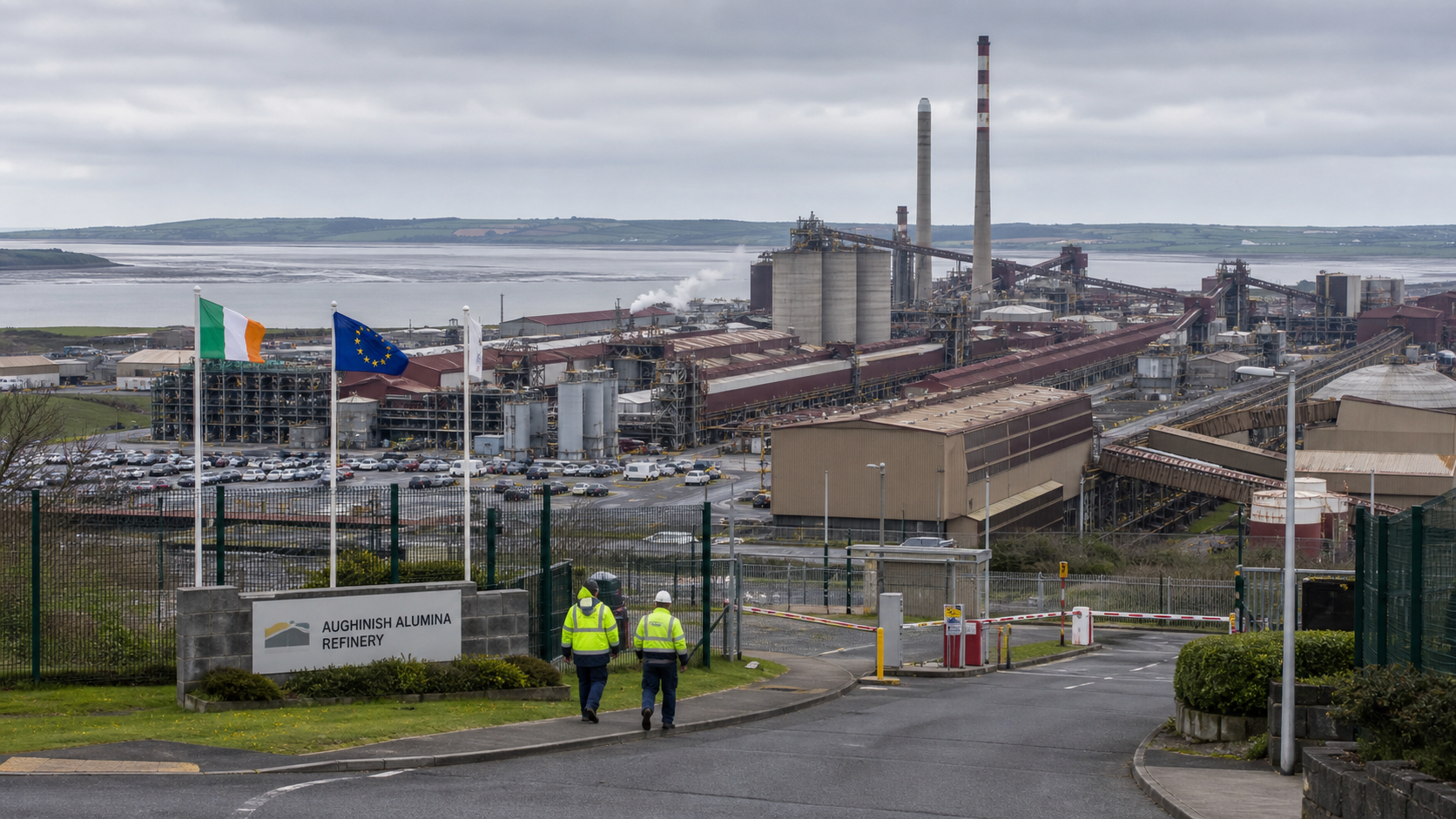
Ukraine has imposed sanctions on customers of Aughinish Alumina, the Russian-owned alumina refinery in Co. Limerick, in a significant escalation of pressure on the Irish government and the European Union to take action against a facility whose exports have been linked to the production of Russian military hardware — placing the government in an increasingly uncomfortable position as Ireland holds the rotating presidency of the EU Council.
Background
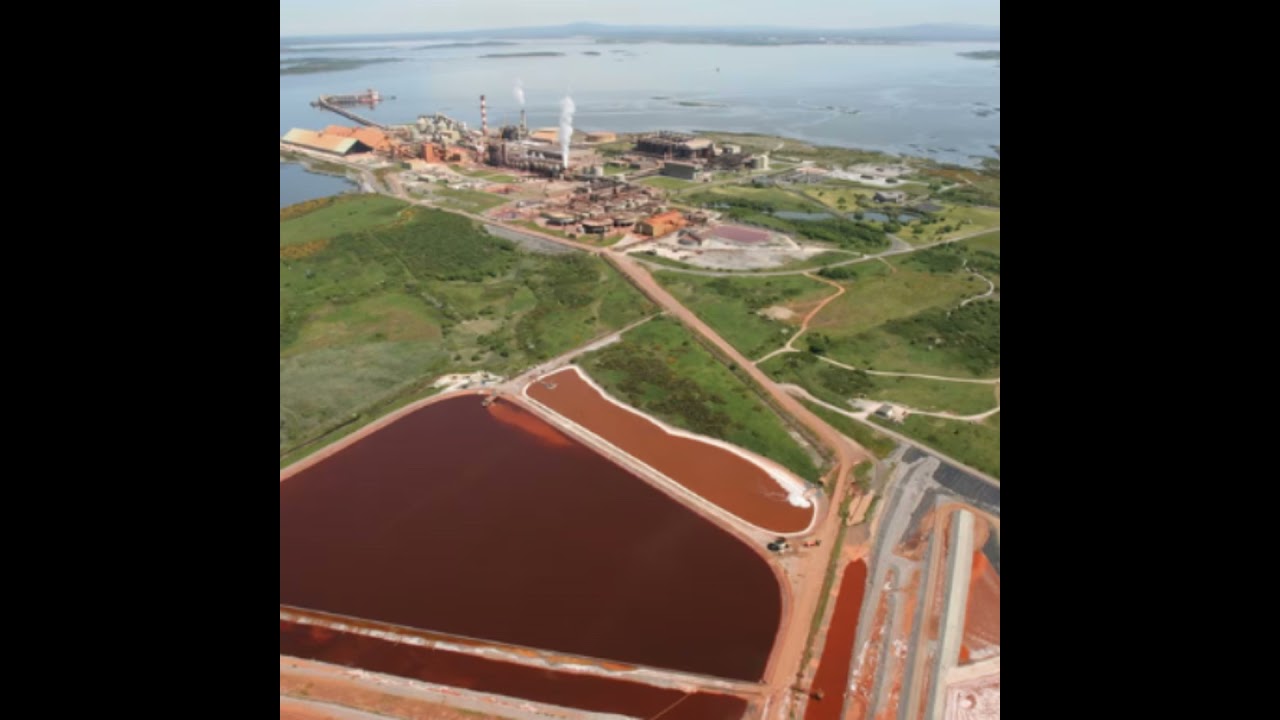
Aughinish Alumina, located on the Shannon Estuary near Askeaton in Co. Limerick, is Europe's largest alumina refinery. Owned by the Russian conglomerate Rusal, the plant processes bauxite into alumina — the intermediate product used to produce aluminium — and employs approximately 450 people directly, with a further 1,450 jobs supported indirectly in the local economy. The plant has been a major employer in the Limerick region for decades and is regarded as a cornerstone of the local industrial base.
The controversy surrounding Aughinish intensified in March 2026, when an investigation by the Organised Crime and Corruption Reporting Project and other media outlets alleged that significant volumes of alumina produced at the Limerick plant were being exported to Russian smelters. The resulting aluminium was then allegedly sold to companies under the umbrella of Rostec, the Russian state-owned defence conglomerate, for use in military equipment including missiles and bombers. The allegations placed the Irish government in an acutely difficult position: as a committed supporter of Ukraine and a member of the EU sanctions regime, Ireland was potentially hosting a facility that was contributing to the Russian war effort.
The government's response has been cautious. Minister for Enterprise Peter Burke acknowledged the difficulty of reaching an "evidential threshold" required to propose specific sanctions to the European Commission, while Minister for Foreign Affairs Helen McEntee stated that Ireland would "work with" the Commission should it propose targeting the plant in future sanctions packages. The government has emphasised that Ireland has never blocked an EU sanctions package and remains committed to supporting Ukraine.
Key Developments
Ukraine's decision to impose sanctions on customers of Aughinish Alumina represents a significant escalation. By targeting the buyers of the plant's output rather than the plant itself, Ukraine is attempting to disrupt the commercial relationships that make the refinery viable — a strategy that puts pressure on European companies that purchase alumina from Aughinish to reconsider those relationships or face consequences in their dealings with Ukraine.
The move has intensified calls from Ukrainian government officials and European MEPs for the EU to include Aughinish in its next sanctions package. Ireland's position as holder of the rotating EU Council presidency — a role it assumed in July 2026 — makes the situation particularly sensitive. As Council president, Ireland is expected to facilitate agreement among member states on EU policy, including sanctions policy, while managing its own national interests.
The Department of Enterprise's internal review of the plant's operations is ongoing, but officials have indicated that the review has not yet produced the level of evidence required to support a formal sanctions proposal. Company management has warned that any restrictions on its exports to Russia could render the plant commercially unviable, leading to its closure and the loss of all 1,900 jobs — a threat that carries significant political weight in a region where alternative employment opportunities are limited.
Why It Matters
The Aughinish situation encapsulates one of the most difficult dilemmas in Irish foreign policy: the tension between Ireland's stated commitment to supporting Ukraine and the rule-based international order on one hand, and the economic interests of a significant regional employer on the other. This is not a new dilemma — Ireland has faced similar tensions in relation to US tech companies' tax arrangements and the use of Shannon Airport by US military aircraft — but the Aughinish case is particularly stark because the alleged connection to Russian military production is direct and specific.
The case also raises broader questions about the effectiveness of the EU sanctions regime. If a major European industrial facility can continue to supply materials that end up in Russian weapons systems without triggering sanctions, the credibility of the entire sanctions architecture is called into question. For Ukraine, which is fighting for its survival, the distinction between direct and indirect support for the Russian military is not a meaningful one.
Local Impact
In Askeaton and the wider Limerick region, the Aughinish controversy has created significant anxiety. The plant is the largest private employer in the area, and its closure would be economically devastating for a community that has limited alternative employment options. Local politicians across the political spectrum have been careful to acknowledge both the seriousness of the allegations and the importance of the plant to the local economy. The Limerick Chamber of Commerce has called for a "proportionate and evidence-based" approach, while trade unions representing Aughinish workers have warned against any action that would put jobs at risk without clear evidence of wrongdoing by the plant's management or workforce.
What's Next
The European Commission is expected to publish its next sanctions package in September, and the question of whether Aughinish will be included is likely to be one of the most contentious issues in the negotiations. Ireland's position as Council president will require it to manage those negotiations while managing its own domestic political pressures. The Department of Enterprise's review is expected to conclude before the end of the year, and its findings will be critical in determining the government's position. Minister McEntee is expected to travel to Kyiv in September for meetings with Ukrainian government officials, at which the Aughinish issue is likely to feature prominently.