Aughinish Alumina Exports to Russia Continue to Rise Despite EU Parliament Vote for Ban as Irish Government Faces Renewed Pressure
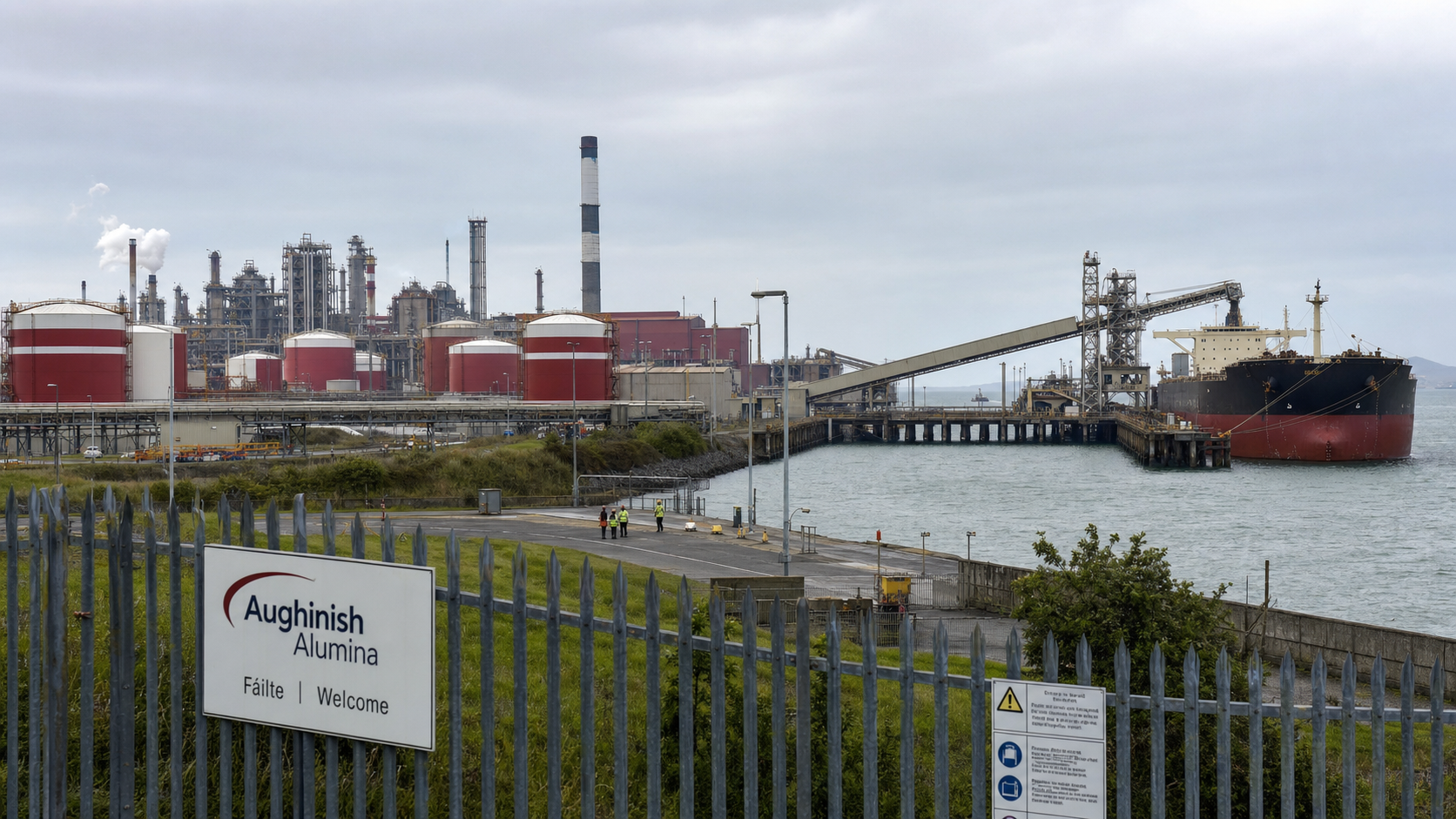
Exports from Aughinish Alumina in County Limerick to Russia continue to rise despite a European Parliament vote in July to ban such exports, as the Irish government faces renewed pressure over the Rusal-owned refinery's role in supplying alumina that investigators have linked to Russian military supply chains. New data published by the Irish Times shows that exports from the plant — Europe's largest alumina refinery — have increased in 2026, even as the political and reputational pressure on the government intensifies.
Background
Aughinish Alumina, located on the Shannon Estuary in County Limerick, is Europe's largest alumina refinery and one of the most significant industrial employers in the mid-west region. The plant, which employs approximately 460 people directly with hundreds more in indirect support roles, refines bauxite into alumina — the primary feedstock for aluminium smelters. It has been owned by the Russian conglomerate Rusal, part of the broader EN+ Group, since 2007.
The plant's ownership by a Russian company became a source of significant controversy following Russia's full-scale invasion of Ukraine in February 2022. However, the controversy intensified dramatically in early 2026 following an investigation by the Organised Crime and Corruption Reporting Project and the Irish Times, which traced alumina from the Limerick plant to Russian smelters, where it was processed into aluminium and subsequently sold to trading companies that supply Russian arms manufacturers. Those manufacturers are involved in producing military hardware, including ballistic and hypersonic missiles and unmanned aerial vehicles.
The Irish government's response to the controversy has been cautious. Taoiseach Micheál Martin argued that unilateral sanctions on the plant would be "self-defeating" and could harm the European aluminium industry more than it would negatively impact Russia. The government maintained that the exports were legal, as alumina was not included in EU sanctions packages, and launched a "deep dive" investigation to determine the extent to which Irish-produced alumina was fuelling the Russian war effort.
Key Developments
The European Parliament voted on 8 July 2026 to implement a ban on the export of alumina to Russia, following consistent lobbying from MEPs and the Vice President of the European Parliament, Pina Picierno. The vote was a significant political development, but it does not automatically translate into a legal prohibition — EU sanctions require agreement at Council level, and the Irish government has been among those urging caution about the economic consequences of a ban.
The new data published by the Irish Times shows that exports from Aughinish to Russia have continued to rise in 2026, a finding that has intensified the political pressure on the government. The controversy over the export statistics has been compounded by a dispute about the figures themselves: initial CSO data suggested that 83% of Aughinish's exports in the first quarter of 2026 were destined for Russia, a figure that Minister for Enterprise Peter Burke publicly disputed, asserting that the actual proportion was approximately 45%. Aughinish subsequently attributed the discrepancy to a "clerical error" in its reporting to the CSO.
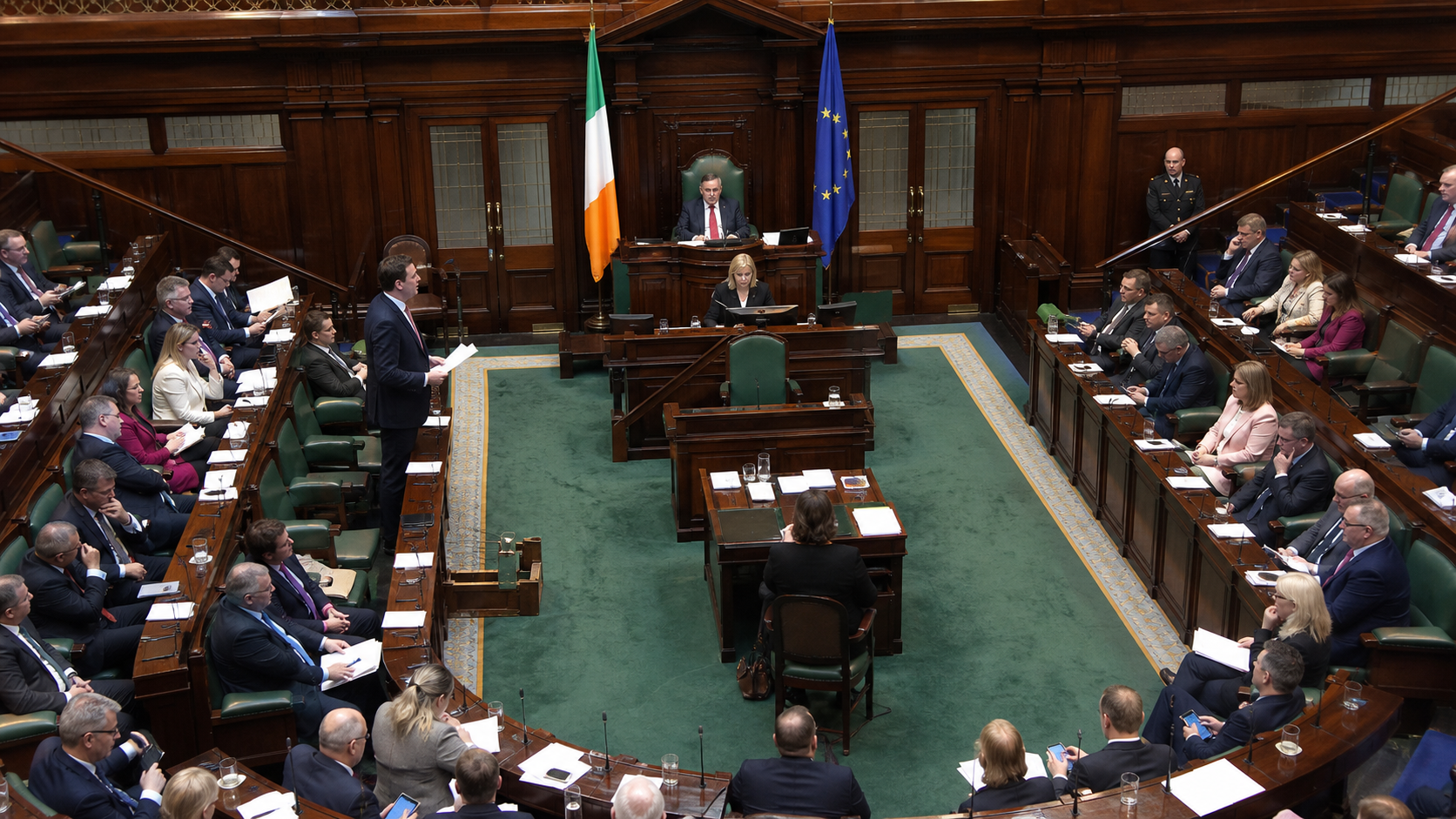
The government's "deep dive" investigation, launched in response to the OCCRP and Irish Times reporting, has yet to publish its findings. Opposition parties have pressed for the investigation to be completed without further delay, and the Oireachtas Committee on Enterprise has indicated that it will seek an update from the Department of Enterprise in September.
Why It Matters
The Aughinish controversy sits at the intersection of several of the most significant policy challenges facing the Irish government: the country's relationship with Russia and its obligations as an EU member state, the tension between economic interests and ethical commitments, and the credibility of Ireland's stated support for Ukraine. For a country that has positioned itself as a committed European partner and a supporter of the rules-based international order, the continued export of alumina from an Irish plant to a country engaged in a war of aggression in Europe is a reputational challenge of the first order.
For context, Ireland's neutrality has long been a source of national pride and political consensus. But neutrality has never meant indifference to the values of democracy and international law, and the Aughinish situation tests the limits of what neutrality can mean in practice when Irish-produced materials are linked — however indirectly — to the Russian military machine. The government's argument that unilateral action would be counterproductive has some merit, but it is increasingly difficult to sustain in the face of evidence that the exports are continuing to rise.
The employment dimension of the issue is real and should not be dismissed. The 460 direct jobs at Aughinish, and the hundreds of indirect jobs that depend on the plant, are significant for the mid-west region. Any action that threatened the plant's viability would have serious consequences for workers and their families. But the government's critics argue that this consideration, while legitimate, cannot be the only factor in a decision that has implications for Ireland's international standing and its obligations as an EU member state.
Local Impact
In County Limerick, the Aughinish controversy has created a difficult situation for local communities. The plant is a major employer in the Askeaton area, and its workers and their families are acutely aware of the political pressure that could affect their livelihoods. Local representatives have called for a resolution that protects employment while addressing the legitimate concerns about the plant's exports, but the path to such a resolution is not obvious. The Shannon Estuary, on which the plant sits, is also the focus of significant renewable energy development, and the long-term future of the site — whatever happens with the current controversy — is a subject of active discussion among regional planners and economic development bodies.
What's Next
The government's "deep dive" investigation is expected to report in September 2026. The Oireachtas Committee on Enterprise will seek an update from the Department of Enterprise when the Dáil returns. At EU level, discussions about whether to include alumina in the next package of sanctions against Russia are ongoing, and the European Parliament's July vote will add pressure to those discussions. The Irish government's position in those negotiations will be closely watched by both its EU partners and its domestic critics.