Politics 3 min read

Assisted Dying Bill Fails as House of Lords Blocks Final Vote

The Terminally Ill Adults (End of Life) Bill has failed after the House of Lords used procedural tactics to block a final vote before the parliamentary session ended on 24 April 2026. Supporters described the outcome as undemocratic, vowing to reintroduce the legislation in the next session. The failure leaves assisted dying illegal in England and Wales, despite consistent majority public support for reform.

Titanic NewsSaturday, 25 April 20262 views
Assisted Dying Bill Fails as House of Lords Blocks Final Vote

Assisted Dying Bill Fails as House of Lords Blocks Final Vote

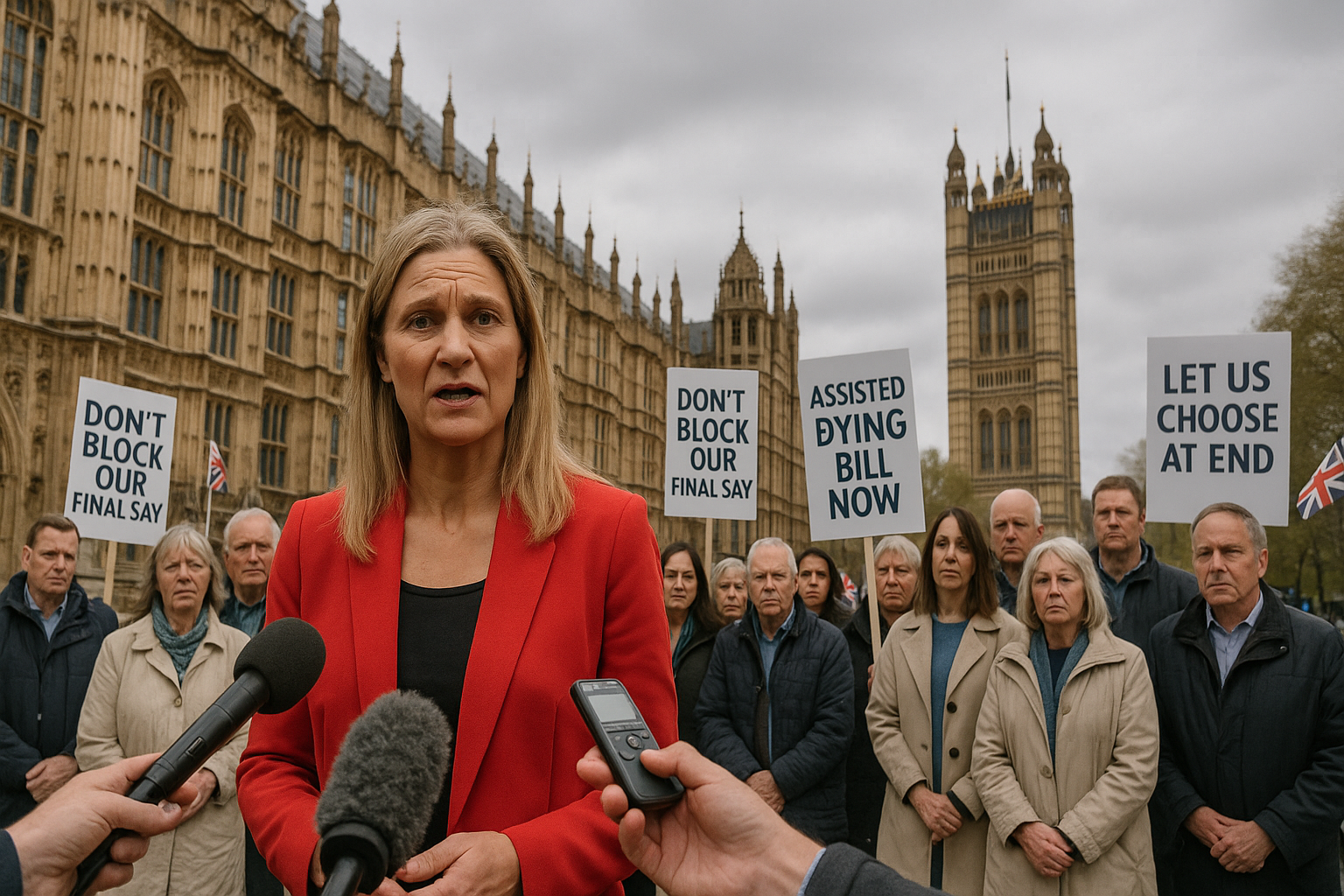
A landmark bid to legalise assisted dying in England and Wales has collapsed after the bill ran out of parliamentary time on 24 April 2026, following what supporters described as an "undemocratic" block in the House of Lords.

The Terminally Ill Adults (End of Life) Bill, championed by Labour MP Kim Leadbeater, had passed its second reading in the House of Commons with a majority of 55 votes in November 2024 — the first time MPs had backed such a measure in decades. However, after months of scrutiny in the Lords, procedural tactics were deployed to prevent a final vote before the parliamentary session closed, effectively killing the legislation.

Background

The bill would have allowed terminally ill adults in England and Wales, with a life expectancy of six months or less, to request assistance in ending their lives, subject to approval from two doctors and a High Court judge. Supporters argued it would give dying people dignity and autonomy in their final weeks. Opponents, including many medical professionals and religious groups, warned of risks to vulnerable people and the potential for coercion.

Key Developments

On 24 April, as the parliamentary session drew to a close, peers in the House of Lords used procedural mechanisms to prevent the bill from receiving its final vote. Kim Leadbeater described the outcome as a profound disappointment, stating that the Lords had acted against the democratic will of the elected Commons. Campaigners from Dignity in Dying gathered outside Parliament, many in tears, as news of the bill's failure spread.

Why It Matters

The failure leaves the UK's legal framework unchanged: assisting a person to die remains a criminal offence carrying a maximum 14-year prison sentence. The UK now stands apart from countries such as Canada, Australia, and several US states, which have introduced assisted dying legislation in recent years. Polling consistently shows that around 75% of the British public support a change in the law.

What's Next

Supporters have vowed to reintroduce the bill in the next parliamentary session. Kim Leadbeater said she remained committed to the cause and that the fight was "far from over." The debate is expected to return to Parliament with renewed urgency, particularly as the population ages and demand for end-of-life care grows. For now, terminally ill people in England and Wales who wish to end their lives must travel to countries such as Switzerland, where assisted dying is legal for foreign nationals.

What's Your Take?

assisted dyingHouse of LordsParliamentKim Leadbeaterend of life

Related Stories

Downing Street Reaffirms Falklands Sovereignty Amid US Policy Concerns
Politics

Downing Street Reaffirms Falklands Sovereignty Amid US Policy Concerns

Downing Street has reaffirmed British sovereignty over the Falkland Islands after reports on 24 April 2026 suggested the Trump administration might withdraw US support for the UK's claim as a diplomatic pressure point over Britain's refusal to join military action against Iran. A Number 10 spokesperson stated the UK's position on the islands is non-negotiable. The episode has highlighted tensions in the transatlantic alliance amid the ongoing Middle East conflict.

Titanic News
2 min read25 Apr 2026
UK Parliament in Final Legislative Sprint as Key Bills Enter Ping-Pong
Politics

UK Parliament in Final Legislative Sprint as Key Bills Enter Ping-Pong

Several major government bills are locked in parliamentary ping-pong between the Commons and Lords as the session nears its end on 24 April 2026. Key disputes include the Crime and Policing Bill, the Children's Wellbeing and Schools Bill, and the Pension Schemes Bill. The Victims and Courts Bill successfully completed its passage, but others face an uncertain fate if compromises cannot be reached.

Titanic News
2 min read25 Apr 2026
Sinn Féin Ard Fheis Opens in Belfast as Party Eyes Unity Referendum by 2030
Politics

Sinn Féin Ard Fheis Opens in Belfast as Party Eyes Unity Referendum by 2030

Sinn Féin's Ard Fheis has opened in Belfast with delegates debating 164 motions including the cost-of-living crisis and a united Ireland referendum. Deputy Leader Michelle O'Neill said a unity referendum could 'very conceivably' happen by 2030.

Titanic News
2 min read24 Apr 2026
Starmer's Leadership 'Terminal' as Mandelson Scandal Deepens and May Elections Loom
Politics

Starmer's Leadership 'Terminal' as Mandelson Scandal Deepens and May Elections Loom

Prime Minister Keir Starmer faces mounting calls for resignation from within Labour and opposition parties as the Peter Mandelson security vetting scandal deepens. With May local elections looming and Reform UK poised to make gains, speculation about a leadership challenge is intensifying.

Titanic News
2 min read24 Apr 2026