Archbishop of Dublin Condemns 'Exploitative' Landlords and Calls on Society to Break Free of Housing Crisis Paralysis
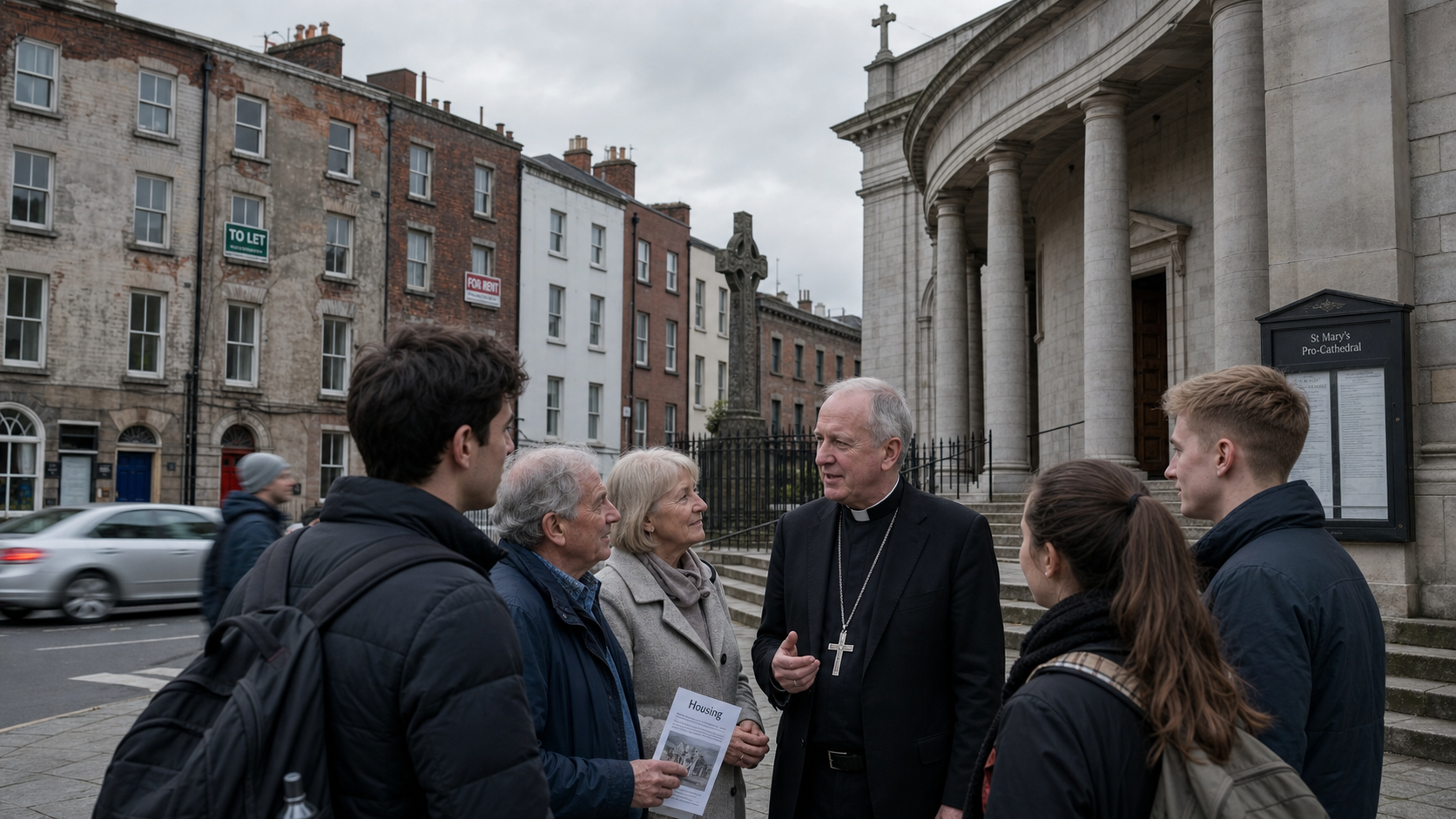
Archbishop of Dublin Dermot Farrell has delivered a pointed and wide-ranging critique of Ireland's housing crisis during a homily at the Grotto in Lourdes, condemning landlords who exploit vulnerable tenants, warning that an entire generation of young people has 'all but given up hope of having a home of their own', and challenging the public to examine their own complicity in a crisis that has been 'normalised to the point where we are no longer exercised about it'.
Background
Archbishop Dermot Farrell has been one of the more outspoken voices in the Irish Catholic hierarchy on social and economic issues since his appointment to the Dublin archdiocese in 2020. His willingness to engage with questions of housing, poverty, and inequality has made him a distinctive figure in Irish public life, and his interventions on these topics have consistently attracted significant attention from both supporters and critics.
The housing crisis in the Republic of Ireland has been one of the defining political and social issues of the past decade. House prices have risen to levels that place homeownership beyond the reach of most young people on average incomes, particularly in Dublin and the other major cities. Rents have followed a similar trajectory, with the average monthly rent in Dublin now exceeding €2,500 for a two-bedroom apartment. The number of people experiencing homelessness has reached record levels, and the waiting lists for social housing have grown to the point where many families face waits of a decade or more.
The Archbishop's remarks were made during the Dublin Diocesan Pilgrimage to Lourdes, which began on 3 September 2026 and included approximately 1,500 pilgrims, among them 250 young people and 122 sick pilgrims. The choice of a pilgrimage setting for such a pointed social commentary was deliberate — Lourdes is a place associated with healing and hope, and the Archbishop's message was framed around the need for a similar healing in Irish society's relationship with housing.
Key Developments
Archbishop Farrell described the housing crisis as an issue that has been "normalised to the point where we are no longer exercised about it" — a formulation that captures the particular danger of a crisis that has persisted for so long that it risks being accepted as an immutable feature of Irish life rather than a political and social failure that can and must be addressed.
He expressed deep concern that an entire generation of young people has "all but given up the hope of having a home of their own," frequently facing the choice between living with parents long into adulthood or emigrating. He condemned landlords who "exploit the desperate by packing them into disgraceful living conditions" and ignoring basic standards while charging high rents, stating that it is "not a law of nature" that requires landlords to extract the highest possible rent from tenants.
Significantly, the Archbishop did not limit his critique to landlords and developers. He challenged the public to consider whether they secretly hope for high property values, whether they provide "silent sympathy" for those who submit planning objections, and whether they prioritise their own interests over the needs of the most vulnerable when voting. This challenge to individual complicity — rather than simply blaming government or the market — was one of the most striking aspects of his intervention.
Why It Matters
The Archbishop's intervention matters because it comes from an institution that has historically been cautious about direct engagement with economic policy debates. The Catholic Church in Ireland has a complex relationship with questions of property and wealth, and the willingness of the Archbishop of Dublin to speak so directly about exploitative landlords and the political choices that perpetuate the housing crisis represents a significant departure from the more measured tone that has characterised much of the hierarchy's public commentary in recent years.
The intervention also matters because it frames the housing crisis in moral rather than purely economic terms. The Archbishop's argument — that the Earth is a "shared inheritance" meant to benefit everyone, and that the current housing situation represents a "gross denial" of the basic right to housing — draws on a tradition of Catholic social teaching that has been less prominent in Irish public discourse than it deserves to be. This framing challenges the tendency to treat housing as primarily a market question rather than a question of justice and human dignity.
For context, the ESRI recently found that Irish house prices are approximately 17% overvalued relative to economic fundamentals, and the government's own housing targets have been consistently missed. The Archbishop's call to "break free of the paralysing grip of the status quo" echoes the frustration of housing advocates who have been making similar arguments for years without achieving the scale of policy change that the crisis demands.
Local Impact
In Dublin, where the housing crisis is most acute, the Archbishop's remarks have resonated strongly. In areas such as Ballymun, Finglas, Clondalkin, and Tallaght — communities that have historically had strong connections to the Catholic Church — the housing crisis is not an abstract policy debate but a daily reality. Young people from these areas who cannot afford to rent independently, let alone buy, are among those the Archbishop had in mind when he spoke of a generation that has given up hope.
The Dublin Diocesan Pilgrimage to Lourdes, which brought 1,500 people from across the archdiocese, includes participants from parishes in every part of the city and county, and the Archbishop's message will be carried back to those communities when the pilgrims return home. Parish priests across Dublin have been encouraged to use the Archbishop's homily as a starting point for community conversations about housing and social justice.
What's Next
The Archbishop's intervention is likely to prompt responses from government ministers and housing advocates in the coming days. The Oireachtas Committee on Housing is expected to note the remarks in the context of its ongoing work on housing policy. The Catholic Social Justice organisation Trócaire has indicated it will use the Archbishop's homily as a resource in its own advocacy work on housing. Budget 2027, due in mid-October, will be the next major test of whether the government is prepared to take the kind of decisive action on housing that the Archbishop and many others are calling for.