AIB Warns Customers as Payment Fraud Cases Surge 59% in July Amid Sophisticated Vishing Attacks
Allied Irish Banks has issued an urgent warning to its customers after recording a 59% increase in payment fraud cases during July 2026, with criminals deploying increasingly sophisticated multi-stage attacks that combine deceptive text messages with follow-up phone calls impersonating bank staff — a pattern that has caught out even financially savvy customers and resulted in significant losses across the country.
Background
Payment fraud has been a growing concern for Irish financial institutions for several years, but the scale and sophistication of the attacks recorded in July 2026 represent a significant escalation. The techniques being deployed — known in the industry as "vishing" (voice phishing) and "smishing" (SMS phishing) — are not new, but the level of personalisation and the multi-stage nature of the attacks have made them considerably more effective than earlier, cruder attempts.
The broader context is one of rapid growth in digital banking. The vast majority of AIB's customers now conduct most of their banking online or through the bank's mobile app, and the volume of digital transactions has increased dramatically over the past five years. This shift has created both opportunities and vulnerabilities: while digital banking offers genuine convenience, it also provides fraudsters with new vectors for attack and a larger pool of potential victims.
AIB is not alone in facing this challenge. Bank of Ireland, Permanent TSB, and a range of credit unions and smaller financial institutions have all reported increases in fraud attempts in recent months. The Banking and Payments Federation Ireland has been working with member institutions and the Garda National Economic Crime Bureau to develop a coordinated response, but the pace of innovation among criminal networks has made it difficult to stay ahead of the threat.
Key Developments
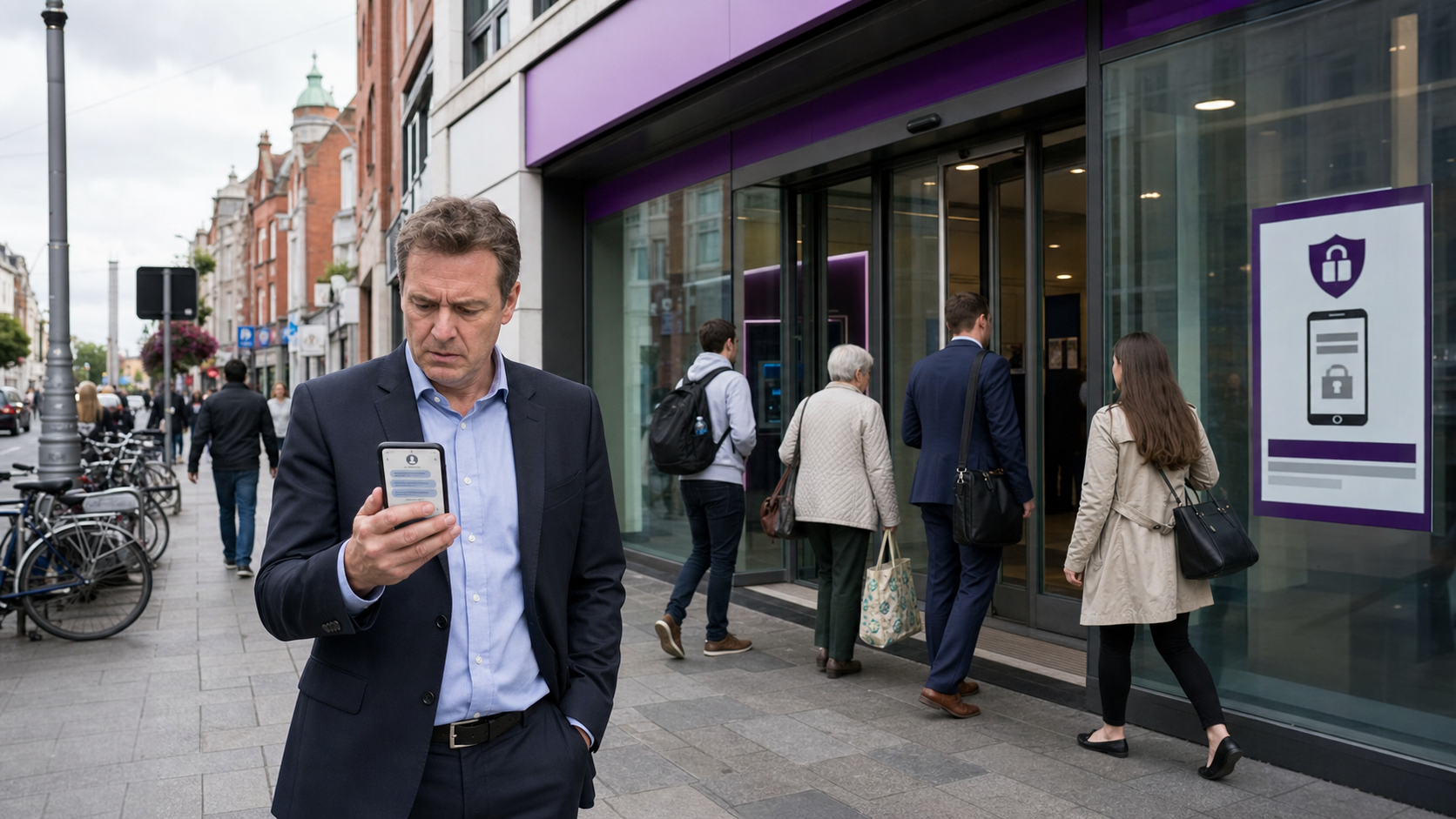
AIB's warning, issued on Friday, describes a typical attack in detail. The victim first receives a text message that appears to come from AIB — often using the same sender ID as genuine bank messages, making it appear in the same thread as legitimate correspondence. The message typically claims that there has been suspicious activity on the account and urges the customer to call a number or click a link. When the customer responds, they are connected to a fraudster posing as a bank security officer, who uses a combination of urgency, technical jargon, and personal information — often obtained from previous data breaches — to convince the victim that their account is under threat.
The fraudster then instructs the victim to take one of several actions: moving funds to a "safe account" (which is in fact controlled by the criminal), sharing one-time security codes or card reader credentials, downloading remote access software that gives the fraudster control of the victim's device, or withdrawing cash for collection by an associate. AIB has confirmed that it will never ask customers to take any of these actions.
The bank is urging customers to adopt a simple rule: "wait a sec, double check." If you receive an unexpected call or message claiming to be from your bank, hang up and call the bank directly using the number on the back of your card or on the official website. Never use a number provided in a suspicious message.
Why It Matters
The 59% increase in payment fraud cases at AIB in a single month is a striking figure that demands attention. For context, the bank processes millions of transactions every month, and even a small percentage increase in fraud attempts translates into a significant number of victims and a substantial financial impact. The human cost of payment fraud extends beyond the financial loss itself: victims frequently report feelings of shame, anxiety, and a loss of trust in digital services that can have lasting effects on their wellbeing. The sophistication of the attacks being described — which exploit the trust that customers place in their bank's communications — makes them particularly insidious. Unlike earlier forms of fraud that relied on obvious deception, these attacks are designed to be plausible and to exploit the psychological pressure of an apparent emergency. The fact that they are succeeding at an increasing rate suggests that public awareness campaigns alone are insufficient and that financial institutions need to invest in more robust technical defences.
Local Impact
The impact of payment fraud is felt across Ireland, from Dublin to rural communities where older residents may be particularly vulnerable to telephone-based attacks. AIB has branches in every county in the Republic, and the fraud surge affects customers regardless of their location. The bank's 24/7 fraud support line — 1800 24 22 27 — has seen a significant increase in calls in recent weeks, and the bank has deployed additional staff to handle the volume. Citizens Information centres and local Garda stations have also reported an increase in queries from members of the public who have received suspicious communications or who believe they may have been targeted. The Garda National Economic Crime Bureau has urged anyone who believes they have been a victim of payment fraud to report the matter immediately, both to their bank and to the Gardaí.
What's Next
AIB has indicated that it is working with telecommunications providers to improve the detection and blocking of fraudulent messages before they reach customers. The bank is also investing in enhanced authentication systems that will make it more difficult for fraudsters to impersonate bank staff in telephone calls. The Banking and Payments Federation Ireland is expected to publish updated guidance for consumers on protecting themselves from payment fraud in the coming weeks. The Garda National Economic Crime Bureau has indicated that several investigations into organised fraud networks are currently active.