Academic Resigns from Leaving Cert Maths Reform Group Over 'Incoherent and Inaccurate' Draft Curricula
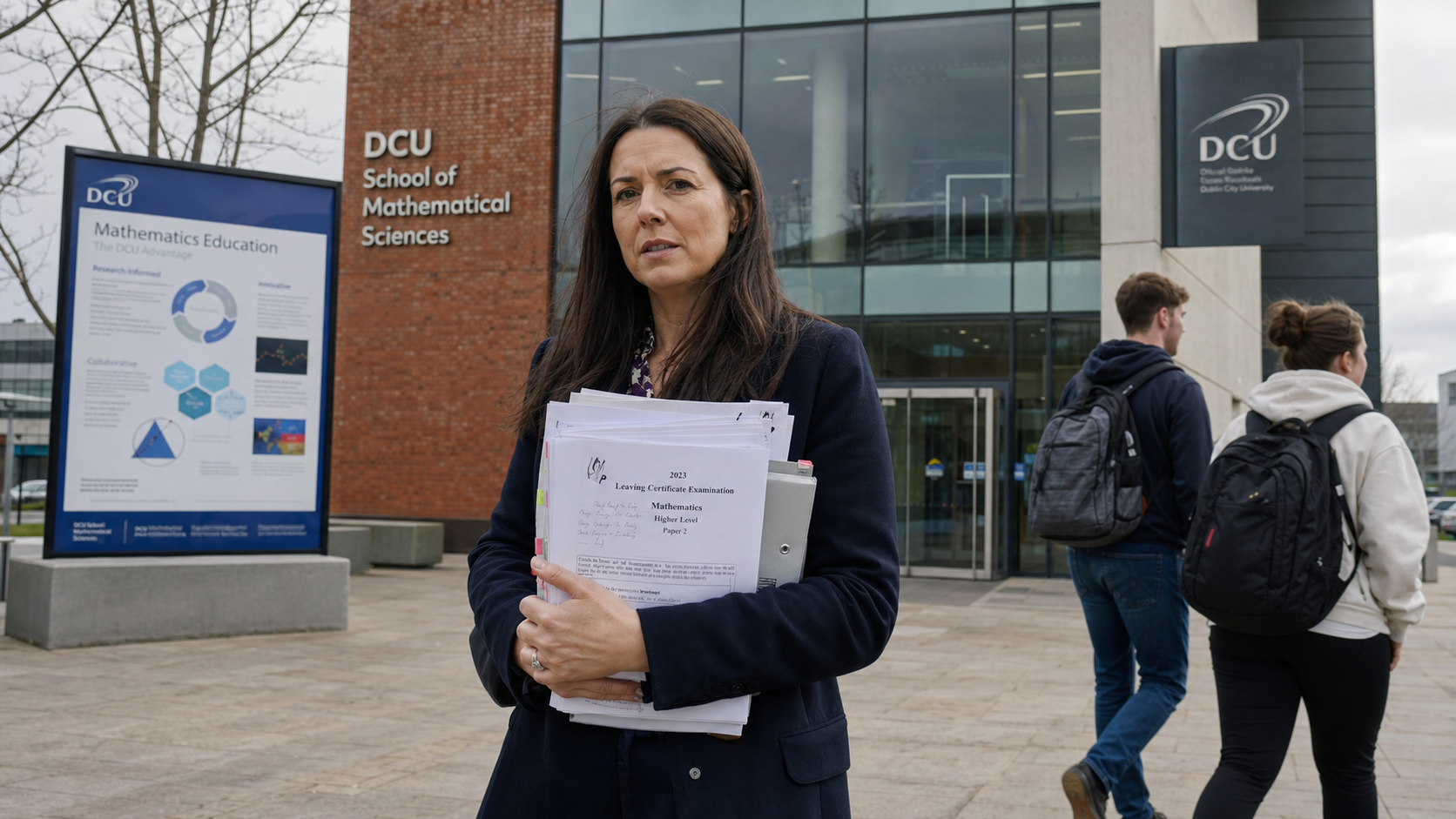
Dr. Aoibhinn Ní Shúilleabháin, an associate professor of mathematics education at Dublin City University, has resigned from the National Council for Curriculum and Assessment's Mathematics Development Group, describing the draft Leaving Certificate maths curricula as "incoherent and mathematically inaccurate" and accusing the NCCA of an opaque process that ignores expert input.
Background
The reform of the Leaving Certificate mathematics curriculum has been one of the most significant and contentious education policy projects in Ireland in recent years. The current Leaving Cert maths course — known as Project Maths — was itself the product of a major reform process that began in the mid-2000s and was fully implemented by 2012. Project Maths was designed to shift the emphasis of mathematics education from rote learning and procedural competence towards conceptual understanding and problem-solving. It was controversial from the outset, with critics arguing that it reduced the rigour of the curriculum and left students ill-prepared for university-level mathematics.
The NCCA's current reform project, which began in earnest in 2024, was intended to address some of the criticisms of Project Maths while also updating the curriculum to reflect the changing demands of a world increasingly shaped by data science, artificial intelligence, and digital technology. The Mathematics Development Group was established to oversee the development of new draft specifications, drawing on the expertise of mathematicians, mathematics educators, teachers, and other stakeholders.
Dr. Ní Shúilleabháin, who joined the group as a subject-matter expert, resigned in June 2026, with her departure becoming a matter of public record in early September 2026. She is the second expert to resign from the group; Professor Pauline Mellon, a former professor at the UCD School of Mathematics and Statistics, resigned in January 2026, citing similar concerns about the process and the quality of the draft specifications.
Key Developments
In a detailed public statement, Dr. Ní Shúilleabháin described the draft curricula as "littered with mathematical errors and inaccuracies" and criticised what she characterised as a reduction in content and abstraction for high-achieving students. She accused the NCCA of operating an "opaque" process in which suggestions and objective corrections provided by members were frequently ignored without explanation.
"I could no longer be associated with work that I believe will do a disservice to our young people," she said. "The draft specifications are not fit for purpose. They fail to prepare students for a data-driven, AI-integrated future, and they contain mathematical errors that should never have made it into a document intended for public consultation."
She also raised systemic concerns about the NCCA's approach to curriculum development, arguing that the organisation does not consistently or formally include subject-matter experts in development groups, leading to an imbalance between pedagogy experts and those with specific subject expertise. "The process is controlled by people who are more interested in pedagogy than in mathematics," she said. "That is a fundamental problem when you are trying to develop a mathematics curriculum."
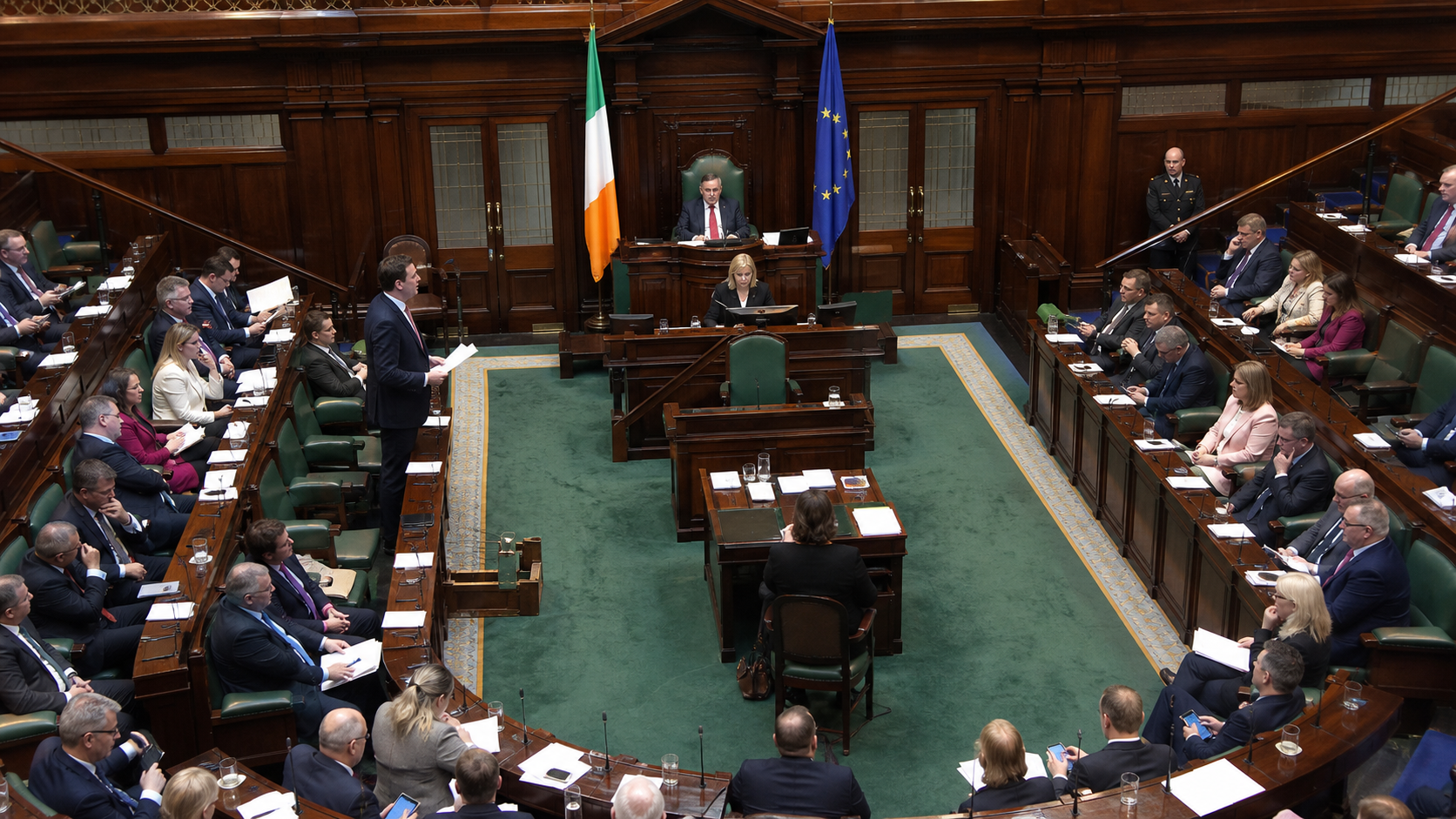
The NCCA defended its process, stating that it strives for accuracy and that expert feedback is considered. The organisation noted that it had engaged an independent mathematician to review the documents prior to their publication. Minister for Education Hildegarde Naughton responded by emphasising that the curricula are in a draft stage and not final, and that the NCCA is currently conducting a three-month public consultation process that allows for significant changes.
Why It Matters
The resignation of two subject-matter experts from the Leaving Cert maths reform group is a serious development that raises fundamental questions about the quality of the curriculum development process in Ireland. The Leaving Certificate is the most consequential examination in the Irish education system, and the mathematics paper is one of its most important components. A curriculum that is "incoherent and mathematically inaccurate" — if that characterisation is accurate — would have consequences for tens of thousands of students every year.
The concerns raised by Dr. Ní Shúilleabháin and Professor Mellon are not isolated. Similar concerns about the exclusion of subject experts and the disregard for feedback have been raised by members involved in the reform of other subjects, including science, where representatives from the Irish University Association have also formally dissociated from final specifications. This pattern suggests a systemic problem with the NCCA's approach to curriculum development that goes beyond any single subject.
The timing of the resignations is also significant. The public consultation on the draft maths specifications is currently under way, and the concerns raised by the two experts will inevitably colour the responses received. If the consultation produces a significant volume of critical feedback, the NCCA will face pressure to make substantial revisions — a process that could delay the implementation of the new curriculum by years.
Local Impact
For students currently in secondary school — particularly those in fifth and sixth year who are preparing for the Leaving Certificate — the uncertainty surrounding the maths curriculum reform is a source of anxiety. Teachers, too, are concerned about the implications of a curriculum that may be significantly revised before it is implemented, requiring them to adapt their teaching approaches at short notice.
In schools across Dublin, Cork, Galway, and every county in Ireland, maths teachers have been following the reform process with a mixture of interest and apprehension. Many have welcomed the principle of updating the curriculum to reflect the demands of the modern world, but they share the concerns raised by Dr. Ní Shúilleabháin about the quality of the draft specifications. The Irish Mathematics Teachers' Association has called for a more transparent and inclusive process that gives classroom teachers a meaningful voice in the development of the curriculum.
What's Next
The NCCA's public consultation on the draft Leaving Certificate maths specifications is expected to close in November 2026. The organisation will then review the feedback received and produce revised specifications, which will be subject to a further period of review before being finalised. The timeline for implementation of the new curriculum has not been confirmed, but it is unlikely to be before the 2028-29 academic year at the earliest. In the meantime, the NCCA has indicated that it will engage with the concerns raised by Dr. Ní Shúilleabháin and Professor Mellon as part of the consultation process.