Aaron Rowe and Beoga Quit Ed Sheeran's US Tour in Solidarity After Macklemore Dropped Over Palestine Remarks
Irish acts Aaron Rowe and the Antrim-based traditional music band Beoga have withdrawn from Ed Sheeran's US "Loop" tour in protest after rapper Macklemore was dropped from the tour following his pro-Palestinian remarks at a concert in New Jersey, with both acts citing their Irish heritage and history with colonisation as the motivation for a decision that has drawn significant attention on both sides of the Atlantic.
Background
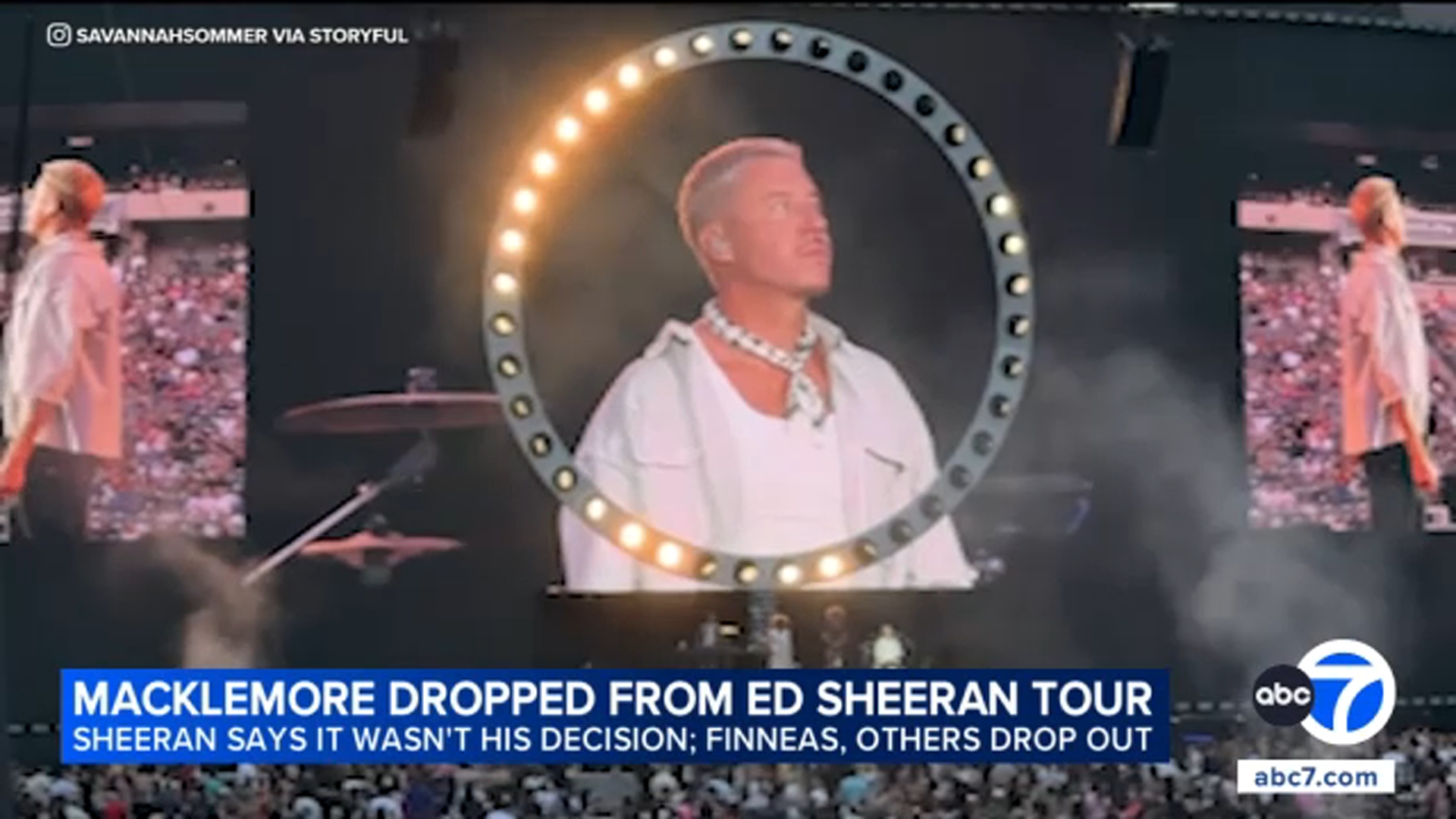
The controversy began on 4 September 2026, when Macklemore — the Seattle rapper Benjamin Hammond Haggerty — expressed support for Palestine during a concert at MetLife Stadium in New Jersey, where he performed his protest song "Hind's Hall" and declared "Free Palestine" from the stage. The remarks prompted a petition calling for his removal from the tour, and reports subsequently emerged that Robert Kraft, the owner of the New England Patriots and the Gillette Stadium venue, had contacted the tour's promoter to demand Macklemore's removal, citing what he described as a "broader history of antisemitic rhetoric and imagery."
Macklemore was subsequently dropped from the tour, a decision that prompted a wave of reaction from other artists on the bill. Aaron Rowe, a Dublin-born singer-songwriter who had been building a significant following in the United States, and Beoga, the Antrim-based traditional music group whose collaboration with Ed Sheeran on the song "Galway Girl" brought them to international attention, both announced their withdrawal from the tour in the days that followed.
Beoga, whose members are from County Antrim and who have been one of the most successful traditional Irish music acts of their generation, noted in their statement that they are founding members of the "Irish Artists for Palestine" movement, a collective of Irish musicians who have been vocal in their support for Palestinian rights. The band cited their Irish heritage and their understanding of colonisation as the foundation of their solidarity with the Palestinian cause.
Key Developments
Aaron Rowe and Beoga were joined in their withdrawal by Finneas — the brother and collaborator of Billie Eilish — and the Danish band Lukas Graham, making it a significant collective departure from one of the most commercially successful tours of the year. Finneas stated that artists "must not be silenced when they speak up for the oppressed," while Lukas Graham emphasised that money should not determine who is allowed to speak or which suffering is acknowledged.
Ed Sheeran addressed the situation on 15 September, stating that the decision to remove Macklemore was made by the tour's promoters rather than himself. He noted that he had attempted to "build a bridge" with the venues but that the decision was final. Sheeran maintained that he prefers to keep his tour as a neutral space, stating: "I choose to use my fame and platform to be a place of safety and sanctuary, to maintain diplomacy and keep conversations open, not closed."
The response to Sheeran's statement has been mixed, with some commentators arguing that his position is a reasonable attempt to maintain the commercial viability of a major tour, and others suggesting that neutrality in the face of injustice is itself a political position. The Irish acts' withdrawal has been widely discussed in Ireland, where the Palestinian cause has significant public support and where the historical parallels drawn by Beoga between Irish and Palestinian experiences of colonisation resonate strongly.
Why It Matters
The controversy around the Ed Sheeran tour is part of a broader debate about the relationship between art, commerce, and political speech that has been playing out across the entertainment industry for the past several years. The question of whether artists have an obligation to speak out on political issues — and whether they can be silenced by commercial pressure when they do — is one that goes to the heart of the role of culture in public life. For Irish artists specifically, the decision by Rowe and Beoga to withdraw from a commercially significant tour at significant personal cost is a statement about the values they believe should govern their professional lives. The reference to Irish history and colonisation is not merely rhetorical: it reflects a genuine and deeply felt sense of solidarity that has deep roots in Irish political culture and that has been expressed by Irish artists and activists in relation to Palestine for many decades.
Local Impact
In Ireland, the withdrawal of Rowe and Beoga from the Sheeran tour has been widely reported and broadly supported. The "Irish Artists for Palestine" movement, of which Beoga are founding members, has been growing in recent years, and the tour controversy has given it a new level of visibility. In County Antrim, where Beoga are based, the band's decision has been welcomed by supporters who see it as consistent with the values the group has expressed throughout their career. The controversy has also reignited debate about the relationship between Irish traditional music and political activism, a relationship that has a long and complex history stretching back to the folk revival of the 1960s and 1970s. For Aaron Rowe, who was building significant momentum in the US market, the withdrawal represents a significant commercial sacrifice, and his decision has been widely praised by Irish music industry figures.
What's Next
Both Aaron Rowe and Beoga are expected to continue their touring and recording activities independently of the Sheeran tour. Beoga has indicated that it will use the time freed up by the withdrawal to focus on new material and on performances in Ireland and Europe. Aaron Rowe is expected to announce alternative US tour dates in the coming weeks. The "Irish Artists for Palestine" movement has indicated that it will continue to advocate for Palestinian rights within the Irish music industry and beyond. Ed Sheeran's "Loop" tour continues in the United States, with the remaining dates expected to proceed as planned.