248 Unreported US Military Flights Over Ireland Spark Fresh Neutrality Debate
The Irish government is facing its most serious challenge to its neutrality policy in decades after it emerged that 248 US military flights over Irish territory went unreported — a disclosure that has reignited fierce debate about what Irish neutrality actually means in practice and whether it is being quietly abandoned.
The revelation, first reported by The Irish Times in April 2026, found that the Department of Foreign Affairs had failed to log the flights on its public website since September 2025, attributing the discrepancy to an "administrative error." The admission came at a particularly sensitive moment, with US military activity over Irish airspace surging by 56% in March 2026 alone — coinciding with American strikes on Iran — and the number of US troops transiting through Shannon Airport rising by 79% in the same period.
Background
Ireland's policy of military neutrality is one of the most cherished and contested aspects of its national identity. Though not explicitly enshrined in the 1937 constitution, neutrality has been a cornerstone of Irish foreign policy since the Second World War, when Taoiseach Éamon de Valera maintained official non-belligerence — a stance that was, in practice, considerably more nuanced, with covert cooperation extended to the Allied powers including the sharing of weather intelligence for the Normandy landings.
In the post-war era, Ireland declined NATO membership, citing the unresolved partition of the island, and instead built its international reputation on United Nations peacekeeping, human rights advocacy, and disarmament. A key safeguard of this tradition has been the "Triple Lock" mechanism, which requires that any overseas deployment of more than twelve Irish troops must secure a UN Security Council or General Assembly resolution, as well as approval from both the Irish Government and Dáil Éireann.
Under a 1959 bilateral agreement, US military aircraft are permitted to transit Irish airspace provided they are unarmed and not engaged in active military operations. Irish authorities do not typically inspect the aircraft, and the Department of Foreign Affairs is responsible for publishing data on such overflights — a responsibility it demonstrably failed to fulfil for the better part of a year.
Key Developments
The corrected figures revealed that 248 US military flights — including military transports, troop carriers, and surveillance aircraft — had passed through Irish airspace between summer 2025 and April 2026 without being properly recorded. Taoiseach Micheál Martin acknowledged the failure was "not normal" for the Department of Foreign Affairs but insisted it was a "stretch by any yardstick" to suggest the government was actively facilitating war.
The response from opposition parties was considerably less sanguine. Patricia Stephenson of the Social Democrats described the underreporting as "deeply concerning," while Paul Murphy of People Before Profit argued it raised fundamental questions about governance and public trust. Critics noted that Spain and Switzerland both closed their airspace to US military aircraft involved in the Iran conflict — a step Minister for Foreign Affairs Helen McEntee declined to take.
The incident has also intensified scrutiny of the government's 2025 proposal to amend the Triple Lock by removing the requirement for UN Security Council approval for troop deployments. Opponents, including President-elect Catherine Connolly, see it as a step towards aligning Ireland with EU and NATO military objectives and effectively ending neutrality as it has been understood.
Why It Matters
For the vast majority of Irish citizens — surveys consistently put support for neutrality at between 75% and 80% — this is not an abstract policy debate. Neutrality is bound up with questions of sovereignty, independence, and national identity that stretch back to the foundation of the state. The perception that the government is allowing Irish airspace to be used for military purposes without proper oversight strikes at the heart of that identity.
There are also hard strategic questions at stake. Ireland currently allocates just 0.24% of its GDP to defence and relies on the UK's Royal Air Force to police its own airspace — an arrangement that sits uneasily alongside any claim to meaningful military independence. Meanwhile, Ireland has contributed approximately €350 million to the European Peace Facility. The gap between the rhetoric of neutrality and the reality of Ireland's defence posture has never been wider.
Local Impact
In Northern Ireland and across the island, the debate resonates with particular intensity. Shannon Airport's role as a transit hub for US military personnel has long been a source of controversy on both sides of the border, with peace campaigners arguing that it makes Ireland complicit in American military operations regardless of official neutrality declarations. The 79% surge in US troops transiting through Shannon in March 2026 has given fresh urgency to those concerns. For communities in the Republic with strong traditions of anti-militarism, and for those in the North who have lived through the consequences of armed conflict, the question of whether Ireland is drifting towards a more militarised foreign policy carries genuine emotional and political weight.
What's Next
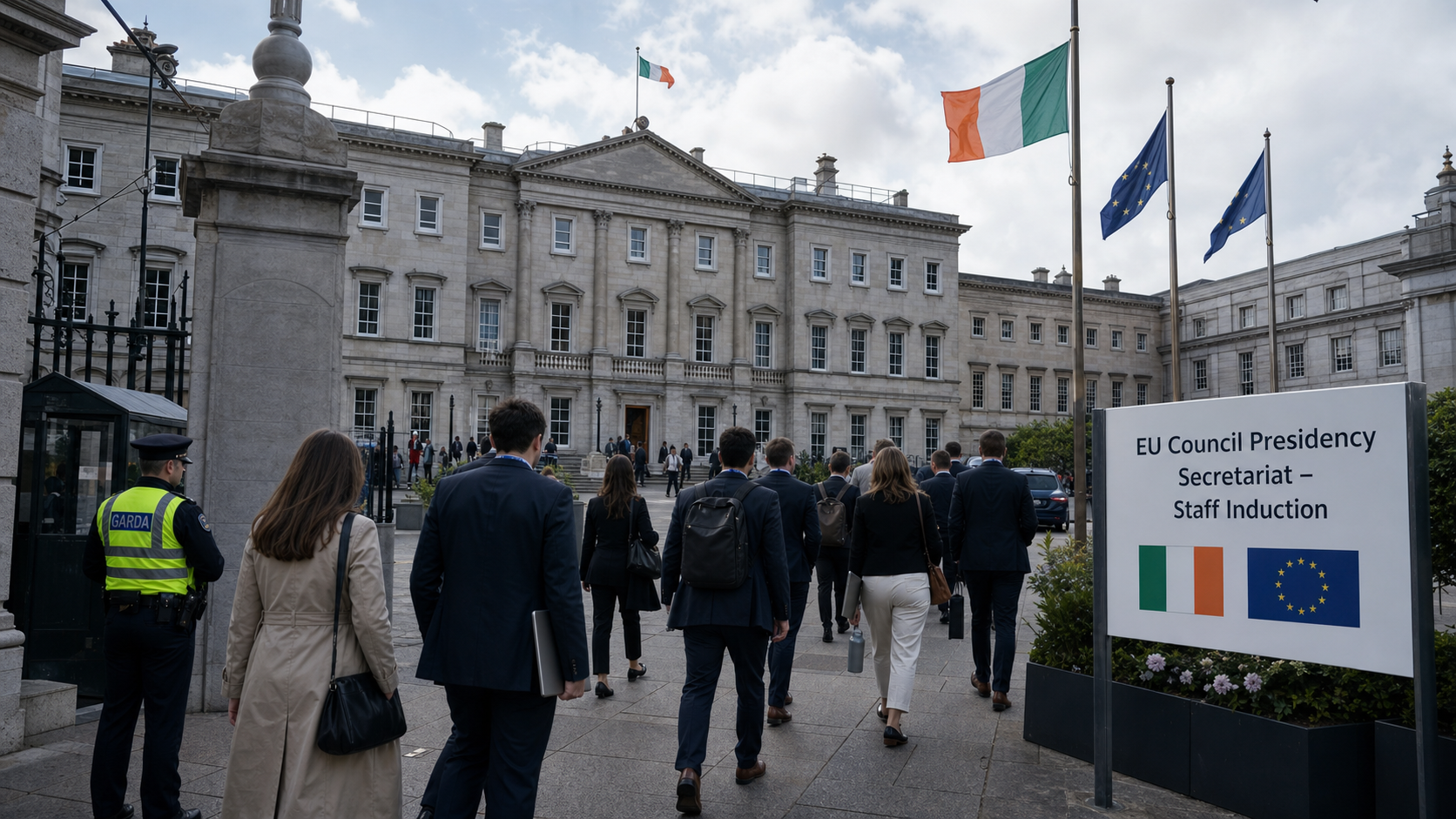
The government faces sustained pressure in the Dáil to provide a full account of the unreported flights and to commission an independent audit of military flight permissions over Irish territory. The debate over the Triple Lock amendment is expected to intensify in the coming months, with Ireland due to assume the EU Council Presidency in late 2026 — a role that will place its foreign and defence policy positions under unprecedented international scrutiny. How the government navigates the tension between its stated commitment to neutrality and the realities of its deepening integration into Western defence structures will define Irish foreign policy for a generation.
For further reading, see The Irish Times investigation into the unreported flights and The Irish Times report on Shannon Airport troop numbers.