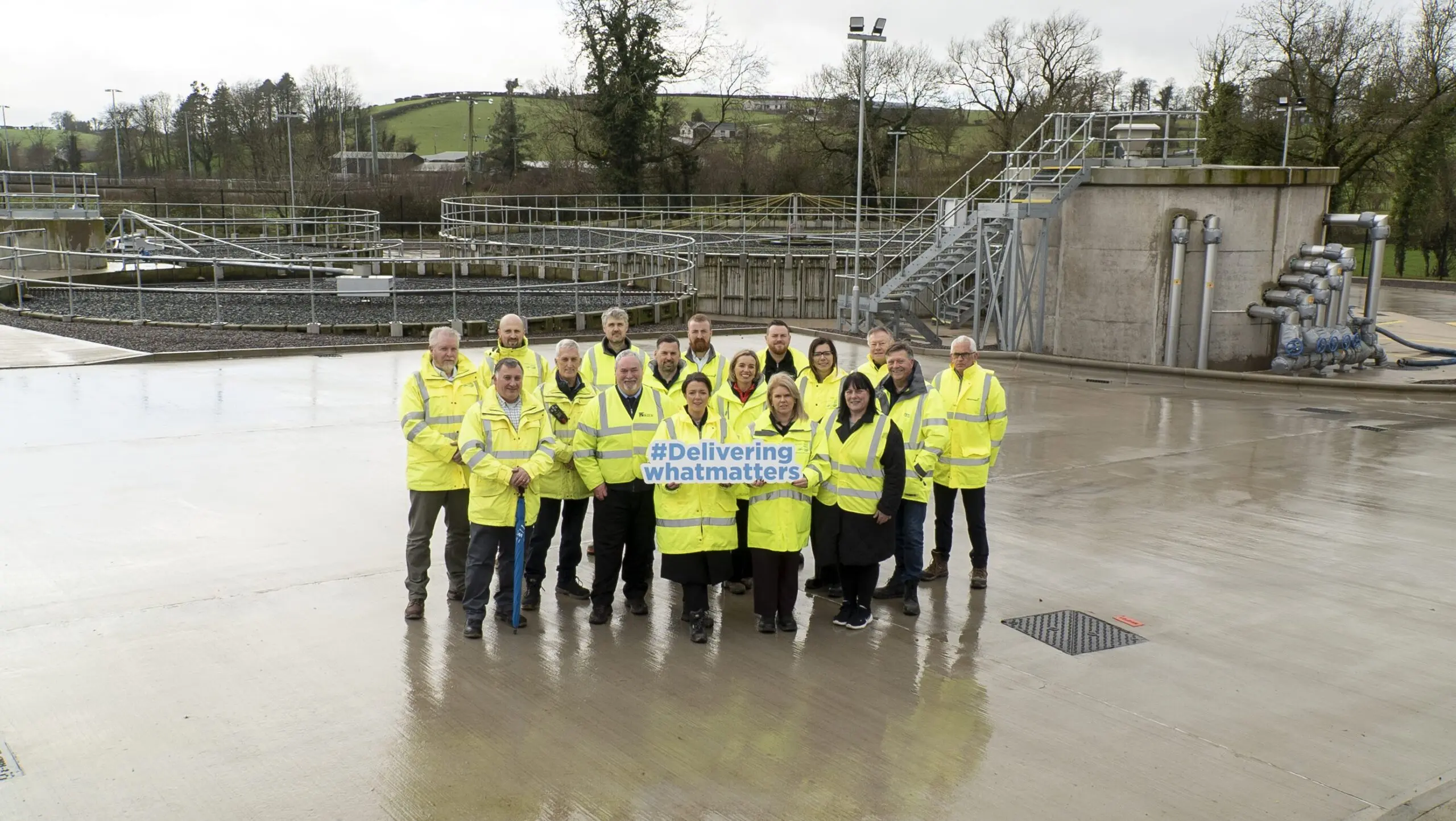
NI's Wastewater Crisis Is Blocking Thousands of Homes and Stalling Economic Growth, Industry Warns
Business and construction leaders in Northern Ireland have issued an urgent warning that the region's chronically underfunded wastewater infrastructure is acting as a direct brake on economic development, preventing the approval of thousands of new homes and stalling commercial development projects across the province. Industry bodies including the Construction Employers Federation and the Northern Ireland Chamber of Commerce are calling for immediate and substantial investment from the Stormont Executive to upgrade the network, arguing that without it, the region's targets for housing delivery and economic growth are simply unachievable.
Background
Northern Ireland's wastewater infrastructure — the network of sewers, pumping stations, and treatment works that manages the region's sewage — is managed by NI Water, a government-owned company that operates under a regulatory framework set by the Utility Regulator. The infrastructure has been chronically underfunded for decades, with investment levels consistently falling short of what is needed to maintain the existing network, let alone expand it to meet the demands of a growing population and economy.
The consequences of this underinvestment are now becoming acute. In many parts of Northern Ireland, the wastewater network has reached or exceeded its capacity, meaning that new development — whether residential or commercial — cannot be connected to the system without exceeding its treatment capacity. Planning authorities are therefore unable to approve new development in these areas, regardless of the merits of individual applications, because the infrastructure to support it does not exist.
The problem is not confined to any single area of Northern Ireland. It affects urban areas, where population growth and commercial development are placing increasing demands on the network, and rural areas, where the infrastructure has never been adequate to support the level of development that communities need. The result is a planning system that is, in many parts of the province, effectively paralysed by infrastructure constraints.
Key Developments
The Construction Employers Federation has described the wastewater infrastructure crisis as an "urgent brake" on economic development, a formulation that captures both the severity of the problem and the urgency of the need for action. The Federation's analysis suggests that thousands of planning applications for new homes and commercial developments are being held up or refused because of wastewater capacity constraints, with the backlog growing as the gap between infrastructure capacity and development demand widens.
A representative from the Construction Employers Federation was blunt in his assessment: "We are in a ludicrous situation where viable projects that would create jobs and homes are being blocked not by a lack of demand, but by a lack of pipes in the ground." The comment captures the frustration of an industry that sees genuine economic opportunity being lost because of a failure of public investment.
Industry bodies are calling for the Stormont Executive to make a significant and sustained investment in wastewater infrastructure as a matter of urgency. They argue that the current level of investment — which is determined by the regulatory price control process — is inadequate to address the backlog of infrastructure deficits, and that a special programme of accelerated investment is needed to unlock the development that Northern Ireland's economy requires.
Why It Matters
The wastewater infrastructure crisis matters because it is a concrete, practical obstacle to Northern Ireland's economic development that is entirely within the power of government to address. Unlike some of the structural challenges facing the Northern Ireland economy — the legacy of the Troubles, the skills deficit, the trade frictions associated with the Windsor Framework — the wastewater problem is a straightforward infrastructure deficit that can be resolved with sufficient investment.
The housing dimension is particularly significant. Northern Ireland, like the Republic of Ireland, is experiencing a housing crisis, with demand for new homes significantly exceeding supply. The wastewater infrastructure constraint is one of the factors preventing the construction industry from meeting that demand, and addressing it would have an immediate and tangible impact on housing delivery. Every planning application that is refused or delayed because of wastewater capacity constraints represents a family that cannot get the home it needs.
The economic development dimension is equally important. Commercial development — offices, factories, logistics facilities — also requires wastewater infrastructure, and the inability to connect new commercial developments to the network is deterring investment and limiting the growth of Northern Ireland's economy. In a competitive environment where businesses have many choices about where to locate, infrastructure constraints are a significant disadvantage.
Local Impact
The impact of the wastewater infrastructure crisis is felt across Northern Ireland, but it is particularly acute in areas where development pressure is highest. In the greater Belfast area, where population growth and commercial development are most intense, the constraints on the wastewater network are a significant obstacle to the delivery of new homes and commercial space. In towns like Antrim, Ballymena, and Newry, where there is genuine demand for new development, the infrastructure constraints are preventing that demand from being met.
NI Water has acknowledged the scale of the problem and has been working with the Utility Regulator and the Department for Infrastructure to develop a plan for addressing the infrastructure deficit. However, the pace of progress has been slow, and the industry's patience is running out. The call for a special programme of accelerated investment reflects a recognition that the normal regulatory process is not moving quickly enough to address the urgency of the situation.
What's Next
The Stormont Executive's Infrastructure Committee is expected to hold hearings on the wastewater infrastructure crisis in the coming weeks, with NI Water, the Utility Regulator, and industry representatives all expected to give evidence. The Department for Infrastructure is expected to publish a plan for addressing the infrastructure deficit before the end of 2026, with the aim of unlocking the development that Northern Ireland's economy needs. The industry has indicated that it will continue to press for urgent action if the government's response is not adequate.