US Imposes Naval Blockade on Strait of Hormuz as Iran Rejects Peace Talks and Tensions Escalate
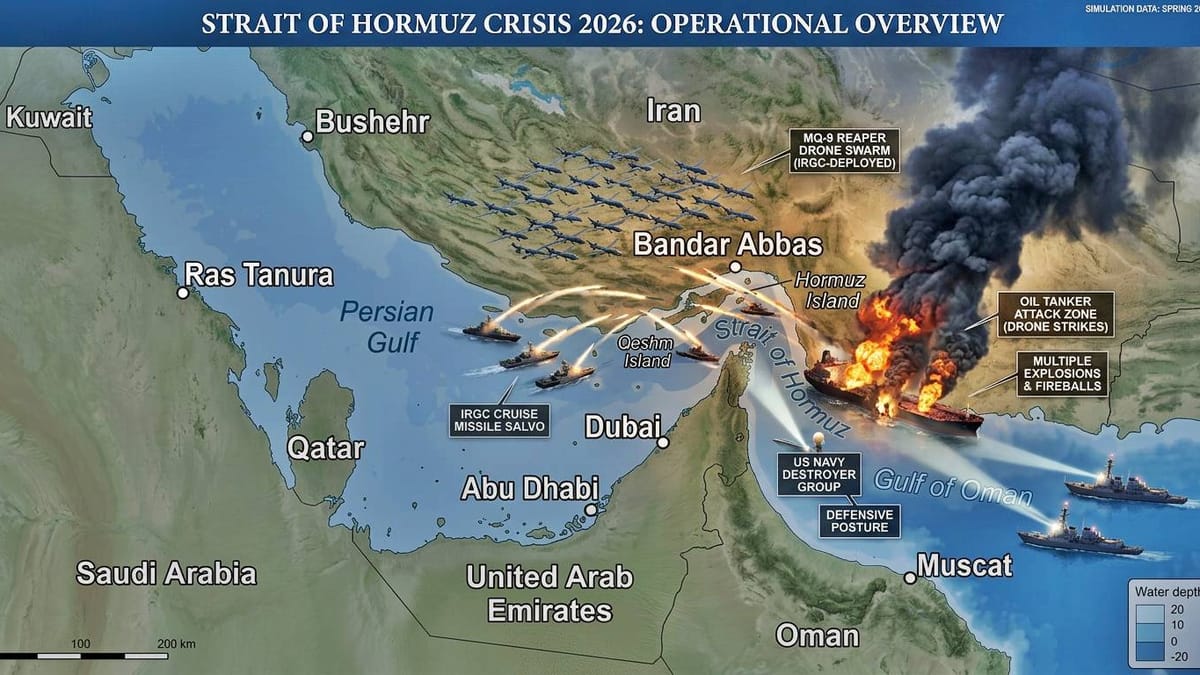
The United States has imposed a full naval blockade on the Strait of Hormuz, a critical artery for global oil supplies, dramatically escalating the standoff with Iran. In a stark warning from the White House, President Trump stated the blockade could last for "months or even longer" and urged the Iranian leadership to "get smart soon" and accept a new nuclear deal. The move came just hours after Iran flatly rejected a new round of peace talks, with its Parliament Speaker declaring the nation would not negotiate under threat and was prepared to reveal "new cards" in the conflict.
Background
Tensions in the Gulf have been simmering for months, reaching boiling point in recent weeks. The current crisis is rooted in the ongoing dispute over Iran's nuclear programme and its regional influence. The United States has been pushing for a new, more restrictive deal to replace the previous JCPOA agreement, a demand Tehran has consistently refused. The situation deteriorated rapidly after a series of tit-for-tat military actions, culminating in Iran's threat to close the Strait of Hormuz, through which a fifth of the world's oil consumption passes. The international community has watched with growing alarm, with many world leaders, including French President Emmanuel Macron, making repeated calls for de-escalation and dialogue.
The announcement of the blockade represents the most aggressive military and economic action taken by the Trump administration against Iran to date. It is a high-stakes gamble designed to cripple the Iranian economy and force its leaders to the negotiating table. However, it risks provoking a direct military confrontation that could have catastrophic consequences for the region and the global economy. The administration's diplomatic efforts have run in parallel to its military posturing, with Vice President JD Vance scheduled to travel to Islamabad, Pakistan, in an attempt to open a backchannel for communication, a move Iran has now publicly scorned.
Key Developments
The blockade was enforced immediately, with US naval assets in the region, part of the Fifth Fleet, beginning to halt and inspect commercial vessels. In the first confirmed action, the Pentagon reported that US military forces had boarded a commercial ship suspected of attempting to evade the blockade under a false flag. The operation was reportedly conducted without resistance. In his televised address, President Trump was uncompromising. "We will not allow Iran to hold the world economy hostage," he said. "This blockade is tight, and it will remain in place until Iran's leaders come to their senses."
Iran's response was swift and defiant. Hours after the President's speech, Parliament Speaker Mohammad-Bagher Ghalibaf addressed the Majles in Tehran. "The great nation of Iran will not negotiate under the shadow of a sword," he declared to applause. "The enemy thinks they can break our will with pressure and threats. They are mistaken. We have new cards to reveal at the appropriate time." This rhetoric, extensively covered by regional media including The Jerusalem Post, effectively slammed the door on the US diplomatic overture. Meanwhile, the economic impact was immediate, with Brent crude oil prices surging to a four-year high on global markets. In Washington, former defense chief Pete Hegseth faced a gruelling six-hour grilling in a closed session of Congress over the administration's strategy. President Trump also refuted claims that pressure from Israel had influenced his decision. As reported by NewsNation, the blockade has sent shockwaves through global energy markets.
Why It Matters
The imposition of a naval blockade is an act of war under international law. While the US is framing it as a quarantine or interdiction effort, the practical effect is the same: a military strangulation of Iran's economy. This action pushes the Middle East to the brink of a major conflict, one that would dwarf previous wars in the region in its scope and impact. The potential for miscalculation is immense. A single incident — a ship refusing to stop, an exchange of fire between naval vessels — could spiral into a full-blown war, drawing in regional powers and causing chaos in global energy markets. The stability of the entire global economy is now at risk. The crisis also represents a defining moment for the Trump presidency's foreign policy. The administration's "maximum pressure" campaign has now reached its zenith. If the gamble pays off and Iran capitulates, it will be hailed as a masterstroke. If it fails and leads to war, it will be condemned as a catastrophic misjudgement. For the UK and Ireland, the surge in energy prices is already feeding directly into inflation, compounding the domestic economic difficulties both countries face.
Local Impact
For the people of Iran, the blockade will have a devastating immediate impact. It will halt the export of oil, the country's primary source of revenue, and severely restrict the import of goods, including essential medicines and food. This will exacerbate an already dire economic situation, leading to hyperinflation, shortages, and widespread public suffering. While the US administration claims the measures are targeted at the regime, it is the ordinary Iranian population that will bear the brunt of the consequences. For the UK and Ireland, the surge in oil prices is already feeding directly into petrol prices and energy bills, adding to the cost-of-living pressures that are already straining household budgets across both nations.
What's Next
The world now holds its breath. The key question is how Iran will respond militarily. It could attempt to challenge the blockade directly with its naval forces, use its proxy militias to attack US interests in the region, or launch missile strikes against US allies. The United States and its allies are on maximum alert for any such retaliation. Diplomatically, the focus will be on third-party mediators, such as Pakistan, Oman, or European nations, to try and find an off-ramp to the crisis. The United Nations Security Council is expected to convene an emergency session, but a resolution is unlikely given the certainty of a US veto. The coming days will be critical in determining whether the Gulf tips over the edge into a devastating war.