UPDATE: BBC NI Defends Decision to Exclude Public from Titanic Drone Spectacular — Latest Developments
BBC Northern Ireland has defended its decision not to inform the public about the filming of a 950-drone recreation of the RMS Titanic in Belfast Harbour on 30 March 2026, citing safety and security concerns — while Alliance MLA Peter McReynolds and the Belfast Titanic Society have acknowledged widespread public disappointment and called for future events to be open to the community.
Background
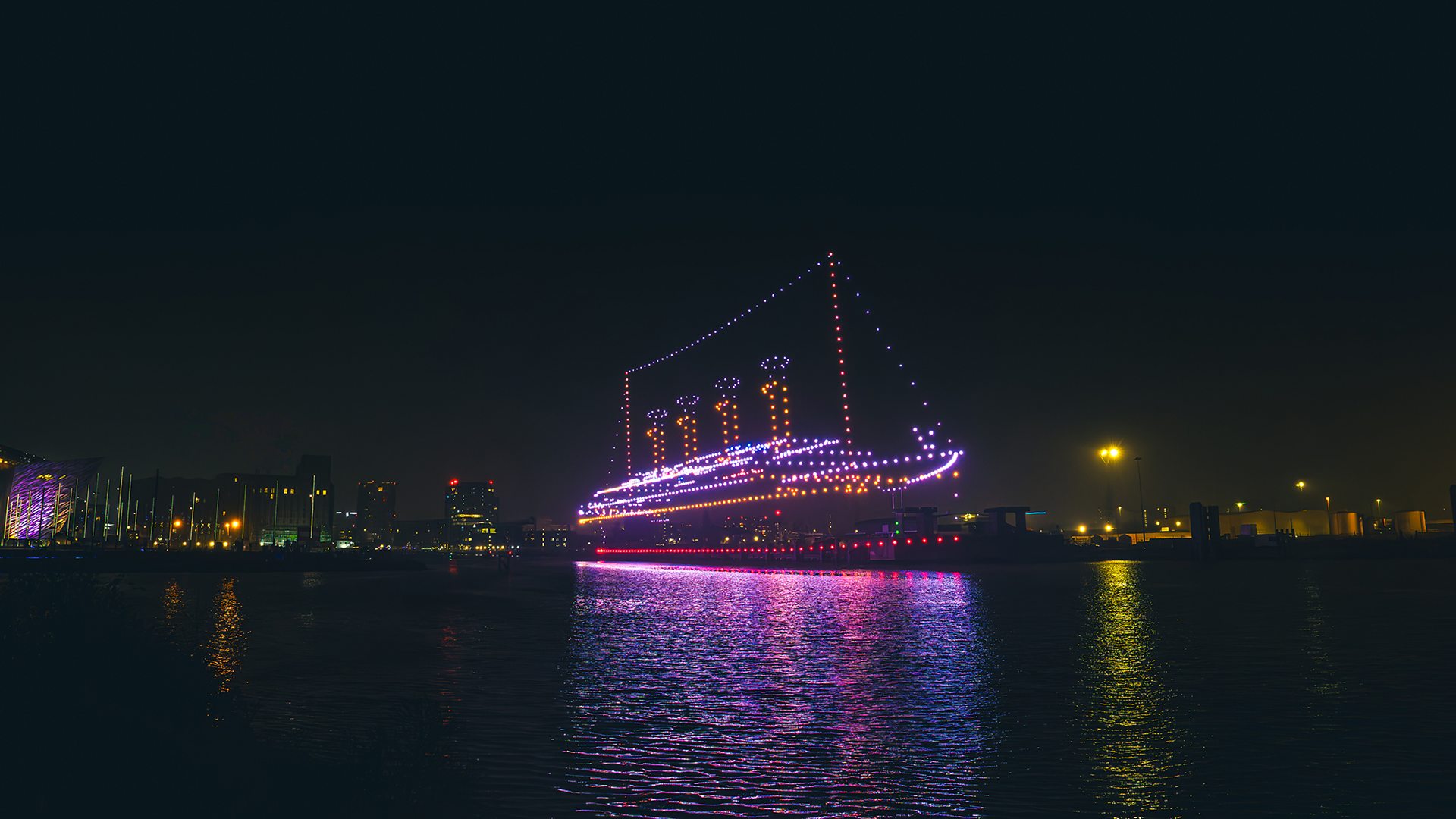
The drone display, which formed part of the BBC's "Made Of Here" campaign celebrating creative talent across the UK, saw 950 drones choreographed to form a full-scale silhouette of the RMS Titanic over Belfast Harbour — earning the spectacle the nickname "Ghost Ship." The footage was broadcast on BBC One and BBC Two Northern Ireland on Thursday, 2 April 2026, timed to coincide with the 114th anniversary of the Titanic's departure from Belfast in 1912.
The event was a remarkable technical achievement, requiring precise coordination and flight planning to create a recognisable, full-scale representation of the iconic ship at night, over water, for a film crew. The drones also formed animated text, including the phrases "TITANIC SINKS TONIGHT" and "MADE OF HERE," adding a dramatic narrative dimension to the display. The footage was widely praised as "hauntingly beautiful" when it was broadcast and shared across social media platforms.
However, the decision to keep the event entirely secret from the public — with only a small number of invited guests, including Belfast Titanic Society chair Aidan McMichael, permitted to attend — generated significant controversy. Many Belfast residents, including those living near the harbour, learned of the event only after it had taken place, through social media and news reports. The sense of exclusion was palpable and immediate.
Key Developments
BBC Northern Ireland defended its decision by citing safety and security concerns, with a spokesperson stating that publicising the event would have made it unfeasible to film. The corporation argued that the presence of a large crowd would have posed risks to both the public and the filming process, and that the primary purpose of the event was to create a promotional video for the "Made Of Here" campaign.
Alliance MLA for East Belfast, Peter McReynolds, described the drone display as "fantastic" and an "amazing" use of innovative technology to celebrate Belfast's history. However, he also voiced the public's disappointment, characterising the lack of public access as a "missed opportunity" and expressing his hope that future events of a similar nature would be open to the community, with adequate notice and promotion.
Aidan McMichael, chair of the Belfast Titanic Society, who was among the small group of invited guests, echoed a similar sentiment. He acknowledged the public's disappointment but expressed understanding of the practical reasons behind the BBC's decision, suggesting that a large crowd could have interfered with the filming. McMichael praised the "truly stunning" footage and its potential to showcase Belfast and the Titanic story to a global audience, while also hoping for a similar, public-facing event in the future.
Why It Matters
The controversy surrounding the BBC NI drone display touches on fundamental questions about public ownership of civic heritage and the responsibilities of public broadcasters to the communities they serve. The Titanic is not merely a historical artefact — it is the defining symbol of Belfast's industrial heritage, a source of immense civic pride, and a story that belongs to the people of this city in a very real sense. When a spectacular tribute to that heritage is staged in the heart of Belfast Harbour without public knowledge or involvement, it is understandable that residents feel excluded from something that is rightfully theirs.
The BBC's safety justification, while not without merit, has not satisfied many in Belfast who believe that a solution could have been found to allow for some degree of public participation. The episode raises broader questions about how public institutions engage with communities when planning events of significant civic importance, and whether safety concerns should always take precedence over public access to shared cultural moments.
Local Impact
For Belfast, a city that has invested enormously in its Titanic heritage — from the world-class Titanic Belfast visitor attraction to the ongoing development of the Titanic Quarter — the drone display was both a triumph and a missed opportunity. The footage has undoubtedly raised the city's profile internationally, and the "Made Of Here" campaign has shone a spotlight on Northern Ireland's creative talent. But the failure to involve the public in a moment of such significance has left a sour note that will linger. Calls for a future, publicly accessible drone display or similar event are already growing, and the BBC would do well to heed them.
What's Next
BBC Northern Ireland has indicated that it will reflect on the public response to the drone display and consider how future events of a similar nature might be handled differently. Peter McReynolds has called for a formal commitment from the BBC to consult with the community before staging similar events in future. The Belfast Titanic Society has expressed its willingness to work with the BBC and other partners to develop a publicly accessible tribute event. Full coverage of the controversy is available via The Irish News and the Belfast Telegraph.