Ukraine Reports 1,820 Ceasefire Violations as Russia Kills 27 in Widespread Attacks Despite Truce Proposal
Ukrainian President Volodymyr Zelenskyy has accused Russia of rejecting a ceasefire proposal through its actions on the ground, reporting 1,820 violations of the proposed truce by the morning of 6 May 2026 — a day on which Russian forces killed at least 27 people in widespread attacks across eastern and southern Ukraine, targeting gas production facilities, residential areas, and industrial sites in a campaign that has drawn renewed international condemnation and underscored the vast gulf between diplomatic rhetoric and military reality.Background
The war in Ukraine, now in its fifth year following Russia's full-scale invasion in February 2022, has entered a phase of attritional warfare in which neither side has been able to achieve decisive military advantage. Russia has made incremental territorial gains in eastern Ukraine, particularly in the Donetsk region, but at enormous cost in personnel and equipment. Ukraine, supported by Western military aid and economic assistance, has maintained its defensive lines and conducted periodic counter-offensive operations, but has been unable to recapture significant territory since the 2022 Kherson offensive.
The diplomatic landscape has shifted significantly in 2026. The change of administration in the United States has brought a different approach to the conflict, with the Trump administration pursuing a more transactional relationship with both Ukraine and Russia. Ukraine has proposed a ceasefire on multiple occasions, seeking to freeze the conflict along current lines while maintaining its territorial claims and securing long-term security guarantees from Western partners. Russia has consistently rejected these proposals, insisting on terms that would effectively legitimise its territorial gains and constrain Ukraine's future military and political alignment.
The humanitarian consequences of the conflict continue to be severe. Millions of Ukrainians remain displaced, both internally and as refugees across Europe. The UK has been one of the largest recipients of Ukrainian refugees, with over 200,000 Ukrainians living in the country under the Homes for Ukraine scheme. Ireland has also welcomed a significant number of Ukrainian refugees, placing considerable pressure on housing and public services.
Key Developments
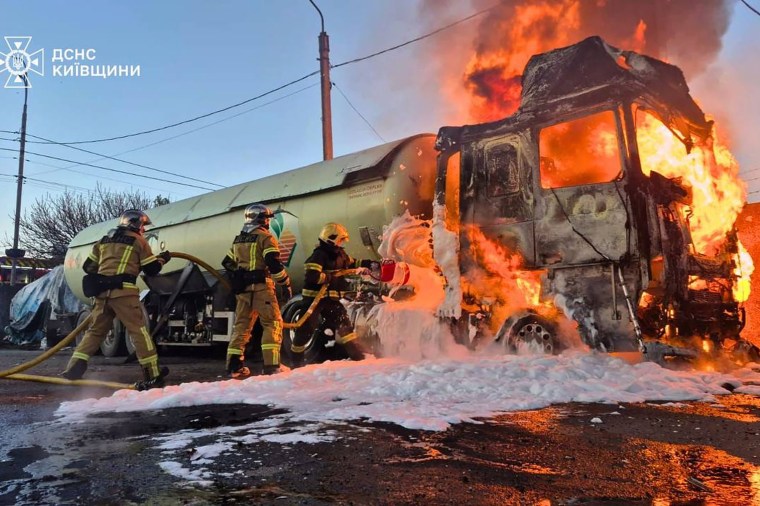
Ukraine proposed a ceasefire to begin on 6 May 2026, but President Zelenskyy reported that Russian forces had committed 1,820 violations of the proposed truce by the morning of that day. The violations included widespread missile and drone attacks across multiple regions of Ukraine. At least 27 people were killed, primarily in eastern Ukraine, with attacks targeting gas production facilities in the Poltava and Kharkiv regions — a deliberate strategy to undermine Ukraine's energy infrastructure ahead of the next winter heating season.
The attacks also targeted residential areas and industrial sites in cities including Zaporizhzhia and Kryvyi Rih, with Russia reportedly deploying over 100 drones and missiles in a single night. The scale and coordination of the attacks suggest a deliberate Russian strategy to demonstrate that it will not accept a ceasefire on Ukraine's terms, and to maximise damage to Ukrainian infrastructure while diplomatic discussions continue.
The attacks came as global attention was focused on the US-Iran peace talks, which had generated optimism about a potential reduction in Middle East tensions. The contrast between the diplomatic progress in one theatre and the continued violence in another underscores the complexity of the current global security environment.
Why It Matters
The continued conflict in Ukraine matters to UK and Irish readers for several reasons. First, the UK remains one of Ukraine's most important military and financial supporters, and the conflict continues to place demands on the UK defence budget at a time of significant fiscal pressure. Second, the presence of over 200,000 Ukrainian refugees in the UK creates ongoing social and economic responsibilities. Third, the conflict continues to contribute to global economic instability — disrupting grain markets, energy supplies, and supply chains in ways that feed through to UK and Irish consumer prices.
The 1,820 ceasefire violations reported by Ukraine in a single day are a stark illustration of the gap between diplomatic aspirations and military reality. Russia's willingness to continue attacking civilian infrastructure while simultaneously engaging in diplomatic discussions reflects a strategy of using military pressure to extract concessions at the negotiating table — a pattern that has characterised Russian foreign policy throughout the conflict.
Local Impact
For the UK and Ireland, the most direct impact of the continued conflict is felt by the Ukrainian refugee communities living in both countries. In Northern Ireland, approximately 3,000 Ukrainian refugees are living under the Homes for Ukraine scheme, with many settled in Belfast, Derry, and the surrounding areas. The continued conflict makes it increasingly unlikely that these families will be able to return home in the near future, placing long-term demands on housing, education, and social services. In the Republic of Ireland, the government has been under pressure to extend and expand its refugee support programmes as the conflict shows no signs of resolution.
What's Next
Ukraine's ceasefire proposal remains on the table, but Russia's response — 1,820 violations in a single day — suggests that a negotiated pause in the fighting is not imminent. The next major diplomatic milestone is a planned meeting between US and Russian officials, the date and venue of which have not yet been confirmed. Readers should watch for: any change in Russia's military posture that might signal a genuine willingness to negotiate; the outcome of the US-Russia diplomatic contacts; and any announcement of additional Western military aid to Ukraine in response to the continued attacks.
Sources: FDD Overnight Brief — May 6 2026; Greeden — World news analysis May 6 2026