UK Cannot Outsource Its AI Future, Warns Tech Sector as Kendall Sets Out Sovereignty Pitch
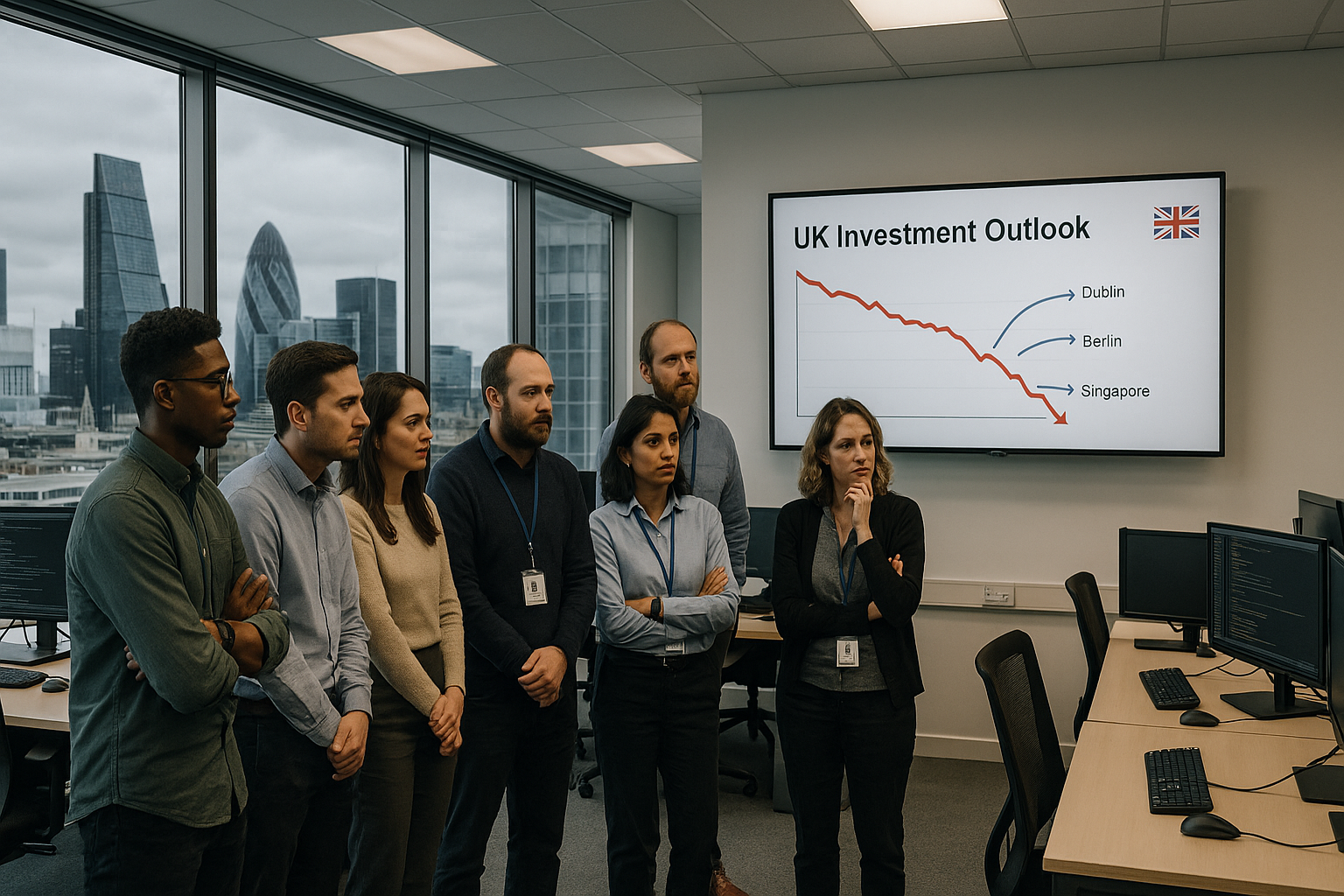
Technology Secretary Liz Kendall has made the case for Britain's AI sovereignty, positioning artificial intelligence as central to the country's economic competitiveness and national security — but her pitch has been met with a stark warning from the European tech sector that without investment in homegrown platforms, the UK risks becoming permanently dependent on technology controlled by Washington or Beijing.Background
The question of AI sovereignty — who controls the foundational models, data infrastructure, and computing power that underpin modern artificial intelligence — has moved from academic debate to urgent policy priority across Europe. The concern is straightforward: if governments, public services, and critical industries rely entirely on AI systems built and controlled by a handful of US or Chinese technology companies, they become vulnerable to supply disruptions, data access demands, and geopolitical leverage.
For the UK, the stakes are particularly high. Britain has positioned itself as a global AI hub, hosting the AI Safety Institute and convening the landmark Bletchley Park AI Safety Summit in 2023. The government has committed significant funding to AI research and infrastructure through UK Research and Innovation (UKRI), and London's tech sector — centred on the so-called "Silicon Roundabout" in Shoreditch — is one of Europe's most dynamic. But critics argue that ambition has outpaced the development of genuinely sovereign capability.
The broader context includes the rapid consolidation of AI power among a small number of US companies — OpenAI, Google DeepMind, Anthropic, and Meta — and growing concerns about the terms on which European governments and businesses access their models. The EU's AI Act, which came into force in 2024, has created a regulatory framework, but the UK, post-Brexit, is developing its own approach through Ofcom and the Digital Markets Unit.
Key Developments
Liz Kendall set out Britain's AI sovereignty pitch on Wednesday, emphasising that AI is not merely a technology question but a matter of economic and national security. She highlighted the government's investment in AI infrastructure, including plans for new data centres and computing capacity, and pointed to the NHS's adoption of AI tools as evidence of public sector leadership.
André Rogaczewski, chief executive of Danish technology firm Netcompany — which operates significant UK government contracts — issued a direct warning that Europe, including the UK, must develop its own AI platforms. "If we do not build our own AI capabilities, we will be dependent on the US or China for the technology that runs our governments, our hospitals, and our critical infrastructure," Rogaczewski said. "That is not a position any sovereign nation should accept."
The warning comes as HMRC confirmed that 28,000 of its staff have received access to an AI copilot tool, with internal trials showing a productivity return of 26 minutes per day per user. The Department for Culture, Media and Sport is also reportedly planning to migrate from Google to Microsoft for its enterprise systems — a decision that illustrates both the scale of government dependence on US technology and the complexity of reducing it.
UK tech scaleups are facing what analysts describe as a "compliance time bomb," with many companies potentially unaware of the regulatory requirements that will apply to their AI systems under forthcoming UK legislation. Ofcom's expanded remit under the Online Safety Act is already creating compliance pressures for platforms operating in the UK market.
Why It Matters
The AI sovereignty debate is not abstract — it has direct implications for how public services are delivered, how sensitive data is handled, and how resilient the UK's digital infrastructure is to geopolitical shocks. For context, the UK government processes vast quantities of sensitive citizen data through systems built on US cloud infrastructure. If relations with Washington deteriorated — as they have shown signs of doing under the current US administration — the terms of that access could change rapidly.
Unlike France, which has invested heavily in national AI champions through initiatives like Mistral AI, or Germany, which has backed European cloud infrastructure through Gaia-X, the UK has been slower to develop genuinely sovereign alternatives. Kendall's pitch represents an attempt to accelerate that process, but the gap between ambition and capability remains significant. The question is whether the government's investment commitments are sufficient to close it before dependency becomes irreversible.
Local Impact
For workers and businesses across the UK and Ireland, the AI sovereignty debate has immediate practical implications. Over one million jobs in London alone are assessed as highly exposed to AI-driven automation, with around 300,000 administrative roles at significant risk. In Dublin, where many of the world's largest technology companies have their European headquarters, the question of AI regulation and sovereignty is central to the city's economic future. For public sector workers in the NHS, HMRC, and local councils, the rollout of AI tools is already changing working practices — with productivity gains promised but job security concerns growing.
What's Next
The government is expected to publish its AI Opportunities Action Plan implementation update in the coming weeks, setting out progress against the commitments made at the start of the year. Ofcom will publish its first AI regulatory guidance under the Online Safety Act framework later in 2026. The UK-EU Technology Partnership discussions, which include AI governance, are scheduled to resume in June. UKRI's reformed research funding mechanisms, which include dedicated AI research streams, will begin accepting applications from May.
Sources: OneNewsPage — Netcompany CEO warning, 29 April 2026; TechRound — UK tech sector briefing, 29 April 2026