Twelve Dolphins Saved in Dramatic West Kerry Rescue as Community Rallies to the Shore
Twelve common dolphins were successfully refloated and returned to open water on Wednesday after a pod of twenty-one became stranded on Trá na Feothanaí, a beach west of Daingean Uí Chúis in County Kerry, in one of the most significant cetacean rescue operations seen on the Irish coast in recent years.
Background
Common dolphins are an oceanic species that typically inhabit deep Atlantic waters far from the Irish shoreline. Strandings of this kind, while not unheard of, are relatively rare events that tend to occur when pods venture too close to shore in pursuit of prey and become trapped by receding tides in shallow water. The Corca Dhuibhne peninsula, which juts into the Atlantic from the western tip of Kerry, has seen occasional strandings over the decades, but a pod of twenty-one animals represents an unusually large group.
The Irish Whale and Dolphin Group, which coordinates responses to cetacean strandings across the island, has noted a pattern of pods venturing closer to the Irish coast in recent summers. Marine biologists have linked this behavioural shift to changes in prey distribution, themselves connected to warming sea temperatures and shifting fish stocks in the deeper Atlantic. The Dingle area, home to the famous resident bottlenose dolphin Fungie for many years, has a long tradition of marine awareness and community engagement with ocean wildlife.
Kevin Flannery, the marine biologist and head of the Dingle Aquarium, was among the first to respond to the scene on Wednesday morning. His familiarity with cetacean behaviour and his network of contacts proved crucial in mobilising a rapid and organised response before more animals could be lost.
Key Developments
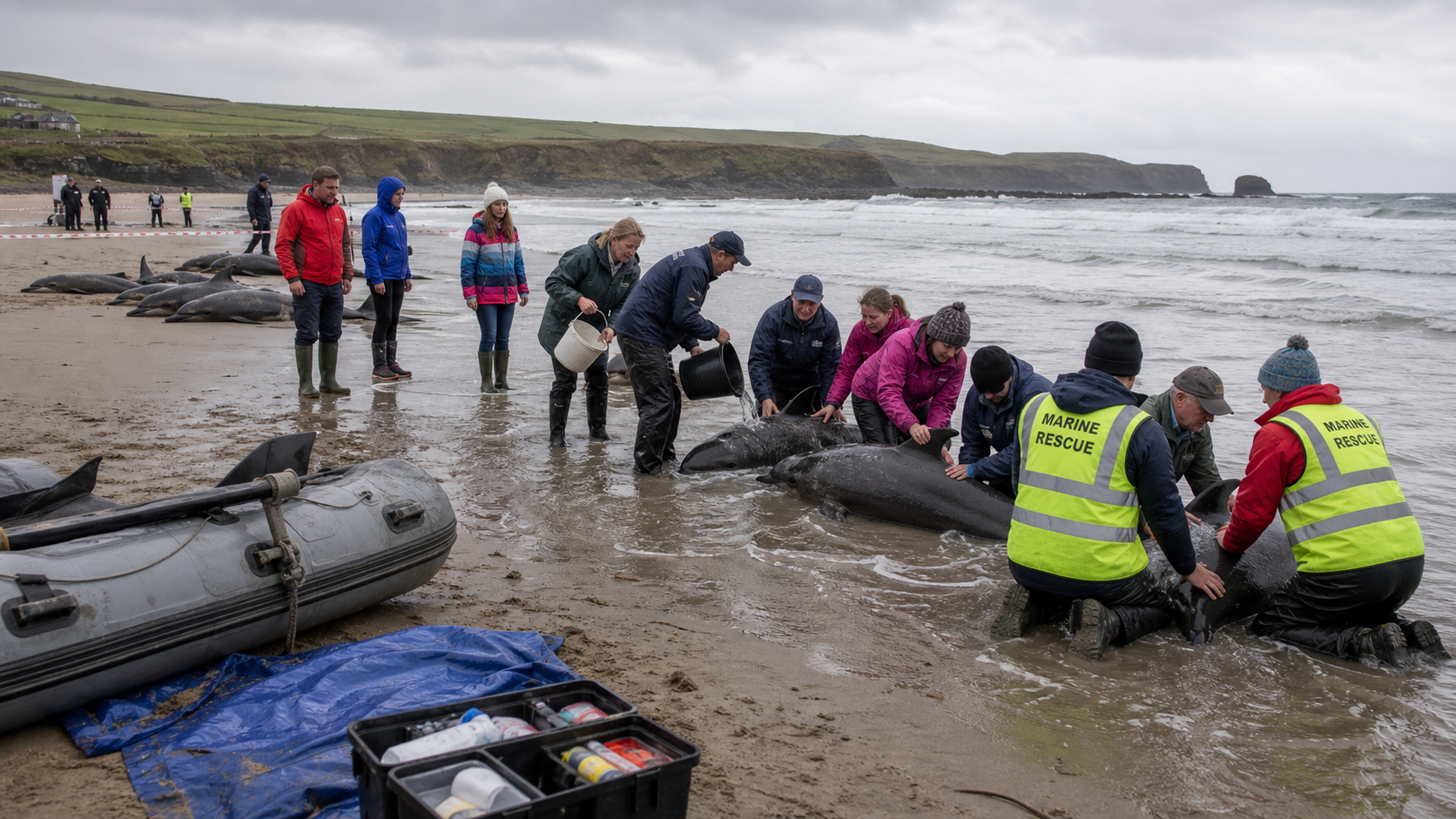
The alarm was raised on Wednesday, August 12, when the pod was discovered on the beach at Trá na Feothanaí in the Corca Dhuibhne Gaeltacht. By the time responders arrived, nine dolphins — a mix of adults and calves — had already died. The remaining twelve were alive but in distress, and a large-scale rescue operation was immediately organised.
Stephen Comerford of the Irish Whale and Dolphin Group coordinated the effort alongside local residents, tourists who happened to be on the beach, and members of An Garda Síochána from the local station. Rescuers used stretchers and slings to carefully move the animals back into the water, with experts emphasising the importance of keeping the dolphins upright to ensure their lungs functioned correctly. Pulling animals by their tails or fins, which can cause spinal and bone injuries, was strictly avoided.
The twelve survivors were successfully refloated and observed swimming in the correct direction out to sea. The area was monitored in the hours that followed to ensure the animals did not return to the beach. The Irish Whale and Dolphin Group expressed deep gratitude to the public for their swift and collaborative response, noting that the outcome could have been far worse without the immediate community mobilisation.
Why It Matters
The Kerry stranding is a reminder of the fragile relationship between Ireland's coastal communities and the marine environment they share. Common dolphins are not an endangered species, but mass strandings of this scale represent a significant loss for any local pod and raise broader questions about the health of the Atlantic ecosystem off the Irish coast. This is the third notable cetacean stranding on the Kerry coastline in the past two years, a frequency that marine biologists say warrants closer monitoring.
Unlike the managed response systems in place in countries such as New Zealand and Australia, Ireland's stranding network relies heavily on volunteer expertise and community goodwill. The IWDG operates with limited state funding, and Wednesday's rescue demonstrated both the strength of that volunteer model and its inherent vulnerability — had the stranding occurred in a more remote location, or had fewer people been on the beach, the outcome could have been very different. The incident has renewed calls for greater investment in Ireland's marine rescue infrastructure and for clearer public education on how to respond safely to cetacean strandings.
Local Impact
For the Corca Dhuibhne Gaeltacht community, the rescue was a moment of collective pride. The beach at Trá na Feothanaí is a popular spot for locals and visitors alike during the summer months, and the presence of tourists alongside residents in the rescue effort reflected the area's character as a place where the natural world is taken seriously. Local businesses in Dingle and the surrounding peninsula reported an outpouring of interest in the story, with many visitors expressing admiration for the community's response. The Dingle Aquarium, which Flannery heads, has long served as an educational hub for marine awareness in the region, and Wednesday's events are likely to feature prominently in its public programming in the weeks ahead.
What's Next
The Irish Whale and Dolphin Group will conduct a post-mortem examination on the nine dolphins that died to determine the cause of the stranding and assess the animals' overall health. Results are expected within several weeks. The group has also called on members of the public who witnessed the stranding or have relevant information to make contact. Marine scientists will continue to monitor the waters off the Dingle peninsula in the coming days to track the movements of the surviving pod. The incident is expected to feature in the IWDG's annual stranding report, which is submitted to the National Parks and Wildlife Service.