Supreme Court Confronts the Fourth Amendment in the Age of Digital Surveillance
The Supreme Court heard oral arguments on April 27, 2026, in Chatrie v. United States, a case that could fundamentally rewrite the rules of digital privacy in America. At stake is whether law enforcement can use geofence warrants — court orders compelling Google to identify every mobile device present near a crime scene — without violating the Fourth Amendment's prohibition on unreasonable searches. A decision is expected by the end of June.
Background
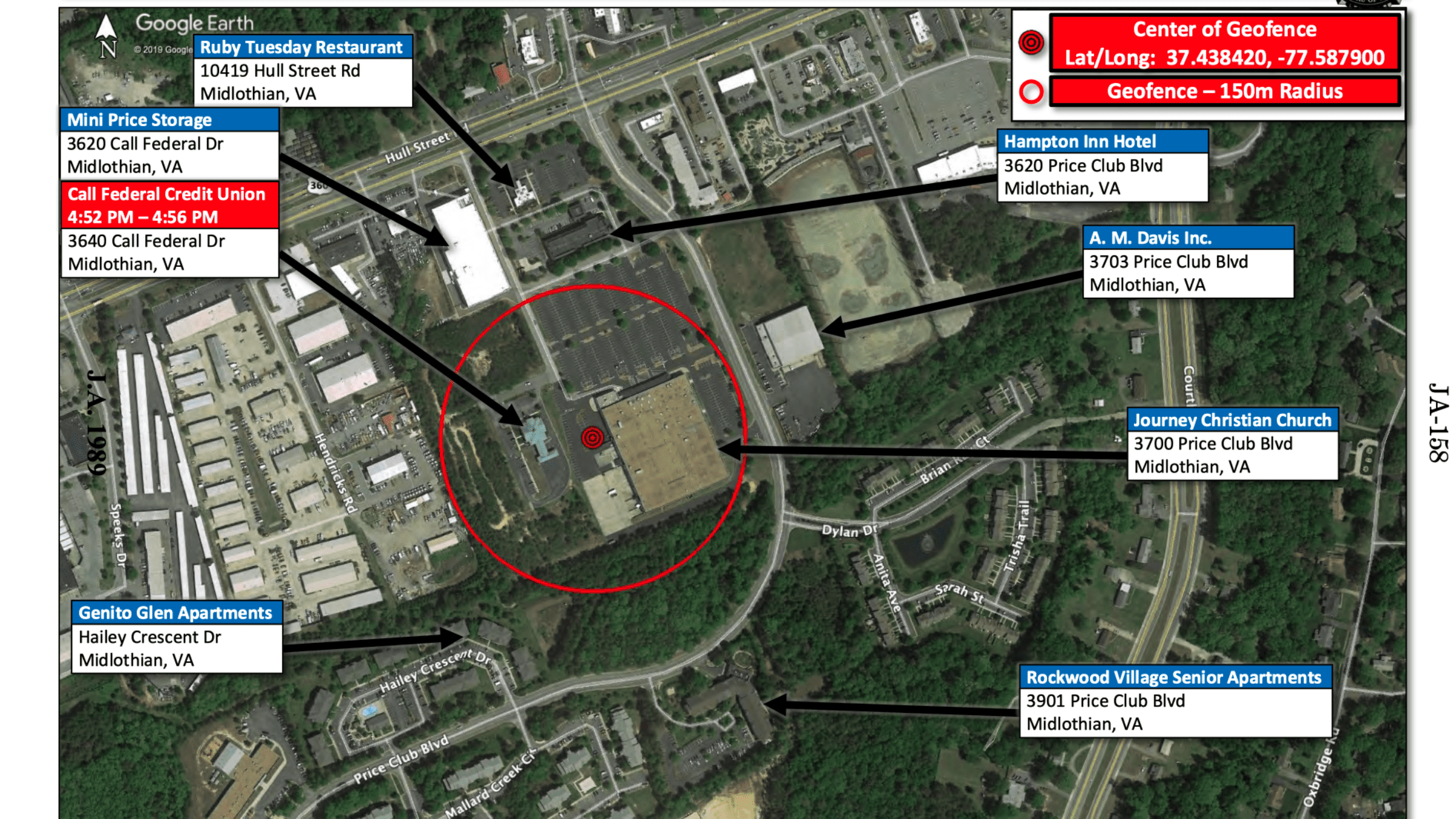
The case traces back to May 20, 2019, when a bank in Midlothian, Virginia was robbed. With traditional investigative leads exhausted, Chesterfield County Detective Joshua Hylton obtained a geofence warrant compelling Google to query its Location History database. Google's process unfolded in three steps: first, it identified all 19 accounts whose devices appeared within a 150-meter radius of the bank during a one-hour window, producing 209 data points. Second, police narrowed the pool to nine accounts and requested movement data across a two-hour window, generating 608 additional data points. Third, officers requested identifying information for three devices — one of which belonged to Okello Chatrie, who was subsequently charged with the robbery.
Chatrie moved to suppress the evidence, arguing the warrant constituted an unconstitutional general search. The U.S. District Court for the Eastern District of Virginia agreed the warrant violated the Fourth Amendment but admitted the evidence under the good-faith exception. The Fourth Circuit Court of Appeals affirmed, with the full court splitting 7-7 on whether a search had even occurred — a deadlock that sent the case to the Supreme Court.
Key Developments
During April 27 oral arguments, the justices pressed both sides on where to draw the constitutional line. Chatrie's counsel argued the geofence warrant was a modern-day writ of assistance — the general warrants that British authorities used to conduct suspicionless searches of colonial homes, the very practice the Fourth Amendment was written to prohibit. They contended that sharing location data with Google is not truly voluntary in a society where digital services are essential, and that the third-party doctrine — which holds that information shared with a third party carries no Fourth Amendment protection — is an outdated framework for the digital era.
The government countered that Chatrie affirmatively opted into Google's Location History service and knowingly exposed his movements to the company. Prosecutors distinguished the case from Carpenter v. United States (2018), which extended Fourth Amendment protection to weeks of cell-site location data, by arguing the geofence covered only a short two-hour window and a limited geographic area. The government also maintained that Google, not law enforcement, performed the initial broad database query, insulating the warrant from constitutional challenge.
Privacy groups including the ACLU, the Brennan Center for Justice, and the Knight First Amendment Institute filed amicus briefs warning that a ruling for the government would greenlight reverse searches targeting people by web queries or physical location — including those attending political protests or visiting places of worship.
Why Americans Should Care
The outcome of Chatrie will directly affect how law enforcement agencies across all 50 states conduct digital investigations. Police departments in California, Texas, Florida, and New York have used geofence warrants in hundreds of cases, from bank robberies to the January 6, 2021 Capitol breach. A ruling in favor of the government would validate a surveillance tool already embedded in local police practice nationwide. A ruling for Chatrie could invalidate evidence in pending prosecutions and force Congress to legislate new standards for digital warrants. For residents of states with active criminal justice reform movements — including Illinois, Colorado, and Washington — the decision will shape the boundaries of what police can demand from technology companies without individualized suspicion. Civil liberties advocates in Virginia, where the case originated, have already called on the state legislature to enact independent protections regardless of the Court's ruling.
Why It Matters
Geofence warrants represent a structural shift in how criminal investigations work. Traditional warrants require probable cause tied to a specific suspect; geofence warrants invert that logic, starting with a location and working backward to identify individuals. The Supreme Court last addressed digital location data in Carpenter v. United States (2018), where Chief Justice John Roberts wrote that the third-party doctrine has limits when data collection is comprehensive enough to reveal the privacies of life. Chatrie tests whether that reasoning extends to shorter, more targeted data pulls. Internationally, the European Union's General Data Protection Regulation prohibits law enforcement from compelling mass data disclosures without individualized suspicion — a standard far more protective than current US practice. The UK's Investigatory Powers Act requires judicial authorization for bulk data requests but includes national security carve-outs that critics argue are too broad. If the Court rules narrowly, Congress may face pressure to pass a federal digital privacy statute — something it has failed to do despite years of bipartisan proposals. The case also carries implications for reverse keyword search warrants, which compel Google to identify users who searched specific terms, a technique already used in arson and child exploitation investigations across dozens of states.
What's Next
The Supreme Court is expected to issue its ruling before the end of the term in late June 2026. If the Court rules the warrant unconstitutional, lower courts will need to determine whether the good-faith exception saves the evidence in Chatrie's case and in similar prosecutions nationwide. Congress may also face renewed pressure to pass comprehensive digital privacy legislation. The Justice Department has indicated it will seek legislative clarification if the Court imposes new restrictions on geofence warrants.
Sources: SCOTUSblog; Lawfare; ACLU; Brennan Center
:max_bytes(150000):strip_icc():focal(723x163:725x165)/Nedra-Talley-Ross-042626-2e79c51418cc43f59b1a9159d3f7adc3.jpg)