Elon Musk's 'Terafab' Would Make Austin a Semiconductor Powerhouse for Tesla, SpaceX, and xAI
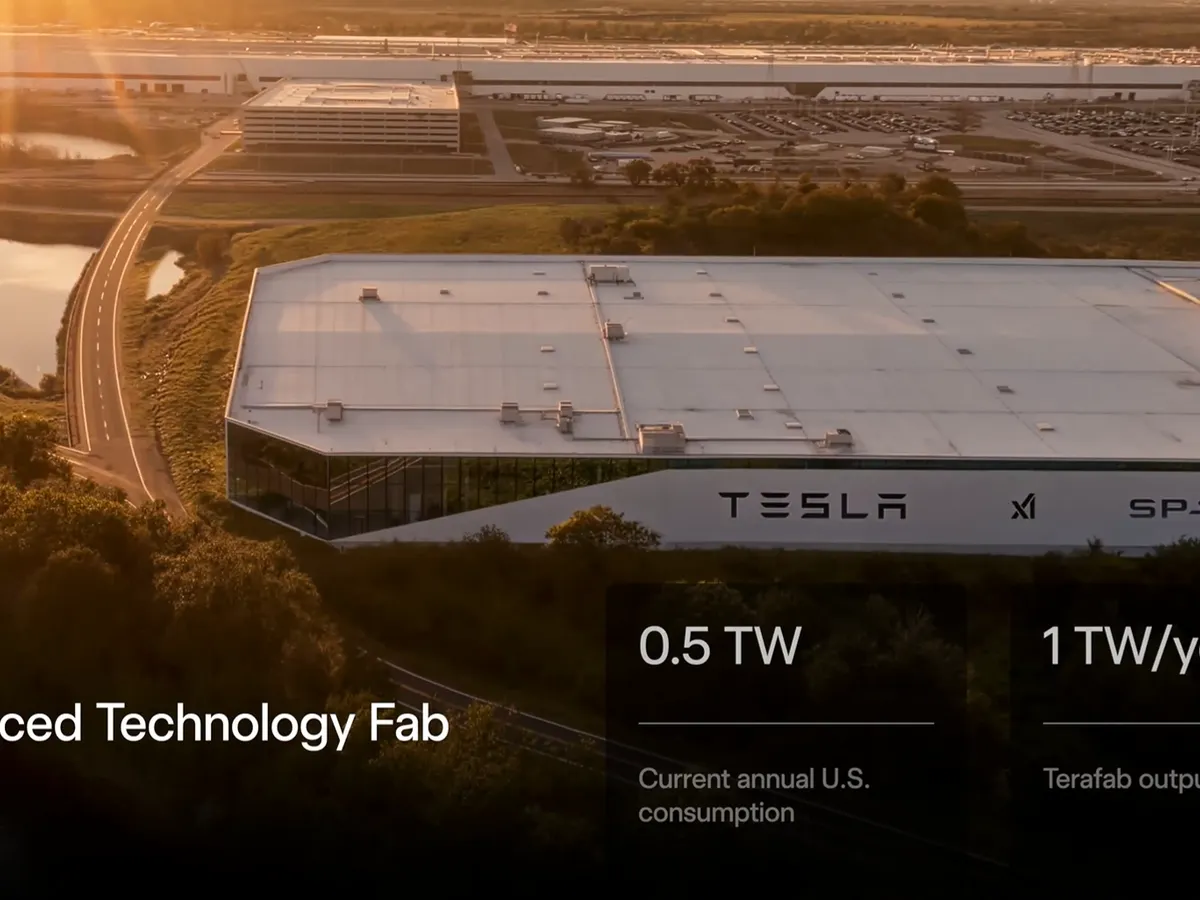
Elon Musk has revealed plans for 'Terafab,' a large-scale chip manufacturing facility to be built in Austin, Texas, that would supply semiconductors for Tesla's vehicles and autonomous systems, SpaceX's satellite and rocket hardware, and xAI's computing infrastructure. The factory would use Intel's advanced 14A fabrication process, positioning it among the most technologically sophisticated manufacturing plants in the United States.
Background
The global semiconductor shortage of 2021-2023 exposed the vulnerability of companies that depend entirely on third-party chip manufacturers, particularly those concentrated in Taiwan and South Korea. Tesla was among the hardest-hit automakers during that period, cutting vehicle production and substituting alternative chips that required software rewrites. The experience accelerated Musk's interest in vertical integration of chip production — a strategy that would give his companies direct control over the supply of the semiconductors that power everything from Tesla's Full Self-Driving system to SpaceX's Starlink satellites.
Intel's 14A process node, announced in 2024, represents the company's most advanced fabrication technology, capable of producing transistors at a scale that rivals Taiwan Semiconductor Manufacturing Company's leading-edge processes. Intel has been aggressively courting US technology companies as customers for its foundry business, which received substantial federal support through the CHIPS and Science Act of 2022. A partnership with Musk's companies would be a major commercial validation for Intel's foundry ambitions.
Key Developments
Musk revealed the Terafab plans in a post on X, his social media platform, describing the facility as a 'terafactory for chips' that would eventually produce semiconductors at a scale sufficient to supply all of his companies' needs. The Austin location builds on the existing concentration of Musk's operations in central Texas: Tesla's Gigafactory Texas, which produces the Cybertruck and Model Y, is located in the city's eastern suburbs, and SpaceX has a significant engineering presence in the Austin metropolitan area.
The announcement did not include a construction timeline, capital investment figure, or employment projections. However, industry analysts estimate that a facility of the scale Musk described would require an investment of $10 billion to $20 billion and could employ between 3,000 and 5,000 workers at full operation. The use of Intel's 14A process would make Terafab one of only a handful of facilities in the world capable of producing chips at that technology node, alongside TSMC's Arizona fabs and Samsung's Texas facility in Taylor.
The announcement sent Intel's stock up 3.2% in after-hours trading, adding to the company's already strong performance following its blowout first-quarter earnings report on April 23.
Why Americans Should Care
Texas has emerged as the epicenter of America's semiconductor manufacturing ambitions, with TSMC's Phoenix, Arizona facility, Samsung's Taylor, Texas plant, and now the potential Terafab all representing major investments in domestic chip production. For workers in the Austin metropolitan area — which has seen rapid population growth and a diversifying economy — a Terafab facility would create thousands of high-wage manufacturing and engineering jobs. The broader Texas economy, already home to major tech employers including Dell, Oracle, and Apple's expanding campus in Austin, would gain another anchor tenant in the semiconductor supply chain. For American consumers, domestic chip production reduces dependence on foreign manufacturers and the geopolitical risks that come with it — a concern that has grown more acute as tensions with China over Taiwan have intensified. The CHIPS Act's federal subsidies, which have already directed billions of dollars to semiconductor facilities in Arizona, Ohio, and New York, could potentially support Terafab's construction, bringing federal investment to Texas's already booming tech corridor.
Why It Matters
Musk's Terafab announcement, if it proceeds, would represent a significant shift in the structure of the US semiconductor industry. Historically, chip design and chip manufacturing have been separate businesses: companies like Nvidia and Qualcomm design chips but outsource fabrication to foundries like TSMC. Vertical integration — owning both design and manufacturing — has been the model of Intel and Samsung, but not of the fabless companies that have dominated the industry's growth over the past two decades. Apple's decision to design its own chips, beginning with the M1 in 2020, demonstrated the competitive advantages of vertical integration in consumer electronics. Musk's ambition to extend that model to automotive, aerospace, and computing represents a further evolution of the strategy. Internationally, China's semiconductor industry — which has invested hundreds of billions of dollars in domestic chip production under the Made in China 2025 initiative — remains several generations behind the leading edge, but the gap is narrowing. A US-based Terafab producing 14A chips would help maintain America's technological lead at a critical moment in the global competition for semiconductor supremacy.
What's Next
Musk has not provided a formal timeline for Terafab's development. Industry observers expect a more detailed announcement, potentially including site selection, investment figures, and partnership terms with Intel, within the next several months. Texas Governor Greg Abbott's office has indicated the state would be prepared to offer incentives to support the project, consistent with Texas's aggressive posture in attracting semiconductor investment. Environmental permitting and community engagement processes in the Austin area could take 12 to 18 months before construction begins.
Sources: TechStartups; Semiconductor Dive; Intel Newsroom
:max_bytes(150000):strip_icc():focal(723x163:725x165)/Nedra-Talley-Ross-042626-2e79c51418cc43f59b1a9159d3f7adc3.jpg)