Stormont Faces Reckoning as PSNI Funding Crisis, Budget Pressures and June Riots Aftermath Converge
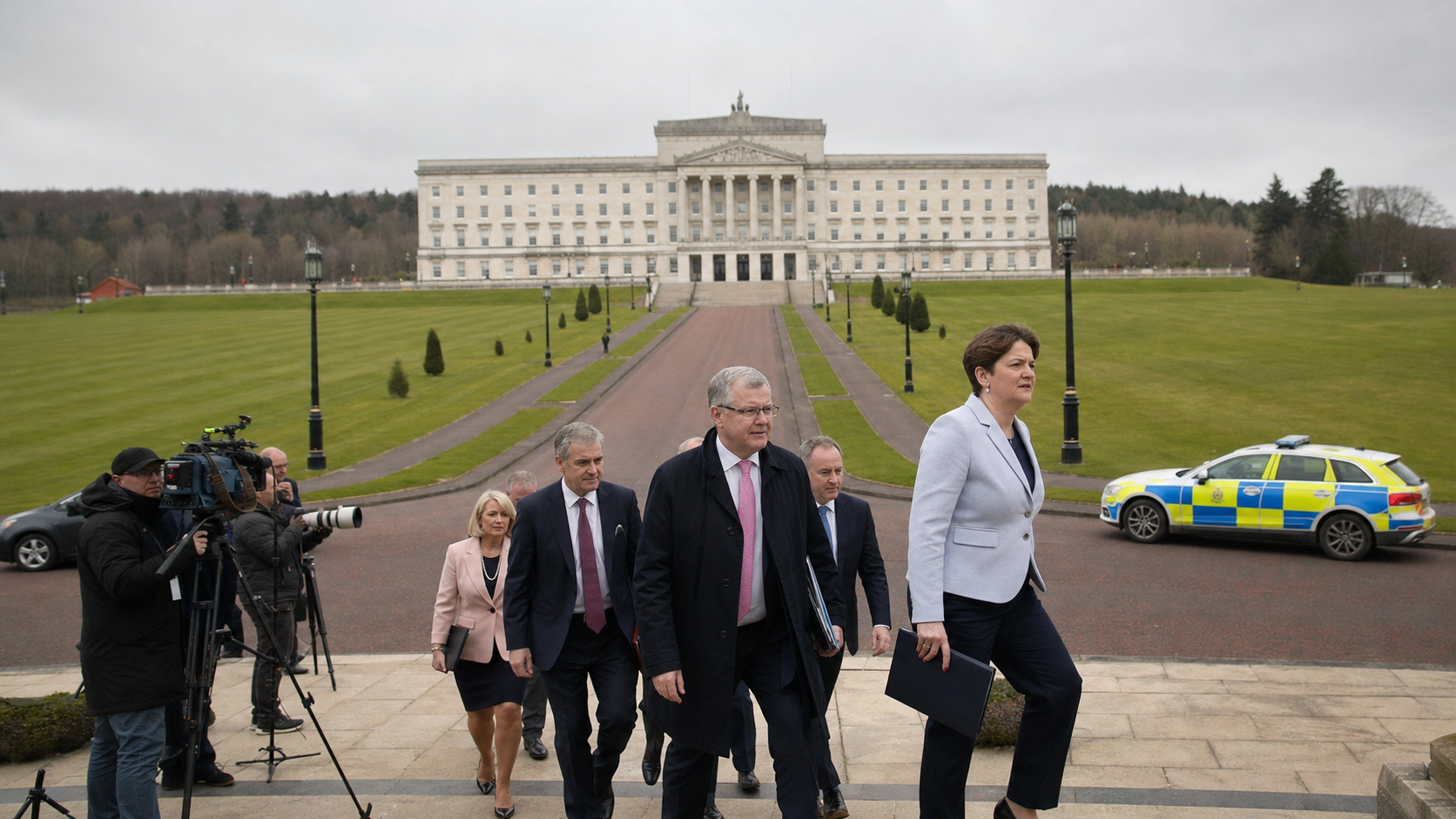
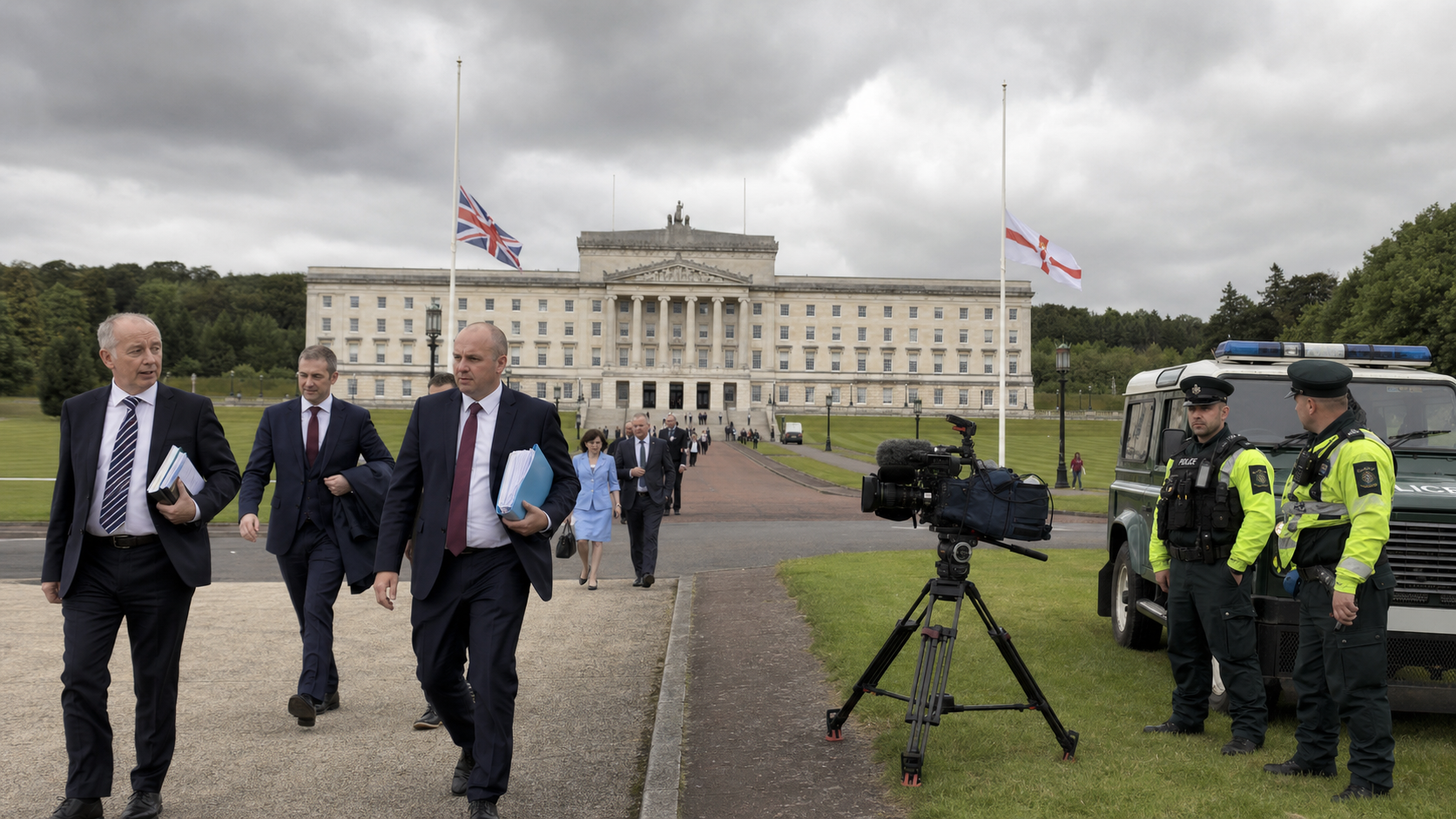
The Stormont Executive is confronting one of the most serious governance challenges since the restoration of devolution, with the HMICFRS warning that the PSNI is at a 'tipping point,' the June civil unrest still reverberating through communities and public finances, and a budget crisis that is simultaneously threatening health, education, and policing — three of the services that citizens depend on most.
Background
The Stormont Executive has been operating under severe financial pressure for several years, a situation that has been compounded by the unique demands of governing a society still navigating the legacy of the Troubles while managing contemporary social and economic challenges. The block grant from Westminster, which funds the majority of Northern Ireland's public services, has not kept pace with the rising cost of delivering those services, creating a structural deficit that has forced the Executive to make increasingly difficult choices about priorities.
The June 2026 civil unrest — which saw widespread rioting across several Northern Ireland towns and cities, with attacks on minority communities and significant damage to public and private property — has added a new dimension to the Executive's challenges. The immediate costs of the unrest, including policing, property damage, and community support, have been estimated at tens of millions of pounds. The longer-term costs — in terms of damage to community relations, investor confidence, and Northern Ireland's international reputation — are harder to quantify but potentially more significant.
The PSNI's response to the June unrest exposed the depth of the force's capacity crisis. The deployment of officers from across the province to manage the disorder left other areas with reduced policing cover, and the force was required to request mutual aid from GB police forces — a measure that underscored the inadequacy of current officer numbers. The HMICFRS inspection report, published on 6 July, has given formal expression to concerns that policing professionals have been raising for years.
Key Developments
The convergence of pressures facing the Stormont Executive in July 2026 is unprecedented in the post-restoration period. The HMICFRS report on the PSNI, which warns that the force is at a 'tipping point' with just 6,300 officers and 52% of sickness absences linked to psychological stress, has placed the Justice Minister and the Executive under immediate pressure to respond. The Executive has been given 28 days to provide a formal response to the report's findings.
The Police Federation for Northern Ireland has called for an emergency meeting with the Justice Minister and the Secretary of State for Northern Ireland, arguing that the funding crisis requires a joint response from both the Stormont Executive and the UK Government. The PFNI has been particularly vocal about the need for Westminster to fund legacy policing costs separately from the PSNI's core budget, a position that has been supported by the Policing Board but resisted by the Treasury.
The budget crisis is not limited to policing. The Department of Health is facing a significant overspend, with waiting lists at record levels and the cost of managing the June unrest's health consequences adding to the pressure. The Department of Education is dealing with the aftermath of school closures and damage caused by the unrest, with several schools in affected areas requiring significant repair work. The Executive's Finance Minister has warned that the overall budget position is 'extremely challenging' and that difficult decisions will need to be made in the autumn.
Why It Matters
The convergence of pressures facing Stormont in July 2026 is significant because it tests the resilience of the devolved institutions at a moment of acute stress. The restoration of the Executive in 2024, after a prolonged period of collapse, was welcomed as a sign of political maturity and a commitment to making devolution work. The current crisis — with policing, health, and education all under severe pressure simultaneously — is a test of whether the Executive can govern effectively under difficult conditions. For context, the June 2026 civil unrest was the most serious public disorder in Northern Ireland since the flag protests of 2012-13, and its aftermath has created a political environment in which the Executive's capacity to maintain public confidence is under scrutiny. The HMICFRS report adds a further dimension of urgency, with the inspectorate's warning that the PSNI is at a 'tipping point' carrying implications for public safety that go beyond the political.
Local Impact
The impact of the converging pressures is felt across Northern Ireland's communities, but it is most acute in the areas most affected by the June unrest. In north and east Belfast, where the rioting was most intense, community organisations are working to rebuild trust and repair the damage to community relations. In Antrim, Ballymena, and Newtownabbey, where attacks on minority communities occurred, local councils and community groups are engaged in intensive dialogue to prevent further disorder. The PSNI's community policing teams, already stretched by the force's capacity crisis, are under particular pressure in these areas, with officers required to manage both the ongoing security situation and the community engagement work needed to prevent a recurrence of the unrest. The Stormont Executive's Community Relations, Equality and Diversity division has been asked to develop an emergency community cohesion programme, with funding expected to be confirmed in the coming weeks.
What's Next
The Stormont Executive is expected to hold an emergency session in the week of 7 July to discuss the HMICFRS report and the broader security situation. The Justice Minister will meet with the PSNI Chief Constable and the Policing Board on 8 July to discuss the report's findings and the force's response plan. The Police Federation for Northern Ireland's emergency meeting with the Justice Minister and the Secretary of State is expected to take place before the end of July. The Executive's budget discussions are scheduled for September, with the Finance Minister expected to present a revised budget position that reflects the additional costs of the June unrest and the PSNI's funding requirements. A Westminster debate on Northern Ireland's security funding is expected to be sought by Northern Ireland MPs in the coming weeks.