Slain British Ambassador Remembered by His Daughter 50 Years After IRA Assassination
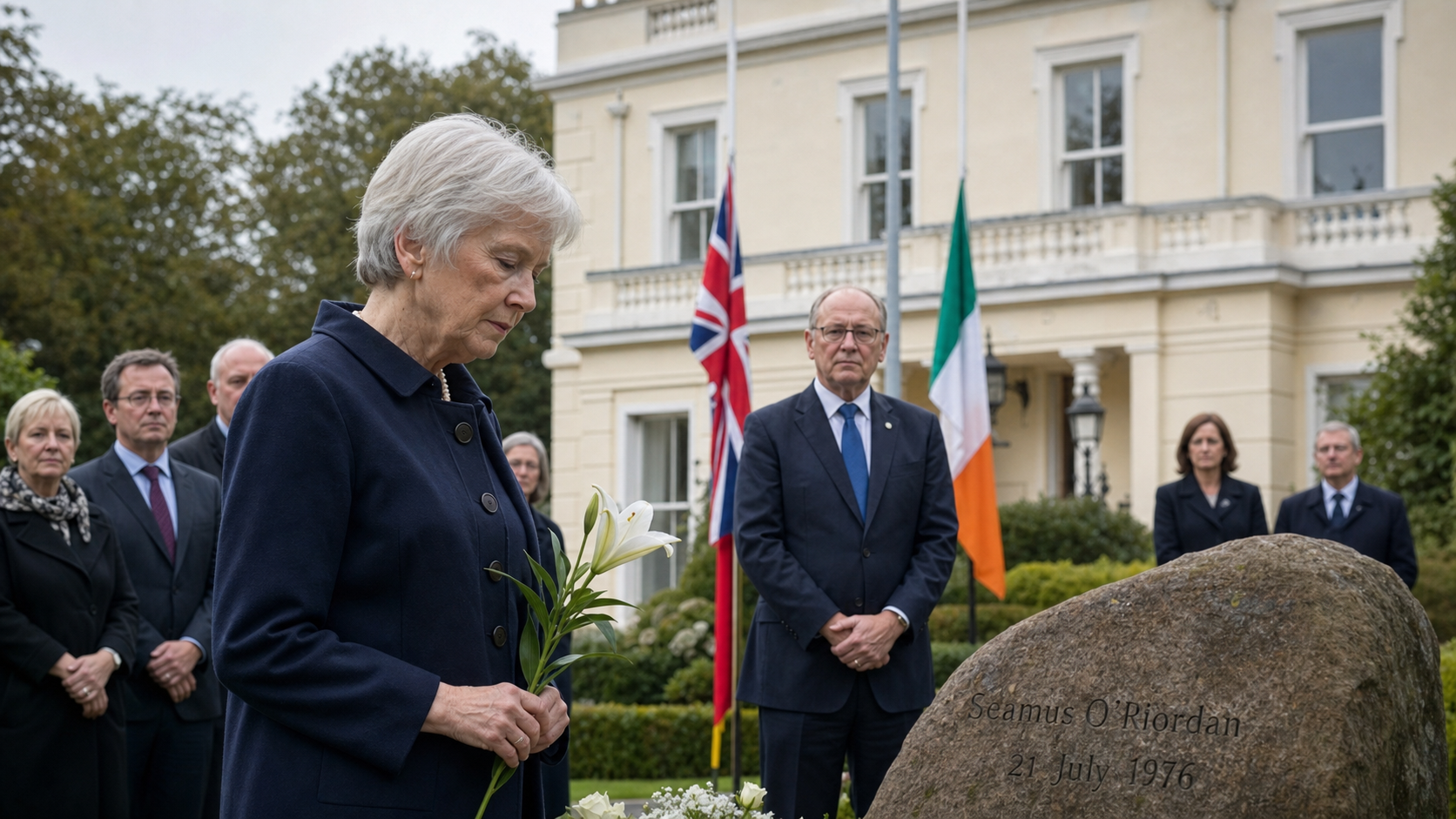
The 50th anniversary of the IRA assassination of British Ambassador to Ireland Christopher Ewart-Biggs was marked at the ambassador's residence at Glencairn in Dublin on Tuesday, with his daughter Kate Ewart-Biggs attending a remembrance event alongside Taoiseach Micheál Martin. Ewart-Biggs was killed on July 21, 1976, just two weeks after taking up his posting, when a 200-pound landmine planted by the Provisional IRA detonated beneath his car on a country road in Sandyford, County Dublin. Civil servant Judith Cooke, 25, also died in the attack.
Background
Christopher Ewart-Biggs arrived in Dublin in July 1976 as one of the most experienced diplomats in the British Foreign Office. A decorated veteran of the Second World War who had lost an eye at El Alamein, he brought to his Irish posting a reputation for intellectual rigour and a genuine commitment to understanding the complexities of Anglo-Irish relations at one of their most fraught moments. The Troubles were at their height, the British government was navigating the aftermath of the Sunningdale Agreement's collapse, and the relationship between London and Dublin was under severe strain.
He had been in the country for just fourteen days when the Provisional IRA struck. The landmine, buried beneath the road near his official residence, was detonated as his car passed over it on the morning of July 21, 1976. The explosion killed Ewart-Biggs and Judith Cooke instantly, and seriously injured his driver Brian O'Driscoll and a senior Northern Ireland Office civil servant, Brian Cubbon. Despite a major investigation involving thousands of personnel and numerous arrests, no individual has ever been convicted of the murders.
The attack provoked outrage across Ireland and Britain. The Irish government declared a national day of mourning, and the Dáil passed a resolution condemning the killings. For many in the Republic, the assassination was a moment of profound shame — a demonstration that the violence of the Troubles could reach into the heart of the Irish state and strike at the very people who were trying to build a better relationship between the two countries.
Key Developments
Kate Ewart-Biggs, who was a child when her father was killed, attended Tuesday's commemoration at Glencairn alongside her daughter Marlie. The event was a private occasion, but Taoiseach Micheál Martin spoke publicly about its significance, reiterating the condemnation of the 1976 attack as an atrocity that caused immense shame and emphasising that the murder of a diplomat represented a total rejection of dialogue and the rule of law.
Martin also noted the positive working relationship between the Irish government and the new British Prime Minister, Andy Burnham, describing the current state of Anglo-Irish relations as a testament to the progress that has been made since the darkest days of the Troubles. The contrast between 1976 — when a British ambassador could be killed on a Dublin road — and 2026, when the two governments cooperate closely on a range of shared challenges, was implicit in every aspect of the commemoration.
The Christopher Ewart-Biggs Memorial Prize, established by his widow Jane in 1977 and now administered by the couple's three children, continues to be awarded biennially to works that promote peace, reconciliation, and understanding between the peoples of the United Kingdom and Ireland. The prize has become one of the most respected literary and cultural awards in the Anglo-Irish calendar.
Why It Matters
The 50th anniversary of Ewart-Biggs's assassination is an occasion for reflection on how far Anglo-Irish relations have travelled since 1976. The journey from a period when a British ambassador could be murdered in the Dublin suburbs to the current era of close cooperation and mutual respect has been neither smooth nor inevitable. It required the courage of political leaders on both sides of the Irish Sea, the patience of diplomats who kept talking when talking seemed futile, and ultimately the willingness of communities on both sides of the border to choose a different future.
The commemoration also serves as a reminder of the human cost of political violence. Judith Cooke, who died alongside Ewart-Biggs, was 25 years old — a civil servant doing her job, with no political role and no say in the conflict that killed her. Her death, like so many others during the Troubles, was a reminder that the victims of political violence are rarely those who bear responsibility for the conditions that produce it. The absence of any conviction for the murders, 50 years on, remains a source of pain for the families involved.
Local Impact
The Sandyford area of south County Dublin, where the attack took place, has changed almost beyond recognition in the half-century since 1976. The country road where the landmine was buried is now part of a suburban landscape of office parks and residential developments, and the violence that once reached into the heart of the Irish state feels, to most people living there today, like a distant and almost incomprehensible history. That distance is itself a measure of progress — and a reminder of what was at stake in the peace process that eventually brought it about.
What's Next
The Christopher Ewart-Biggs Memorial Prize will next be awarded in 2027. The British Embassy in Dublin has indicated that it will continue to mark the anniversary of the ambassador's death as part of its ongoing commitment to Anglo-Irish reconciliation. The Taoiseach's office has confirmed that the Irish government will participate in any future commemorative events associated with the anniversary.