Sinn Féin Demands Emergency Mini-Budget as Fuel Crisis Deepens Political Pressure
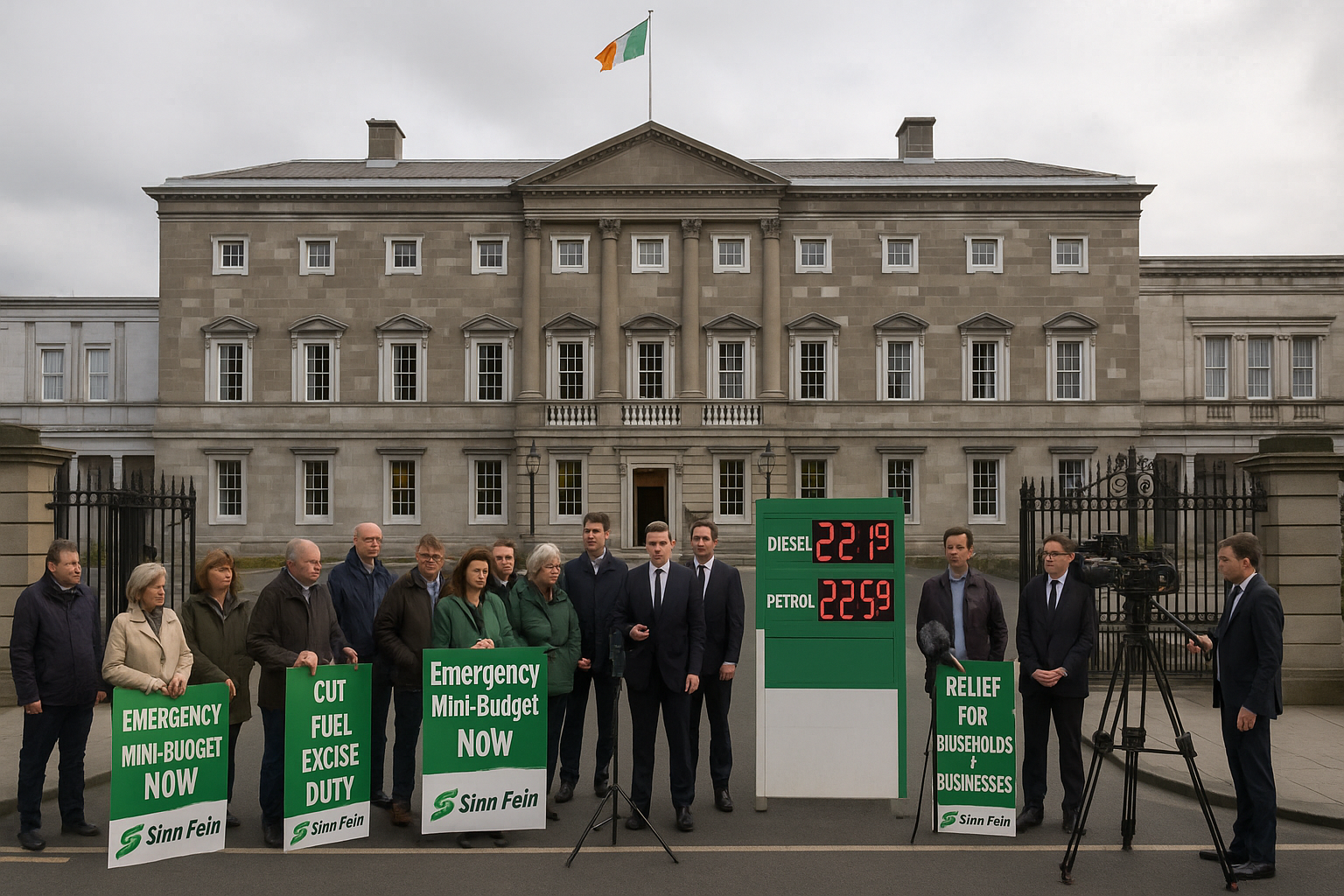
Sinn Féin has called on the Irish government to introduce an emergency mini-budget to provide immediate relief for households and businesses struggling with record-high fuel prices, as the political fallout from the ongoing energy crisis intensifies across the Republic.
The main opposition party's demand, made on 24 April 2026, comes as public anger over soaring fuel costs continues to grow, with protests having already brought the country to a standstill and the government facing mounting criticism for what many see as an inadequate response to the scale of the crisis.
Background
Ireland's vulnerability to the current fuel shock is rooted in a structural dependency that successive governments have failed to address. The country imports 100% of its oil, and in 2024, nearly 80% of all energy consumed in Ireland was imported, with 94% of those imports being fossil fuels. Oil constitutes approximately 45% of Ireland's primary energy needs — one of the highest dependencies in the European Union. The transport sector alone accounts for 62% of all oil consumed in the country.
The global disruption to oil supplies resulting from the Iran war and the closure of the Strait of Hormuz — a critical channel for roughly 20% of the world's oil — has exposed this dependency in the starkest possible terms. Between the outbreak of the conflict and the height of the protests, diesel prices in Ireland rose by approximately 28% and petrol by 25%, according to documented accounts of the 2026 Irish fuel protests.
The price hikes arrived on top of an already escalating cost-of-living crisis, triggering a wave of nationwide protests led by farmers, hauliers, and transport-dependent workers. At the peak of the disruption, an estimated 600 of the country's 1,500 filling stations ran dry after blockades targeted fuel depots and Ireland's only oil refinery at Whitegate.
Key Developments
Sinn Féin leader Mary Lou McDonald called on Taoiseach Micheál Martin to convene an emergency session of the Dáil to debate the crisis and introduce immediate relief measures. The party's demands include temporary reductions in fuel excise duty, the complete removal of carbon tax on home heating oil and green diesel, additional electricity credits, and targeted support for businesses most affected by rising energy costs.
The Independent Ireland party has also been vocal in its criticism of the government, reportedly gaining new support from voters angry at the pace and scale of the official response. A Minister of State, Michael Healy-Rae, resigned in protest at the government's handling of the situation, adding to the political pressure on the coalition.
The government has already announced a €505 million support package that included cuts to excise duty on fuel and a postponement of a planned carbon tax increase until October 2026. However, opposition parties and business groups argue these measures fall far short of what is needed. The government survived a motion of no confidence tabled by Sinn Féin, but the political damage has been significant, according to RTÉ News analysis.
Why It Matters
The political pressure on the government is unlike anything seen in recent Irish political history. The fuel crisis has become the defining issue for the current administration, threatening to reshape the electoral landscape ahead of future elections. The cost of home heating oil rose by 63% in March 2026 alone, a figure that has concentrated minds across the political spectrum.
For ordinary Irish families, the crisis is not an abstraction. It is felt at the petrol pump, in the heating bill, and in the price of food on supermarket shelves — supply chain disruptions caused by the blockades led to reports of half-empty shelves at major retailers. Businesses in agriculture, construction, and logistics face a sudden and potentially unsustainable increase in operating costs, with fears of closures and job losses mounting.
The broader significance lies in what the crisis has revealed about Ireland's structural energy vulnerability. Without a fundamental shift in energy policy, the country will remain exposed to geopolitical shocks of this kind for years to come. The emergency budget debate is, in that sense, about more than short-term relief — it is a reckoning with decades of policy choices.
Local Impact
In Northern Ireland, the fuel crisis has been felt acutely, with pump prices tracking the Republic's increases and households on both sides of the border facing similar pressures. The interconnected nature of the island's economy means that supply chain disruptions in the Republic have knock-on effects for businesses in Belfast and beyond. Hauliers operating cross-border routes have been among the hardest hit, with fuel costs eating into already tight margins. Community groups in working-class areas of Belfast have reported a sharp increase in demand for emergency financial assistance as families struggle to heat their homes and fill their tanks.
What's Next
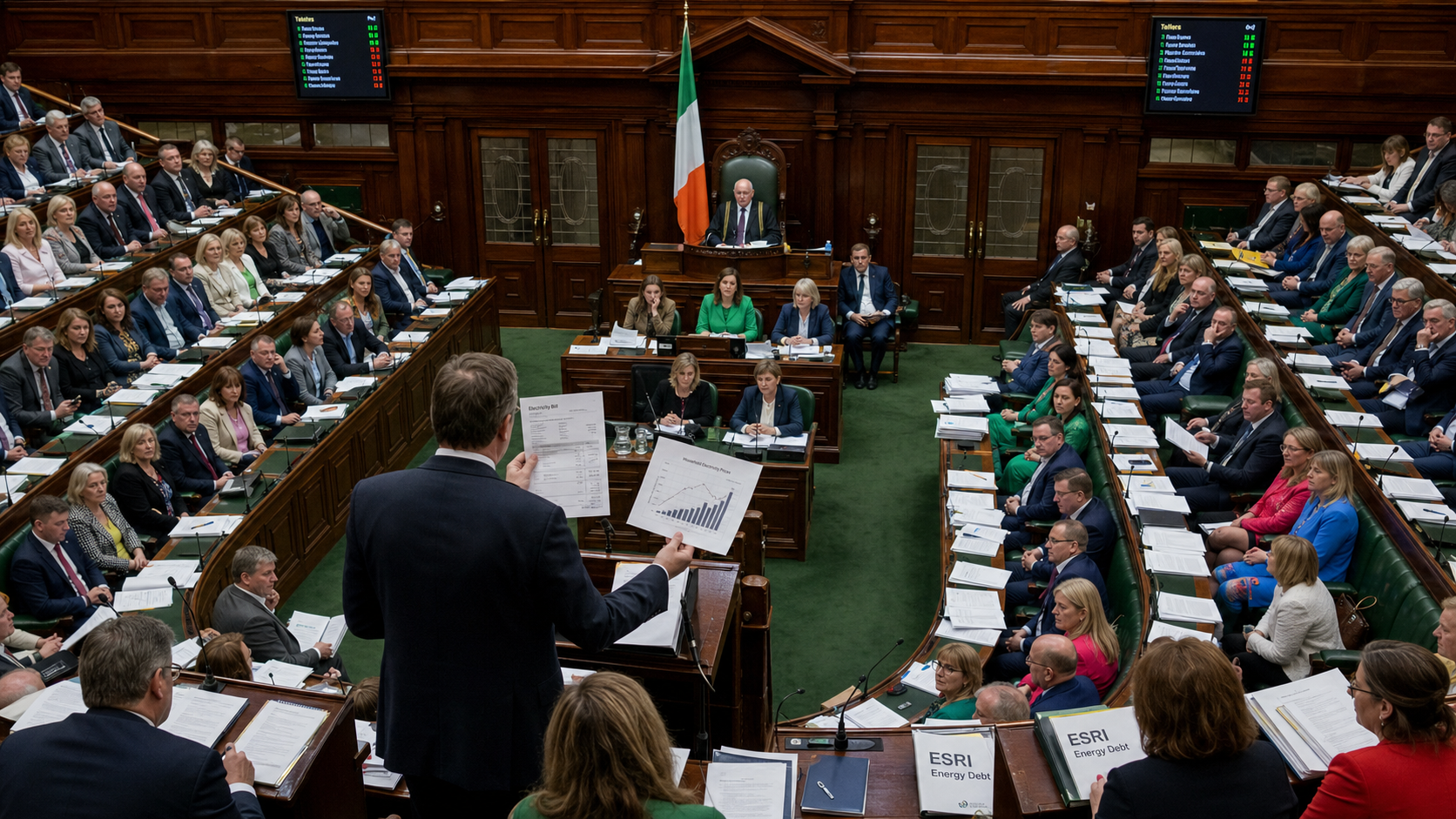
The government is expected to announce its response to Sinn Féin's demands in the coming days, with ministers under intense pressure to demonstrate decisive action. The Dáil is likely to debate the issue in the coming week, with opposition parties using the opportunity to hold the coalition to account. The trajectory of the crisis will ultimately depend on developments in the Iran conflict and global energy markets — but the political fallout, whatever happens next, will take considerably longer to resolve.