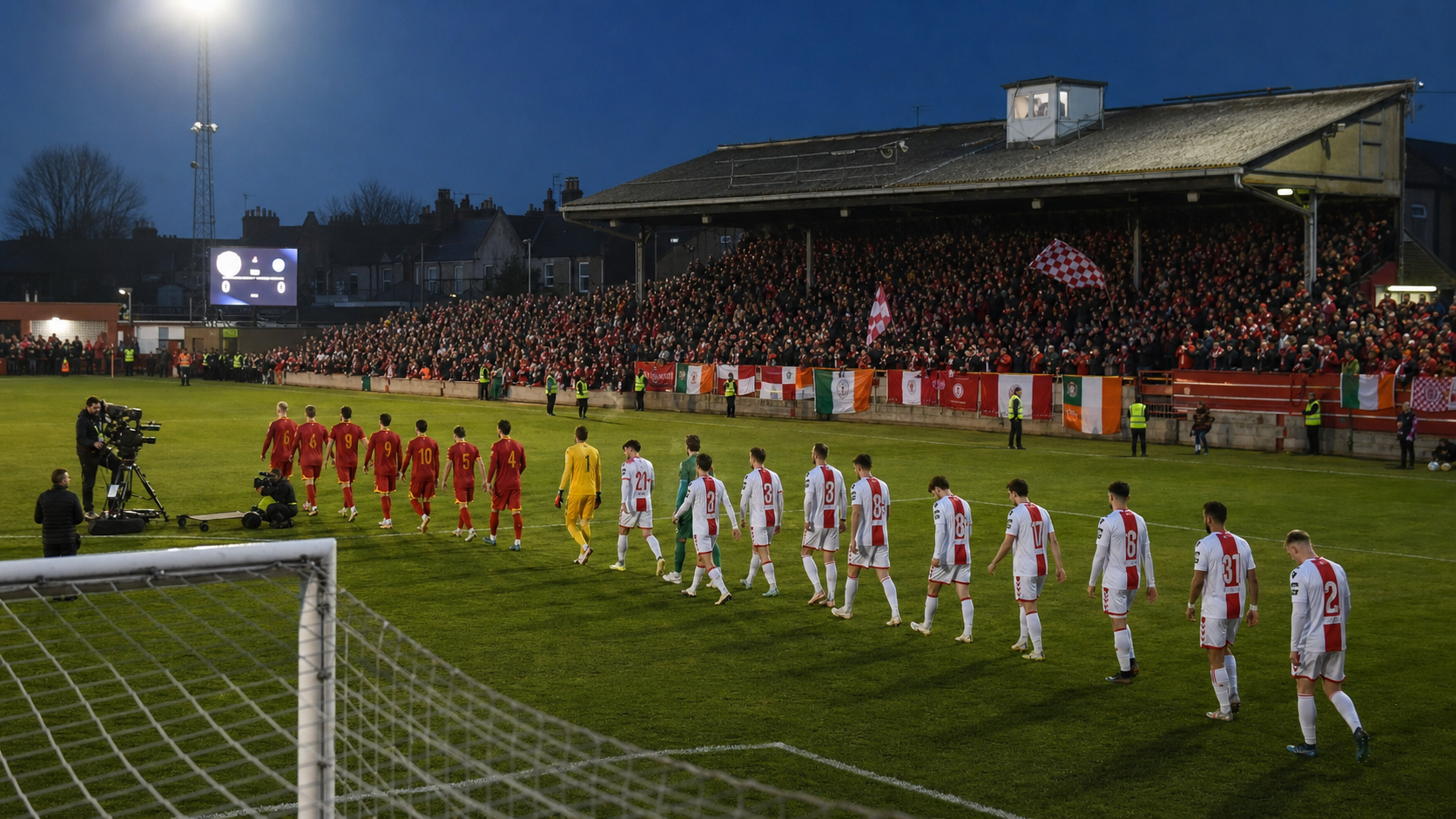
Shelbourne's European Night: Ajax Tie Captures Imagination of Irish Football as Tolka Park Sells Out
Shelbourne's UEFA Conference League second leg against Ajax at a sold-out Tolka Park has captured the imagination of Irish football in a way that few domestic club matches have managed in recent memory, with the occasion generating a level of national interest that reflects both the quality of the opposition and the growing ambition of the League of Ireland as a competition.
Background
The League of Ireland has a complicated relationship with European football. The domestic season runs from spring to autumn, meaning that Irish clubs enter European qualifying rounds in the summer months when their squads are still finding form and their opponents from continental leagues are at peak fitness after a full pre-season. The structural disadvantage is significant, and it has historically meant that League of Ireland clubs exit European competition at the earliest qualifying stages, generating little public interest and even less media coverage.
Shelbourne's run to the third qualifying round of the Conference League, and their draw against Ajax, has changed that narrative in a meaningful way. The club's ability to compete in Amsterdam — losing 3-1 but scoring an away goal through Darragh Kelly — demonstrated that the gap between the League of Ireland and the established European leagues, while still significant, is not unbridgeable. The away goal, in particular, gave the second leg a genuine competitive dimension that has sustained public interest in the tie throughout the week between the two matches.
Ajax, one of the most storied clubs in European football history, with four European Cup and Champions League titles to their name, represent a different order of opponent from those that League of Ireland clubs typically face in European qualifying. Their presence at Tolka Park — a ground with a capacity of approximately 4,343 that sits in a residential neighbourhood in Drumcondra — is itself a remarkable juxtaposition, and it has generated the kind of media attention that money cannot buy for the League of Ireland and for Irish football more broadly.
Key Developments
The sold-out Tolka Park will host what manager John Russell has described as the biggest night in Shelbourne's recent history. Russell, who took charge of the club in mid-July 2026, has signalled a more attacking approach for the second leg than the defensive structure employed in Amsterdam, acknowledging that the 3-1 aggregate deficit requires Shelbourne to take risks and create chances. The absence of key players John Martin and Mipo Odubeko through injury complicates his selection options, but the manager has expressed confidence in the squad's ability to rise to the occasion.
Ajax, managed by Míchel, enter the second leg with a comfortable aggregate lead but face their own selection challenges, with several centre-backs including Josip Šutalo and Ko Itakura ruled out through injury. The Dutch side have been in good form domestically, winning their opening Eredivisie fixture against PEC Zwolle, and they will be determined to progress to the play-off round without drama. Their squad, which includes Oscar Gloukh and Kasper Dolberg, is significantly stronger than anything Shelbourne will face in the League of Ireland, and the quality differential remains the defining factor in the tie.
RTÉ is broadcasting the match live, and the audience is expected to be one of the largest for a League of Ireland club's European fixture in many years. The match has also attracted significant international media attention, with Dutch and European football journalists travelling to Dublin to cover what is, from Ajax's perspective, a routine qualifying tie but from Shelbourne's perspective a once-in-a-generation opportunity.
Why It Matters
The significance of Shelbourne's Conference League campaign extends well beyond the result of the second leg. For the League of Ireland, European exposure of this kind is invaluable — it raises the profile of the domestic game, demonstrates that Irish clubs can compete at European level, and generates the kind of media coverage that money cannot buy. The coefficient points earned through European competition also benefit Irish clubs in future UEFA draws, gradually improving the seeding position of League of Ireland clubs in qualifying rounds. The Ajax tie has also demonstrated that Tolka Park, despite its modest capacity, can generate an atmosphere that rivals any ground in Ireland when the occasion demands it.
Local Impact
For Drumcondra and the north Dublin communities that have supported Shelbourne for generations, the Ajax second leg is a moment of genuine civic pride. The sold-out crowd will include supporters who have followed the club through decades of varying fortunes, and for many of them the occasion represents the fulfilment of a long-held ambition to see their club compete against one of Europe's elite. The economic impact on local businesses — pubs, restaurants, and shops in the Drumcondra and Glasnevin areas — will also be significant, with thousands of supporters descending on the area in the hours before kick-off. The match has also generated interest from supporters across Ireland who have made the journey to Dublin to be part of what promises to be a memorable occasion regardless of the result.
What's Next
If Shelbourne achieve the improbable and progress past Ajax, they would enter the Conference League play-off round, one step away from the group stage. If they exit, as the aggregate score suggests is the more likely outcome, they will drop into the Europa Conference League third qualifying round, where they would face another European opponent. Either way, the club's European campaign for 2026-27 will continue into late August. The League of Ireland season resumes at the weekend, with Shelbourne's domestic campaign also requiring attention as the title race enters its decisive phase in the autumn.