FAI Backs New National League with Financial Commitment as Amateur Football Gets Pyramid
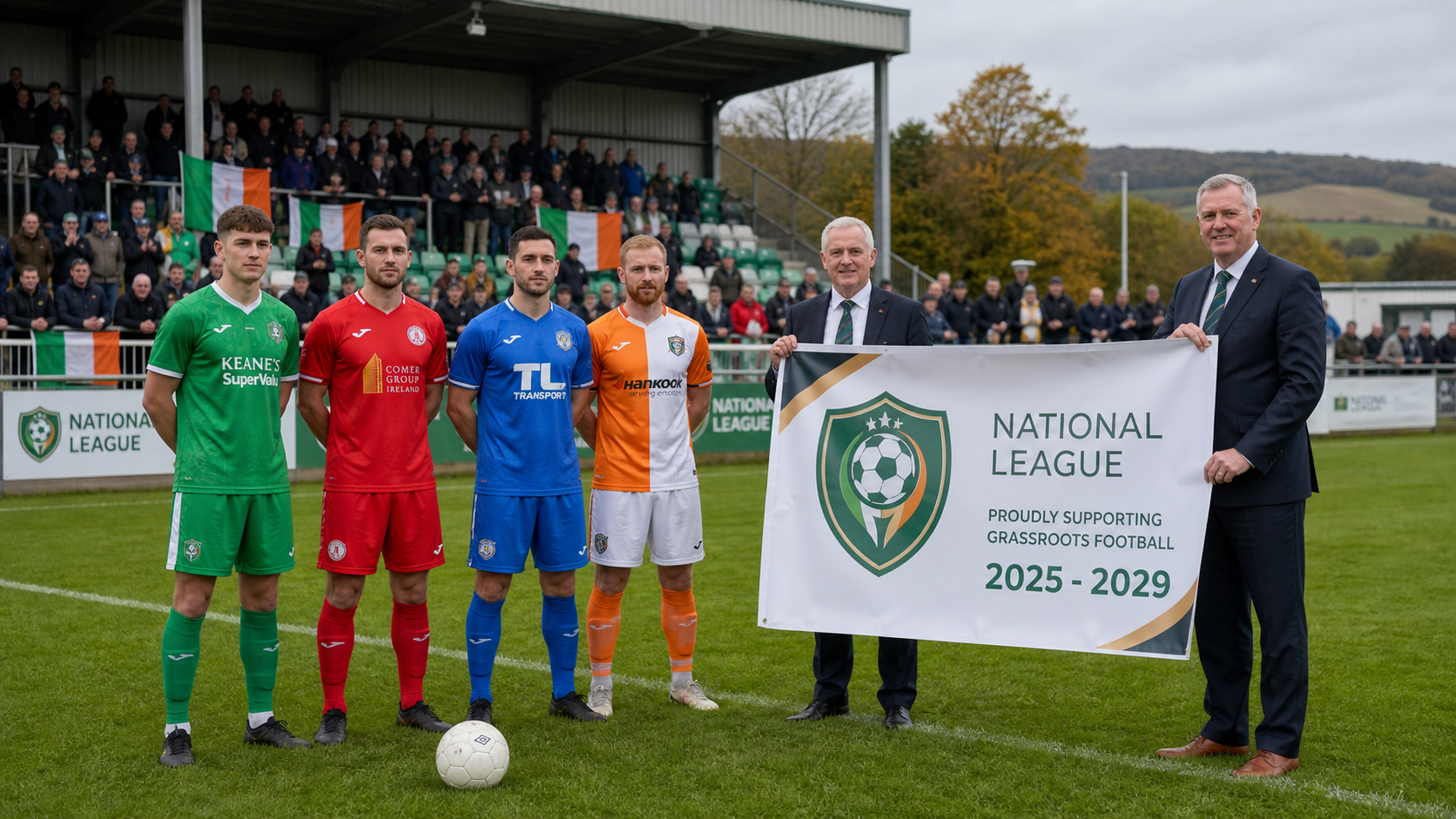
The Football Association of Ireland has confirmed it will financially support the new FAI National League through to the 2029 season, giving 15 founding amateur clubs the stability they need to invest in their infrastructure and player development as they compete for a pathway to the League of Ireland First Division — a commitment that closes a long-standing structural gap in Irish football and creates a genuine national pyramid for the first time.
Background
The absence of a national third tier in Irish football has been one of the most frequently cited structural weaknesses of the domestic game for the past two decades. Without a national competition bridging the gap between regional amateur leagues and the professional League of Ireland, talented players in clubs outside the top two tiers had no clear pathway to professional football, and ambitious clubs had no national stage on which to demonstrate their quality. The result was a fragmented landscape in which the League of Ireland was effectively disconnected from the grassroots game.
The FAI National League, formally announced in December 2024 and launched in autumn 2026, addresses this gap by creating a national third tier with a clear promotion pathway to the League of Ireland First Division. The 15 founding clubs were selected from 67 expressions of interest through a rigorous assessment process that examined financial stability, ground standards, governance, and community engagement. The geographic spread of the clubs — from Donegal to Kerry, from Mayo to Dublin — gives the competition a genuinely national character.
The FAI's financial commitment through to 2029 is structured to give clubs the certainty they need to make medium-term investments while incentivising them to develop their own commercial revenue streams. The association has been clear that the long-term sustainability of the competition depends on clubs building their own financial models rather than becoming permanently dependent on FAI support.
Key Developments
The 15 founding clubs — including Bonagee United, Cockhill Celtic, Home Farm, Lucan United, Mervue United, Letterkenny Rovers, Mayo FC, Salthill Devon, St Francis, TU Dublin, CK United, Killarney Celtic, Newbridge Town, UCC, and Villa FC — are divided into three groups of five for the inaugural season. The group winners and the best runner-up advance to a semi-final stage, with the final determining the inaugural National League champions.
From 2027, the National League champions will enter a promotion play-off against the bottom club in the League of Ireland First Division, provided they meet the necessary licensing criteria. This promotion pathway is the central incentive for clubs in the competition and is expected to drive competitive intensity throughout the season. The FAI has indicated it will expand the league to 20 clubs by 2028, with five additional spots available for clubs that meet the licensing requirements.
The competition has attracted significant interest from clubs across the country, with several of the founding members already investing in ground improvements and coaching infrastructure in anticipation of the new season. Mervue United in Galway, one of the most established clubs in the competition, has completed a significant upgrade of its facilities, while Killarney Celtic in Kerry has appointed a new head of football development to oversee its player pathway programme.
Why It Matters
The FAI National League matters because it creates a coherent structure for Irish football that has been missing for decades. The existence of a clear pathway from grassroots football to the League of Ireland — and potentially beyond — gives clubs, players, and communities a reason to invest in the game at every level. It also creates a competitive environment that will raise standards across the amateur game, as clubs that aspire to promotion must meet the licensing requirements and performance standards that the FAI has set for the competition.
The economic implications are also significant. Clubs that compete in the National League will need to invest in their facilities, coaching, and player recruitment, creating employment and economic activity in their local communities. The FAI's financial support is intended to help clubs make that transition, but the long-term sustainability of the competition will depend on clubs developing their own commercial models through sponsorship, matchday revenue, and community engagement.
Local Impact
For the communities served by the 15 founding clubs — from Donegal to Kerry, from Mayo to Dublin — the National League represents an opportunity to compete on a national stage for the first time. The prospect of promotion to the League of Ireland First Division is a powerful motivator for players, coaches, and supporters, and the competition is expected to generate significant local interest and media coverage as the inaugural season gets underway. Local businesses in the towns and cities where the founding clubs are based are expected to benefit from the increased footfall and community engagement that a national competition brings.
What's Next
The inaugural FAI National League season begins in autumn 2026, with the group stage running through to December. The semi-finals and final are scheduled for early 2027, with the champions then entering the promotion play-off against the bottom club in the League of Ireland First Division. The FAI will review the league's structure and format after the inaugural season, with a view to expanding to 20 clubs by 2028.