Celtic Crash Out of Champions League as LASK Complete Stunning 5-4 Aggregate Comeback
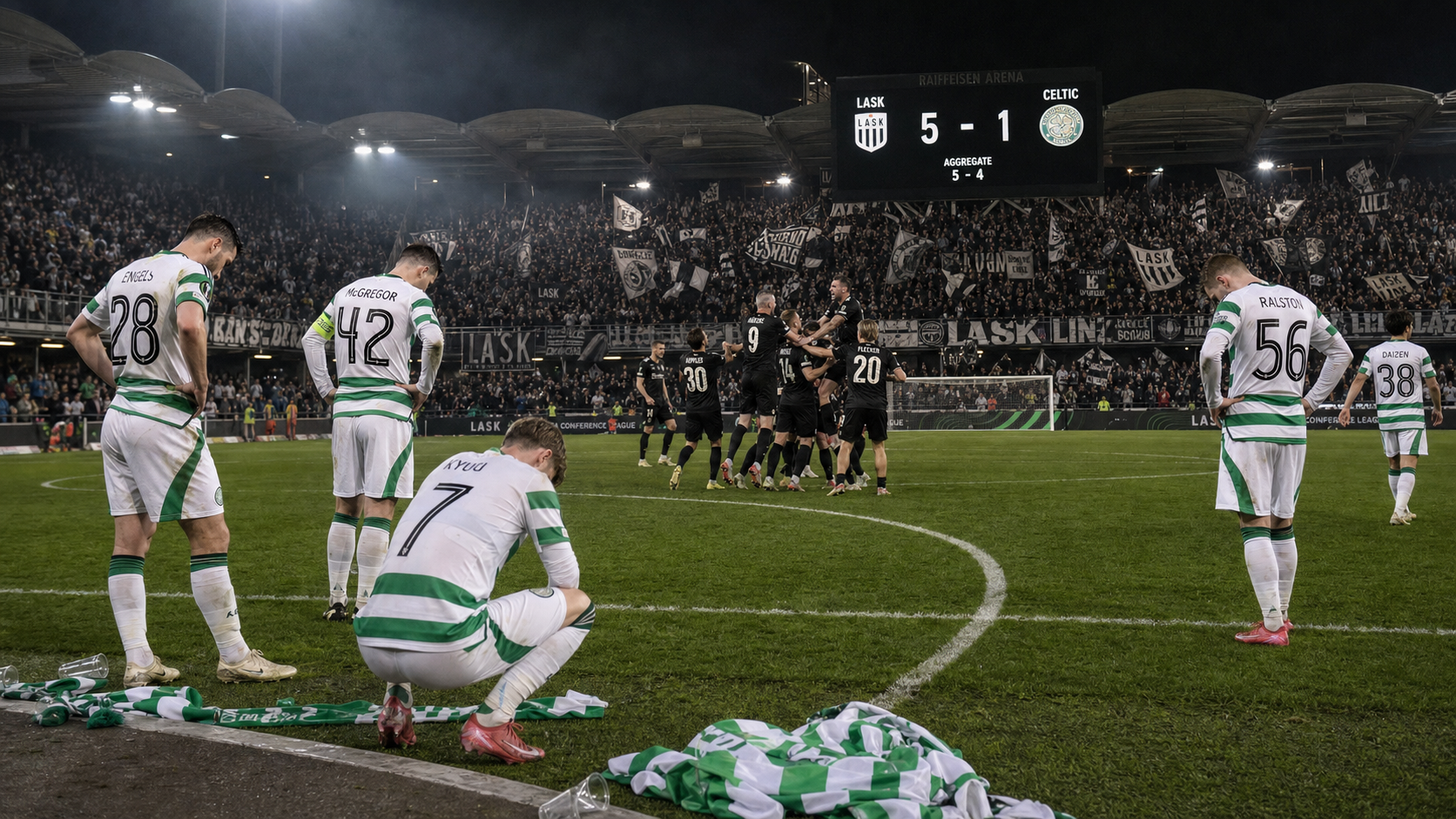
Celtic have been eliminated from the UEFA Champions League in one of the most dramatic collapses in the competition's recent history, surrendering a commanding 3-0 first-leg lead to lose 5-1 to Austrian side LASK in Linz on Monday night and exit the play-off round 5-4 on aggregate — a result that carries financial implications estimated at over £20 million and relegates the Scottish champions to the UEFA Europa League.
Background
Celtic's European campaign had appeared to be progressing smoothly after a dominant first-leg performance at Celtic Park on August 19, when goals from Benjamin Nygren and a brace from Camilo Durán gave the Glasgow club a 3-0 advantage heading into the return leg in Linz. The margin was considered more than sufficient to see Celtic through to the Champions League group stage, and manager Martin O'Neill had spoken confidently about the team's readiness for the challenge of European group stage football.
LASK, the Austrian Bundesliga club based in Linz, had shown enough quality in the first leg — including two goals disallowed for offside — to suggest they were capable of causing problems, but few observers anticipated the scale of what was to unfold in the Raiffeisen Arena. The Austrian side had the backing of a fervent home crowd and the motivation of a team that knew they had performed better than the scoreline suggested in the first leg.
Celtic's Champions League record in recent seasons has been a source of frustration for the club's supporters, who have seen the team repeatedly fall short of the group stage or struggle to make an impact once there. The financial stakes are enormous: Champions League group stage participation generates revenues of approximately £20 million or more for participating clubs, a sum that dwarfs what is available in the Europa League and which has a significant bearing on Celtic's ability to compete in the transfer market.
Key Developments
The second leg began promisingly for Celtic when Callum McGregor scored in the 21st minute to extend the aggregate lead to 4-0, apparently putting the tie beyond doubt. However, the momentum shifted dramatically when Moses Usor scored for LASK in the 31st minute following a defensive error by Benjamin Nygren. The goal changed the atmosphere in the Raiffeisen Arena and appeared to unsettle Celtic's composure.
LASK proceeded to overwhelm Celtic in the second half, with goals from Robert Ljubicic and Samuel Adeniran narrowing the aggregate margin to 4-3. Florian Flecker scored in stoppage time to force the match into extra time, where Adeniran secured the winning goal for the hosts, completing a remarkable comeback that left Celtic's players and management visibly stunned. The final aggregate score of 5-4 to LASK represented one of the most dramatic reversals in recent Champions League play-off history.
O'Neill accepted full responsibility for the defeat, describing it as the most disappointing night he had experienced in a long time. He admitted that the team had "glorious chances" to put the game out of sight and failed to capitalise on them. Former Ireland goalkeeper Shay Given, working as a pundit for Premier Sports, criticised the management for failing to adjust tactically as LASK mounted their comeback, arguing that Celtic should have adopted a more pragmatic approach once it became clear the team was in difficulty.
Why It Matters
The defeat is a significant setback for Celtic on multiple levels. Financially, the loss of Champions League group stage revenue will constrain the club's transfer budget and its ability to retain key players who attract interest from clubs in wealthier leagues. Competitively, it means Celtic will spend the autumn in the Europa League rather than the Champions League — a competition that, while prestigious, does not carry the same financial rewards or global profile. Reputationally, the manner of the defeat — surrendering a 3-0 lead — will invite uncomfortable questions about the team's mentality and tactical preparation for high-pressure European occasions.
For Irish football fans, the result is a reminder of the structural challenges facing clubs from smaller leagues in European competition. Celtic, as the dominant force in Scottish football, is the club most likely to represent these islands in the Champions League group stage, and their repeated failures to progress beyond the play-off rounds reflect the growing financial and competitive gap between the elite European leagues and the rest. The 23 shots that LASK registered compared to Celtic's 5 in the second leg tells its own story about the tactical imbalance that developed as the match progressed.
Local Impact
Celtic's large Irish support — drawn from communities across the island, with particularly strong followings in Belfast, Derry, Donegal, and Dublin — will feel the disappointment keenly. The club's Irish fanbase has grown significantly in recent years, and Champions League nights at Celtic Park are occasions that many Irish supporters travel to attend. The Europa League campaign that follows will provide some consolation, but it is a poor substitute for the prestige and financial rewards of the Champions League group stage.
What's Next
Celtic will now enter the UEFA Europa League group stage draw, which takes place on Friday, August 29. O'Neill is expected to address the media in a full post-mortem press conference on Thursday, at which he will face questions about the team's tactical approach and the club's transfer plans for the remainder of the window. Celtic's next domestic fixture is a Scottish Premiership match at the weekend, and O'Neill will be under pressure to restore confidence within the squad before the Europa League campaign begins in September.