RSV Vaccine Offered to Cork and Kerry Babies as HSE Programme Enters Final Winter Rollout
The HSE has confirmed that the RSV (respiratory syncytial virus) vaccine is being offered to babies in Cork and Kerry as the national immunisation programme enters its final winter rollout phase, bringing the protection available in other regions since last winter to the remaining areas of the country and completing a national programme that has been welcomed by paediatricians and public health specialists.
Background
Respiratory syncytial virus is one of the most common and serious respiratory infections affecting infants and young children, and is the leading cause of hospitalisation in babies under the age of one in Ireland. The virus causes bronchiolitis — an inflammation of the small airways in the lungs — which can be severe enough to require hospital admission and, in some cases, intensive care. In Ireland, RSV season typically runs from October to March, with the peak of infections occurring in December and January, placing significant pressure on paediatric services at a time when hospitals are already under strain from winter demand.
The development of effective RSV vaccines and preventive treatments has been one of the most significant advances in paediatric medicine in recent years. The monoclonal antibody nirsevimab, which is administered as a single injection and provides protection for the entire RSV season, has been shown in clinical trials to reduce RSV-related hospitalisations in infants by approximately 75%. Its introduction in Ireland has been welcomed by paediatricians, who have long advocated for a national programme to protect the most vulnerable infants from a virus that causes significant suffering and places a heavy burden on the health service.
The HSE began rolling out the RSV immunisation programme in phases, with some regions receiving access to the vaccine in the 2025-2026 winter season. The extension of the programme to Cork and Kerry in the 2026-2027 season completes the national rollout, ensuring that all babies in Ireland will have access to the protection that the vaccine provides.
Key Developments
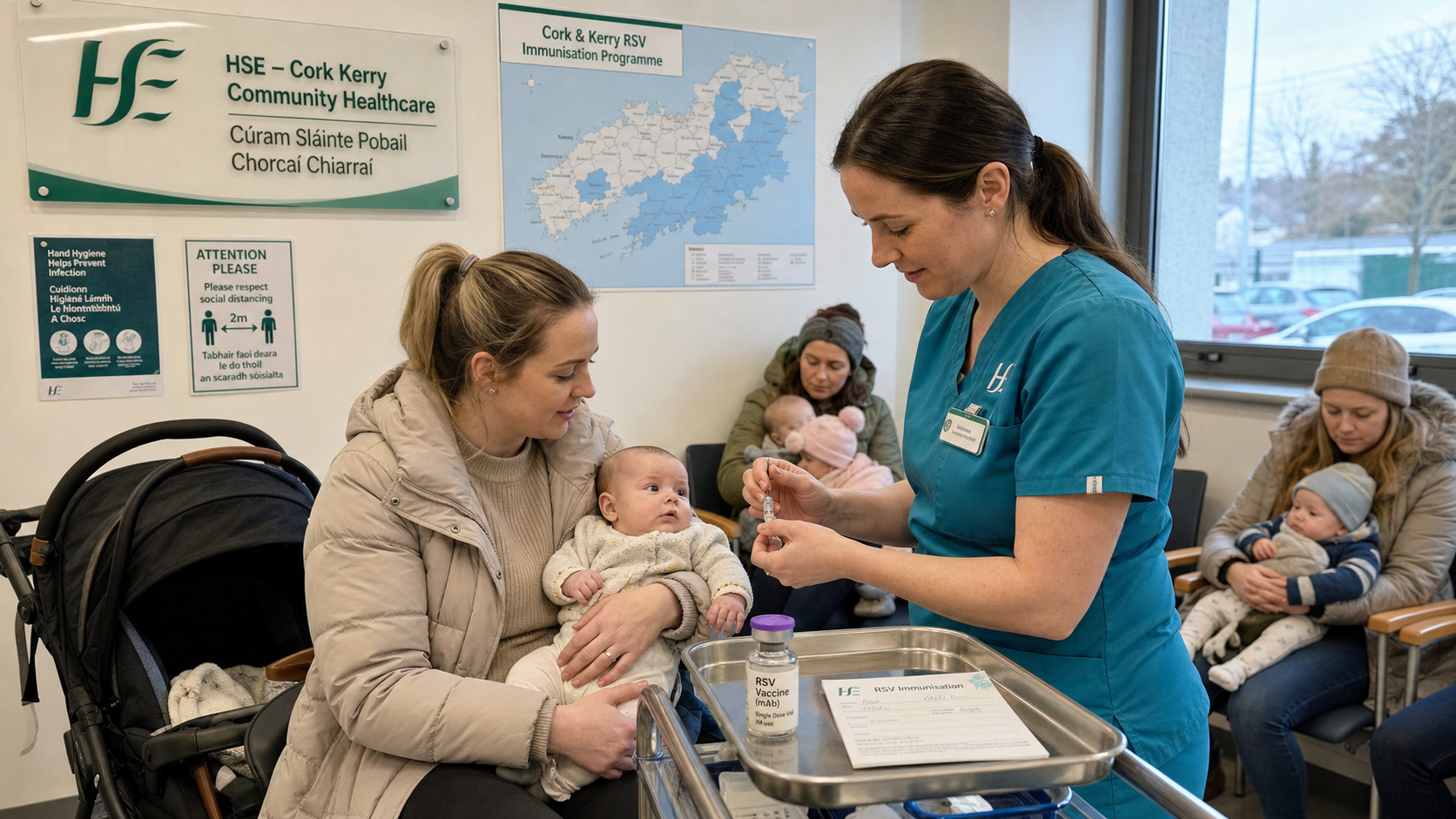
The HSE has confirmed that the RSV vaccine is now being offered to babies in Cork and Kerry as part of the national immunisation programme's final winter rollout. The vaccine is being administered through the community health services, with parents of eligible infants being contacted by their public health nurse or GP to arrange the injection. The programme targets babies born from October 2026 onwards, as well as older infants who are at particular risk of severe RSV disease due to underlying health conditions.
Paediatricians at Cork University Hospital and Kerry University Hospital have welcomed the extension of the programme to the region, noting that RSV bronchiolitis is one of the most common reasons for infant hospitalisation in both facilities during the winter months. The availability of the vaccine is expected to reduce the number of infants requiring hospital admission for RSV-related illness, freeing up paediatric beds for other conditions and reducing the pressure on nursing and medical staff during the winter period.
The HSE has also confirmed that the programme will continue in subsequent years, with the aim of providing RSV protection to all babies born in Ireland as a routine part of the national immunisation schedule. The cost of the programme is covered by the HSE, and there is no charge to parents for the vaccine.
Why It Matters
The completion of the national RSV immunisation programme is a significant public health achievement that will have tangible benefits for infants, families, and the health service across Ireland. RSV bronchiolitis is not only a serious illness for the infants who contract it — it is also a source of enormous anxiety and distress for parents, many of whom have no prior experience of seeing their baby struggle to breathe and require hospital admission. The availability of a safe and effective vaccine that can prevent the majority of severe RSV cases represents a genuine advance in the protection of Ireland's youngest and most vulnerable citizens.
The programme also has significant implications for the health service's capacity to manage winter demand. Paediatric wards in hospitals across Ireland are consistently under pressure during the RSV season, with bronchiolitis admissions accounting for a substantial proportion of winter paediatric bed days. A reduction in RSV hospitalisations will free up capacity for other conditions and reduce the pressure on nursing and medical staff at a time of year when the health service is already stretched.
Local Impact
In Cork and Kerry, where the RSV vaccine is now being offered for the first time, the response from parents and healthcare professionals has been overwhelmingly positive. Public health nurses in both counties have been working to contact the families of eligible infants, and the uptake of the vaccine is expected to be high given the strong track record of immunisation programmes in the region. Cork University Hospital's paediatric department, which has been managing significant RSV-related admissions in previous winters, has expressed particular relief at the availability of the vaccine, noting that it will make a meaningful difference to the department's ability to manage winter demand. Kerry University Hospital has similarly welcomed the programme, noting that RSV bronchiolitis has been a significant driver of paediatric admissions in the county during the winter months.
What's Next
The RSV immunisation programme will run through the winter season, with the HSE aiming to vaccinate all eligible infants before the peak of the RSV season in December and January. Parents of babies born from October 2026 onwards will be contacted by their public health nurse or GP to arrange the injection. The HSE will monitor the impact of the programme on RSV-related hospitalisations during the 2026-2027 winter season and will publish data on the programme's effectiveness in due course. The programme is expected to be incorporated into the national immunisation schedule on a permanent basis from 2027 onwards.