Flu Vaccine Shortage Forces Pharmacies to Restrict Private Supplies to Over-65s as Manufacturing Crunch Bites
Community pharmacies across Ireland have restricted their private flu vaccine supplies to patients aged 65 and over following an unprecedented manufacturing crunch caused by the World Health Organisation's requirement to update all three influenza strains simultaneously for the 2026-27 season — with workplace vaccination clinics cancelled across the country, though the HSE has confirmed that public supplies for vulnerable groups remain secure ahead of the national campaign launch on October 8.
Background
Ireland's annual flu vaccination programme is one of the most important public health interventions of the winter season, protecting vulnerable populations — including the elderly, pregnant women, healthcare workers, and those with underlying medical conditions — from the potentially serious consequences of influenza infection. The programme is delivered through a combination of HSE-funded public vaccination and private vaccination services offered by community pharmacies and occupational health providers.
The composition of the flu vaccine is updated annually to reflect the influenza strains that the WHO expects to be most prevalent in the coming season. Typically, one or two strains are updated each year, allowing manufacturers to make targeted changes to the vaccine while maintaining production schedules. The 2026-27 season has presented an unusual challenge: the WHO has recommended updates to all three strains contained within the vaccine, a requirement that has created a "manufacturing crunch" as pharmaceutical companies have had to reformulate the entire vaccine from scratch.
This simultaneous update, compounded by delays in the arrival of critical manufacturing materials, has created production delays that have left private vaccine supplies significantly short of demand. The HSE, which procures vaccines for the public programme well in advance, has been largely insulated from the shortage, but the private market — which supplies community pharmacies and workplace vaccination services — has been severely affected.
Key Developments
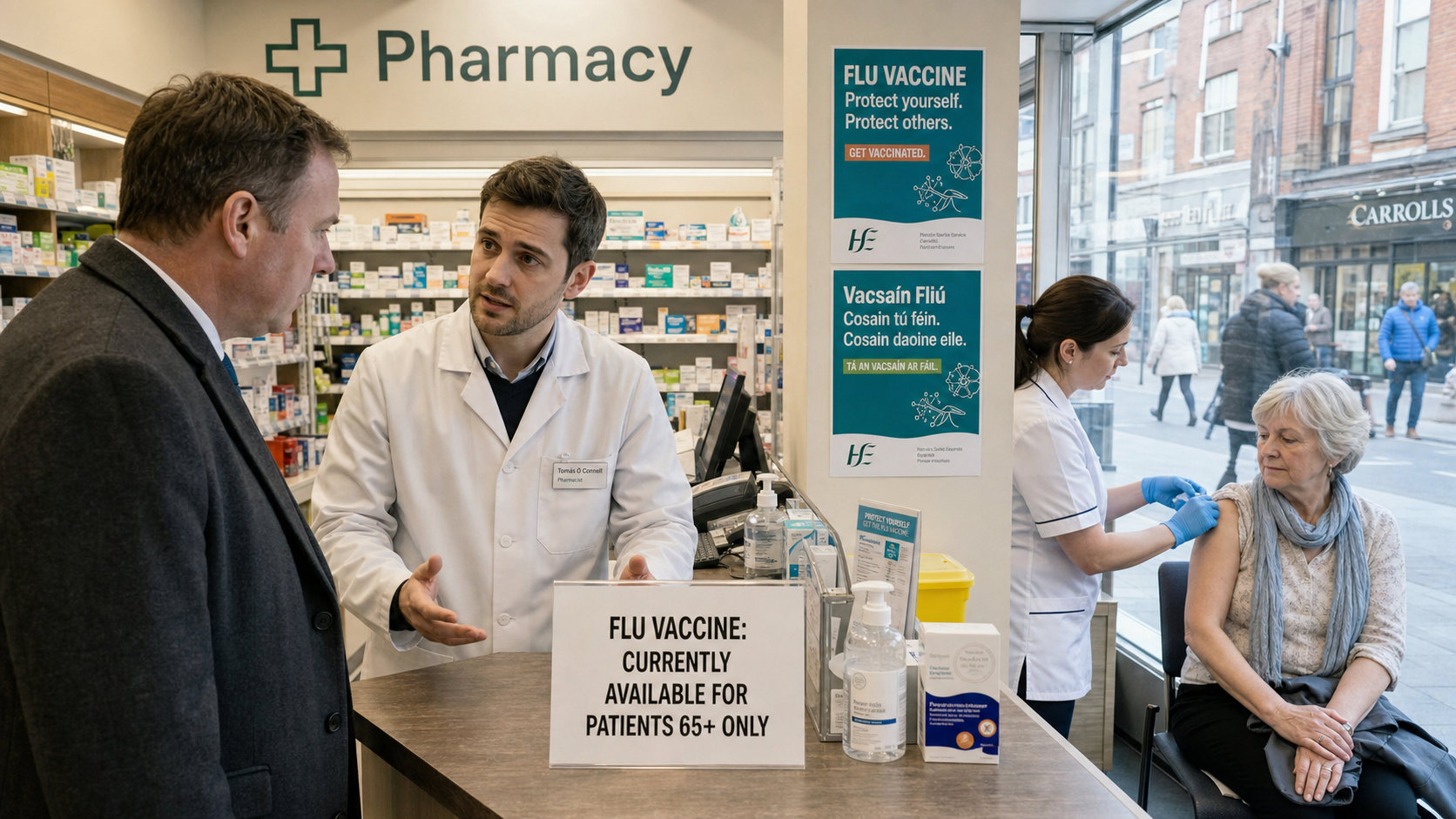
Community pharmacies across Ireland have been forced to restrict their available private vaccine stocks to patients aged 65 and over, prioritising the most vulnerable age group in the face of limited supply. Numerous flu vaccination clinics previously scheduled at companies across Ireland have been cancelled, leaving thousands of workers without access to the private vaccination services they had planned to use. The cancellations have generated frustration among employers and employees who had made arrangements for workplace vaccination as part of their winter health planning.
Minister for Health Jennifer Carroll MacNeill acknowledged the supply disruptions but emphasised that the situation does not affect the immunocompromised or other high-risk individuals covered by the state programme. The HSE confirmed that the main public flu vaccination campaign remains scheduled to launch on October 8, with supplies for the priority groups — those aged 60 and over, pregnant women, healthcare workers, and individuals with underlying medical conditions — secured and on track.
Pharmacists have expressed frustration at the lack of clarity from pharmaceutical companies about when additional private supplies will become available. The Irish Pharmacy Union has called on the government to provide better information to the public about the shortage and to ensure that the HSE's public programme is not affected by any further supply disruptions. Officials have expressed optimism that additional supplies will become available as the season progresses, encouraging private patients to be patient and to check with their pharmacist regularly.
Why It Matters
The flu vaccine shortage matters because it creates a gap in Ireland's winter health defences at a time when the health system is already under significant pressure. The cancellation of workplace vaccination clinics means that many working-age adults who would normally receive the flu vaccine through their employer will not be vaccinated this season, potentially increasing the burden of flu-related illness on the health system. While working-age adults are generally at lower risk of serious flu complications than the elderly or immunocompromised, they can transmit the virus to more vulnerable family members and colleagues.
The shortage also raises questions about the resilience of Ireland's vaccine supply chain and the adequacy of the planning processes that are supposed to ensure sufficient supplies for each season. The WHO's recommendation to update all three strains simultaneously was not a surprise — it was communicated to manufacturers well in advance — and the fact that it has nonetheless resulted in a significant supply shortage suggests that the planning and procurement processes need to be reviewed.
Local Impact
Across Ireland, the cancellation of workplace vaccination clinics has affected businesses of all sizes, from large multinationals with dedicated occupational health programmes to small and medium enterprises that had arranged group vaccination sessions for their staff. In Dublin, Cork, and other urban centres, where workplace vaccination is particularly common, the cancellations have generated significant disruption. Community pharmacies have been fielding large numbers of calls from patients seeking flu vaccines, and pharmacists have had to manage the difficult task of explaining the shortage and the restrictions on private supplies. The HSE has urged patients who are in the priority groups for the public programme to register with their GP or pharmacy to ensure they receive their vaccine when the national campaign launches on October 8.
What's Next
The HSE's national flu vaccination campaign launches on October 8, with supplies for priority groups secured. Pharmaceutical companies have indicated that additional private supplies will become available in the coming weeks, though they have been unable to provide specific dates. The Irish Pharmacy Union has indicated that it will continue to press for better information from suppliers and from the government about the timeline for additional supplies. The Department of Health is reviewing the procurement and planning processes for the flu vaccination programme to identify lessons from the 2026-27 shortage that can be applied to future seasons.