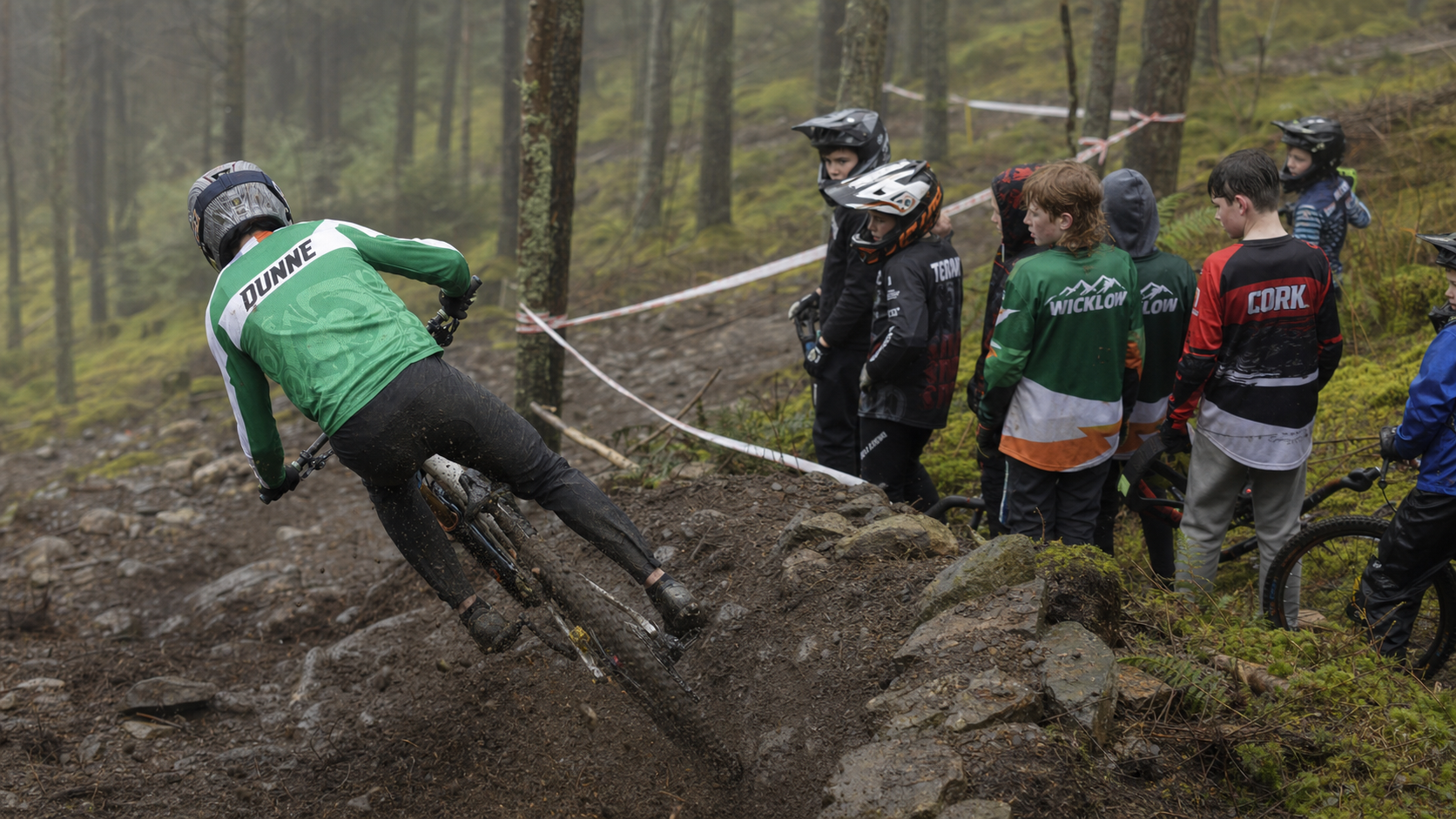
Dunne Effect: How One Wicklow Rider is Transforming Irish Mountain Biking
As Ronan Dunne prepares to represent Ireland at the UCI Mountain Bike World Championships in Val di Sole, Italy, from 26–30 August, Cycling Ireland has highlighted the growing impact of his international success on participation in downhill mountain biking across the country. Junior clubs in Wicklow, Cork, and Antrim have all reported increased membership in the past 12 months, and the Irish Downhill Mountain Bike Series — which includes a round in Wexford on 23 August — has seen record attendance figures at several events this season. The "Dunne Effect," as it has been dubbed within the cycling community, represents one of the most tangible examples of elite success driving grassroots growth in Irish sport.
Background
Downhill mountain biking is a discipline that demands a unique combination of physical fitness, technical skill, and psychological courage. Riders descend steep, rocky courses at speeds of up to 70 kilometres per hour, navigating jumps, drops, and technical sections that require split-second decision-making and absolute commitment. The sport has a passionate global following, with World Cup events in locations including Les Gets in France, Leogang in Austria, and Val di Sole in Italy attracting tens of thousands of spectators and millions of online viewers.
In Ireland, the sport has historically been a niche pursuit, practised by a dedicated community of enthusiasts but lacking the mainstream profile of road cycling, which has benefited from the success of riders like Nicolas Roche and Dan Martin. Ronan Dunne's emergence as a genuine World Cup contender — culminating in his historic victory at Les Gets, the first by a non-French rider in over two decades — has changed that dynamic fundamentally. His success has given the sport a face and a story that resonates with a much wider audience than the traditional mountain biking community.
The natural terrain of Ireland — particularly in Wicklow, Cork, and the Antrim hills — is well-suited to mountain biking, and the country has a network of purpose-built trails and natural descents that provide excellent training and recreational opportunities. The challenge has always been converting that natural advantage into competitive success at the highest level, and Dunne's achievements have demonstrated that it is possible.
Key Developments
Cycling Ireland's participation data for the 2025/26 season shows a 23 per cent increase in junior membership in downhill and enduro disciplines compared to the previous year — a growth rate that the organisation attributes directly to the visibility generated by Dunne's international profile. The Wicklow Cycling Club, which is based in Dunne's home county, has seen its junior section grow from 45 to 78 members in the past 18 months. Similar growth has been reported by clubs in Cork, Antrim, and Galway.
The Irish Downhill Mountain Bike Series, which is organised by Cycling Ireland and features rounds at venues across the country, has seen attendance figures at several events exceed previous records. The Wexford round on 23 August, hosted by Bree MTB, is expected to attract its largest ever field of competitors, with entries from riders across all age categories and ability levels. The series provides a competitive pathway for riders who aspire to follow in Dunne's footsteps, and the quality of competition has improved markedly in recent seasons.
Cycling Ireland has also invested in coaching and development programmes designed to support the next generation of downhill talent. A national talent identification programme, launched in 2025, has identified a cohort of promising junior riders who are receiving structured coaching and support, with the aim of developing future World Cup competitors. Several of these riders are expected to compete at the Wexford round this weekend.
Why It Matters
The growth of downhill mountain biking in Ireland matters for several reasons beyond the sport itself. Mountain biking is a low-carbon, health-promoting activity that can be practised across a wide age range and ability level. The development of trail networks and mountain biking infrastructure generates economic activity in rural areas, attracting visitors and supporting local businesses. In counties like Wicklow, where the Wicklow Mountains provide a natural backdrop for the sport, mountain biking has become an increasingly important component of the outdoor tourism offer.
The sport also provides a model for how elite success can drive grassroots participation — a dynamic that is relevant across Irish sport. The investment in high-performance programmes that produces athletes like Dunne generates returns not just in medals and rankings but in the broader health and wellbeing benefits of increased participation at all levels.
Local Impact
In Wicklow, the combination of Dunne's success and the county's natural terrain has created a virtuous cycle of investment and participation. The Wicklow Mountains National Park has worked with Cycling Ireland and local clubs to develop and maintain trail networks that serve both recreational riders and competitive athletes. The economic impact of mountain biking tourism in the county has been estimated at several million euros annually, with visitors from across Ireland and internationally drawn by the quality of the trails and the county's association with one of the sport's rising stars.
What's Next
The UCI Mountain Bike World Championships in Val di Sole, Italy, run from 26–30 August. Dunne is expected to compete in the elite men's downhill event, with the Irish team also including Oisin O'Callaghan, Henry Kerr, Niamh Richards, Kevin Randall, and Darragh Ryan. The Irish Downhill Mountain Bike Series continues with the Wexford round on 23 August, followed by further rounds in September and October. Cycling Ireland will publish the full series schedule and results on its website, with live timing available at all events.