Rhasidat Adeleke Reaches 200m Final at European Athletics Championships with Season's Best in Birmingham
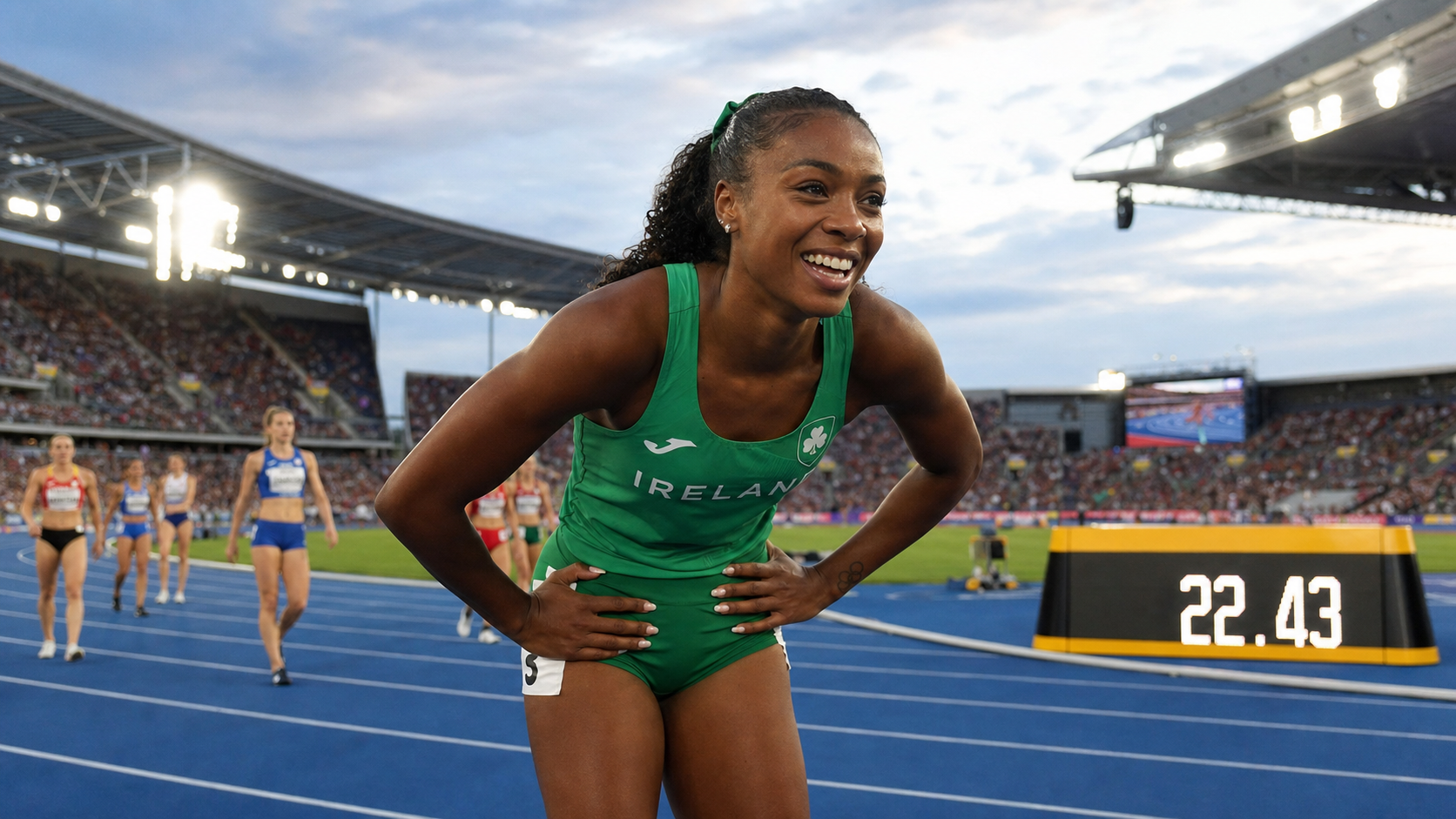
Rhasidat Adeleke has qualified for the women's 200m final at the European Athletics Championships in Birmingham after delivering what she described as her best performance of the season, clocking 22.43 seconds in her semi-final to advance to the final as one of the contenders for a medal that would represent a landmark achievement in her career.
Background
Rhasidat Adeleke's journey to the 200m final in Birmingham has been anything but straightforward. The 23-year-old Irish-Nigerian sprinter, who grew up in Tallaght in Dublin before moving to the United States to compete for the University of Texas, has had a season marked by injury and inconsistency that made her qualification for the European Championships uncertain until relatively late in the summer. She failed to meet the qualifying standard at a meeting in Lucerne earlier in the season before securing her place at the Irish National Championships in Santry, a sequence of events that tested her resilience and her confidence.
Adeleke describes the 200m as her "first love" — the event in which she first made her mark as a junior athlete and the one that she believes best suits her combination of explosive speed and endurance. Her personal best of 22.43 seconds, set in the Birmingham semi-final, is a time that places her among the top European 200m sprinters of the current generation, and her ability to produce it under the pressure of a major championship semi-final is a significant indicator of her mental strength as well as her physical capabilities.
The European Athletics Championships in Birmingham have provided a platform for several Irish athletes to perform at their best, with Mark English's record-breaking 800m semi-final and the swimming team's double medal haul in Paris creating a mood of optimism around Irish athletics that Adeleke is well-placed to capitalise on. Her presence in the 200m final is itself a significant achievement, given the quality of the European sprint field and the difficulties she has faced in reaching peak form this season.
Key Developments
Adeleke's semi-final performance was characterised by the controlled aggression that defines her best running. She came off the bend in a strong position and drove hard through the straight to clock 22.43 seconds, a time that was both a season's best and a demonstration that she is capable of competing with the best European sprinters when she is at her peak. Following the race, she spoke about the importance of enjoying the process and using the pressure of the competition as fuel rather than allowing it to consume her — a mindset that reflects the maturity she has developed through years of competing at the highest level of collegiate and international athletics.
The women's 200m final in Birmingham features several other world-class sprinters, and Adeleke will need to produce another personal best or close to it to challenge for a medal. Her limited racing schedule in the weeks leading up to the championships means that she has had fewer opportunities to sharpen her competitive edge than some of her rivals, but the semi-final performance suggests that she is peaking at the right moment. Her coach and support team have expressed confidence that she can produce an even better performance in the final.
Adeleke's qualification for the 200m final also makes her one of only two Irish athletes to contest two individual events at the Birmingham championships, alongside Sarah Healy, who is competing in both the 1500m and 5000m. The depth of Irish representation in the individual events at a major European championship is a reflection of the investment that Athletics Ireland and Sport Ireland have made in the sport over the past decade.
Why It Matters
Rhasidat Adeleke's story is one of the most compelling in Irish sport. Born in Dublin to Nigerian parents, she represents the diversity of modern Ireland and the potential of the country's growing multicultural community to produce world-class athletes. Her success has been celebrated across the Irish athletics community and beyond, and she has become a role model for young athletes from immigrant backgrounds who might previously have felt that the highest levels of Irish sport were not accessible to them. A medal in the 200m final in Birmingham would be a landmark moment not just for Adeleke personally but for Irish athletics and for the broader story of Irish identity in the 21st century.
Local Impact
In Tallaght, where Adeleke grew up and first developed her love of sprinting, her progress through the rounds of the European Championships has been followed with enormous pride. The south Dublin suburb has produced several notable athletes over the years, and Adeleke's emergence as a genuine European-level sprinter has given the community a figure to celebrate and aspire to. Athletics clubs across Dublin and the wider Leinster region have reported increased interest from young athletes inspired by her performances, and a medal in Birmingham would amplify that impact significantly. Athletics Ireland has identified Adeleke as one of the key figures in its strategy to grow participation in track and field athletics among young people from diverse backgrounds.
What's Next
The women's 200m final at the European Athletics Championships in Birmingham is scheduled for Thursday evening, 13 August. Adeleke will line up alongside the best European sprinters in what promises to be one of the most competitive events of the championships. Following Birmingham, she is expected to return to the United States to prepare for the final phase of the 2026 season, which may include Diamond League appearances and the World Athletics Championships qualifier. Her long-term focus, like that of many of Ireland's top athletes, is on the 2028 Los Angeles Olympics.