PSNI to Expand Taser Deployment Across Northern Ireland After 850 Assaults on Officers in Twelve Months
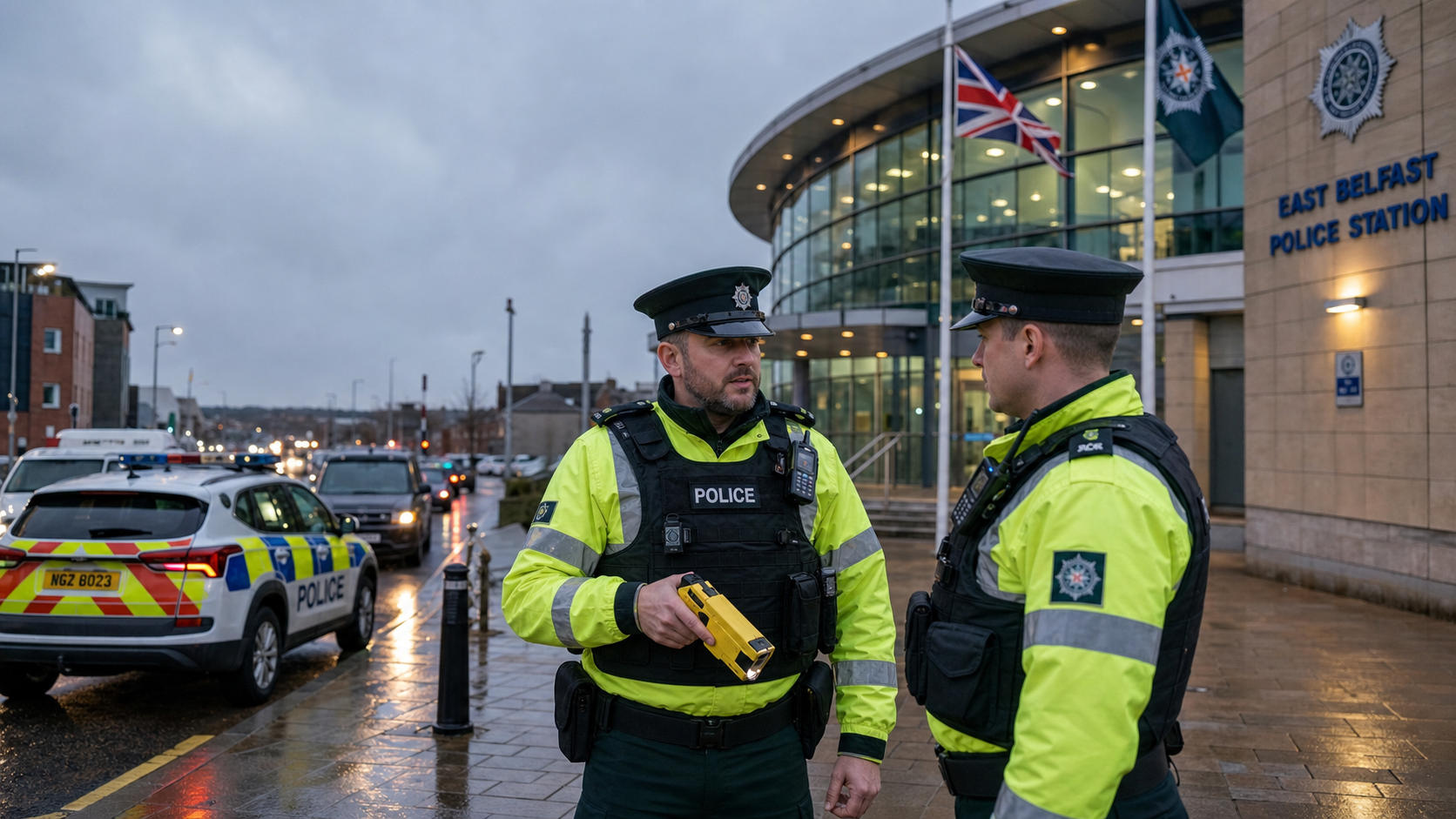
The Police Service of Northern Ireland is expanding the number of officers authorised to carry tasers following a twelve-month period in which 850 assaults on officers were recorded across the region — a figure that the Police Federation for Northern Ireland has described as "deeply concerning" and that has prompted a review of the protective equipment available to frontline officers.
Background
The use of tasers by police in Northern Ireland has been a subject of ongoing debate since the PSNI first introduced the devices in 2012. Tasers — conducted energy devices that deliver an electric shock capable of temporarily incapacitating a person — are classified as less-lethal weapons and are subject to strict protocols governing their deployment. Officers must be specifically trained and authorised to carry them, and their use is subject to detailed recording and review requirements.
The PSNI's approach to taser deployment has historically been more cautious than that of many other UK police forces, reflecting the particular sensitivities of policing in Northern Ireland and the importance of maintaining community confidence in the police service. The Policing Board, which provides oversight of the PSNI, has been closely involved in the development of taser policy and has sought to ensure that the devices are used proportionately and in accordance with human rights standards.
The 850 assaults on officers recorded between September 2025 and September 2026 represent a significant increase on previous years and have prompted a reassessment of the protective measures available to frontline officers. The assaults range from minor incidents to serious attacks involving weapons, and the cumulative impact on officer welfare and morale has been a growing concern for the Police Federation.
Key Developments
The PSNI has confirmed that it is increasing the number of officers authorised to carry tasers as part of a broader review of officer safety and protective equipment. The expansion will involve additional training for officers across a range of roles, with the aim of ensuring that taser-equipped officers are available in a wider range of operational contexts.
The Police Federation for Northern Ireland has welcomed the decision, arguing that the 850 assaults recorded in the past twelve months demonstrate the need for officers to have access to effective protective equipment. The federation has been calling for an expansion of taser deployment for several years, arguing that the current restrictions leave officers unnecessarily exposed to risk.
Civil liberties groups, including the Committee on the Administration of Justice, have raised concerns about the expansion, arguing that tasers carry significant risks for vulnerable individuals — including those with mental health conditions, heart conditions, or who are under the influence of substances — and that the expansion of deployment should be accompanied by enhanced training and oversight mechanisms.
The PSNI has emphasised that the expansion will be accompanied by additional training and that the use of tasers will continue to be subject to strict protocols and detailed recording requirements. The Policing Board has indicated that it will monitor the impact of the expansion closely and will review the data on taser use on a quarterly basis.
Why It Matters
The expansion of taser deployment reflects a genuine tension between the need to protect officers from assault and the importance of ensuring that police use of force is proportionate and does not disproportionately affect vulnerable members of the community. This tension is particularly acute in Northern Ireland, where the history of policing and the importance of community confidence in the PSNI give questions of police use of force a particular sensitivity.
The 850 assaults on officers in twelve months is a figure that demands a response. Officers who are assaulted in the course of their duties suffer physical and psychological harm, and the cumulative impact of a high assault rate on officer welfare, retention, and morale is significant. The PSNI has a duty of care to its officers that must be balanced against its obligations to the communities it serves.
The civil liberties concerns raised about taser use are also legitimate and deserve serious attention. Research from other jurisdictions has shown that tasers can cause serious injury or death in certain circumstances, and that their use is not always proportionate to the threat faced by officers. The importance of robust training, clear protocols, and effective oversight cannot be overstated.
Local Impact
For communities across Northern Ireland — in Belfast, Derry, Newry, and the many smaller towns and rural areas where the PSNI operates — the expansion of taser deployment will be felt in the day-to-day interactions between officers and the public. The presence of taser-equipped officers in a wider range of operational contexts will change the nature of some of those interactions, and the PSNI will need to communicate clearly with communities about the circumstances in which tasers may be used.
For mental health services and advocacy organisations, the expansion raises specific concerns about the treatment of individuals in mental health crisis who come into contact with the police. The PSNI has been working to develop its mental health response capabilities, including through the deployment of mental health nurses alongside officers in some areas, and the expansion of taser deployment should be considered in the context of that broader approach to mental health and policing.
What's Next
The PSNI will begin the additional taser training programme in October, with the expanded deployment expected to be in place before the end of 2026. The Policing Board will receive a detailed briefing on the expansion at its October meeting and will establish a monitoring framework for the review of taser use data. Civil liberties organisations have indicated that they will engage with the Policing Board's oversight process and will seek to ensure that the expansion is accompanied by robust accountability mechanisms.