PSNI Taser Expansion Raises Rights Concerns as 850 Officer Assaults Recorded in Twelve Months Across NI
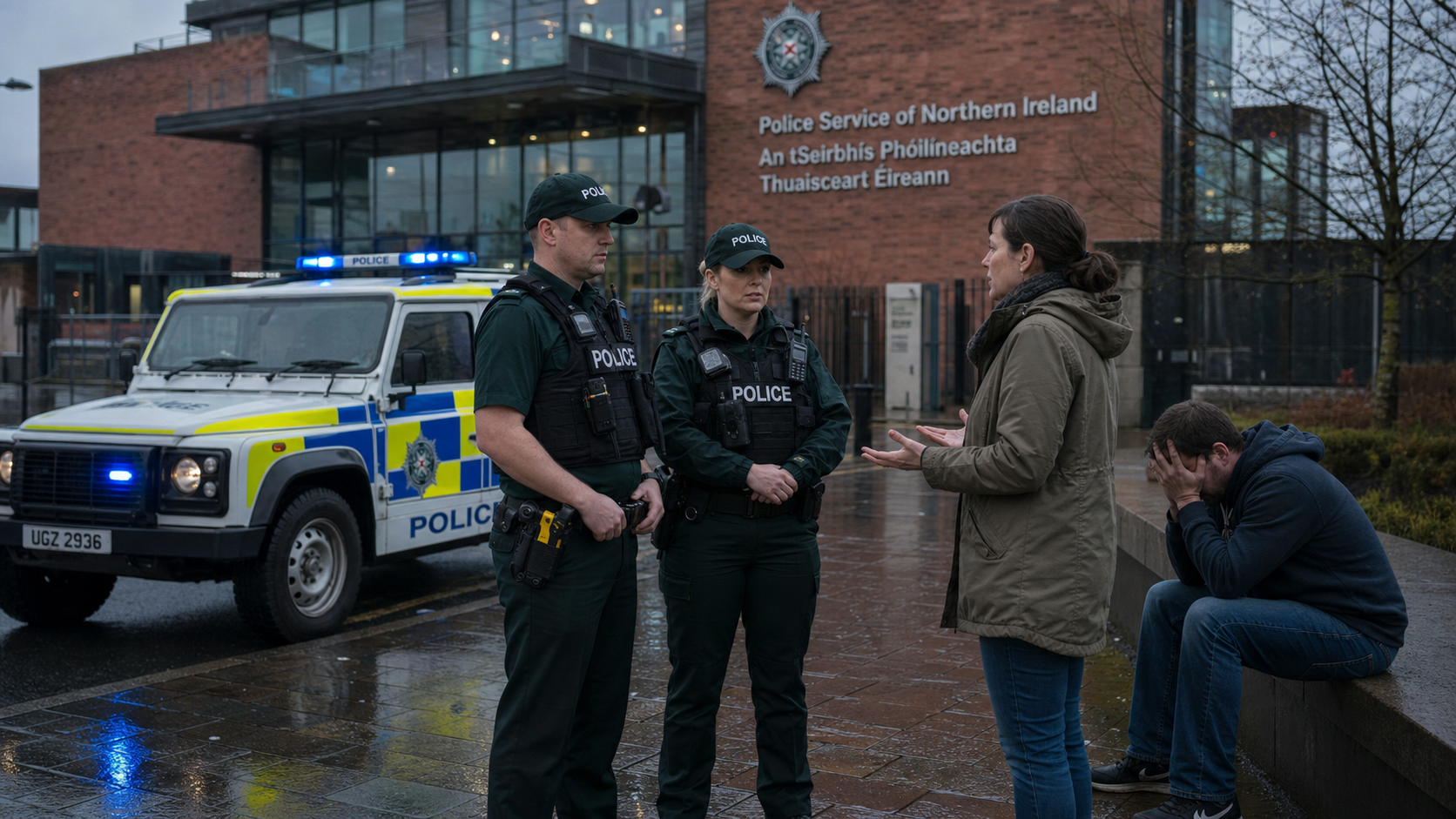
The PSNI's plan to expand Taser deployment across Northern Ireland, announced in response to 850 assaults on officers in the past twelve months, has prompted serious concerns from mental health advocates and human rights organisations, who warn that increased use of conducted energy devices in mental health crisis situations poses significant risks to vulnerable individuals and could undermine the community policing model that has been central to the peace process.
Background
Tasers — conducted energy devices that deliver an electric shock capable of temporarily incapacitating a person — have been used by the PSNI since 2012, initially on a limited basis and subsequently expanded to a wider range of officers. The devices are classified as less-lethal weapons and are intended to provide officers with an alternative to firearms in situations where a subject poses a threat to themselves or others. However, their use has been controversial, particularly in situations involving people experiencing mental health crises, where the shock can cause serious harm and where the presence of a Taser can escalate rather than de-escalate a situation.
The PSNI's announcement of an expanded Taser deployment comes in the context of a significant increase in assaults on officers. The 850 assaults recorded in the past twelve months represent a substantial rise on previous years and reflect a broader trend of increased violence against emergency service workers that has been observed across the United Kingdom and Ireland. The PSNI has argued that the expansion of Taser availability is a necessary response to this trend, providing officers with the tools they need to protect themselves and the public.
Mental health advocates have been raising concerns about the intersection of policing and mental health in Northern Ireland for several years. The region has some of the highest rates of mental ill-health in the United Kingdom, a legacy of the Troubles that has been well-documented in academic research. The PSNI is frequently called to incidents involving people in mental health crisis, and the question of how officers should respond to those situations — and what tools they should have available — is one of the most sensitive in Northern Ireland policing.
Key Developments
The PSNI's plan to expand Taser deployment was announced in the context of the 850 assault figure, which the service described as unacceptable and unsustainable. The expansion will see Tasers made available to a wider range of frontline officers, including those in response roles who do not currently carry the devices. The PSNI has said that all officers who carry Tasers will receive enhanced training in their use, including specific training on situations involving people in mental health crisis.
Mental health organisations, including the Northern Ireland Association for Mental Health (NIAMH) and the Mental Health Foundation, have responded with concern. They have argued that the expansion of Taser availability, without a corresponding investment in mental health crisis response capacity, risks increasing the harm caused to vulnerable individuals who come into contact with the police. They have also raised concerns about the disproportionate impact of Taser use on people from minority ethnic communities, a pattern that has been documented in England and Wales.
The Police Ombudsman for Northern Ireland has indicated that it will monitor the implementation of the expanded Taser policy closely and will investigate any incidents in which the use of a Taser results in serious injury or death. The Policing Board has similarly indicated that it will scrutinise the policy and its implementation through its oversight function.
Why It Matters
The Taser expansion debate goes to the heart of a fundamental tension in Northern Ireland policing: the need to protect officers from violence while maintaining the community trust that is essential to effective policing in a post-conflict society. The PSNI's legitimacy — which was hard-won through the reforms that followed the Patten Report — depends on its ability to police by consent, and any perception that the service is becoming more militarised or more willing to use force against vulnerable people risks undermining that legitimacy.
The mental health dimension is particularly significant. Northern Ireland's mental health crisis — driven by the legacy of the Troubles, high rates of poverty and deprivation, and chronic underfunding of mental health services — means that the PSNI is regularly called to situations that are fundamentally health emergencies rather than policing situations. The appropriate response to those situations is not a Taser but a mental health professional, and the expansion of Taser availability without a corresponding investment in mental health crisis response capacity is a symptom of a system that is not adequately resourced to meet the needs of its population.
Local Impact
The impact of the Taser expansion will be felt most directly in the communities where mental health crisis incidents are most common. In North and West Belfast, where rates of mental ill-health are among the highest in Northern Ireland, the PSNI is regularly called to incidents involving people in acute distress. In Derry, where the legacy of the Troubles has left a particularly deep mark on community mental health, the relationship between the police and the community is particularly sensitive. Mental health advocates in both cities have called for the PSNI to invest in joint response models — in which police officers and mental health professionals respond together to crisis incidents — as an alternative to expanding Taser availability.
What's Next
The PSNI is expected to publish a detailed implementation plan for the Taser expansion in the coming weeks, including the training requirements for officers and the protocols for use in mental health crisis situations. The Policing Board will hold a public session on the policy in October. Mental health organisations have indicated that they will seek a meeting with the Chief Constable to discuss their concerns and to advocate for investment in joint response models as an alternative approach.