PSNI Running on "Overtime and Cancelled Rest Days" as Budget Cuts Bite, Inspectorate Warns
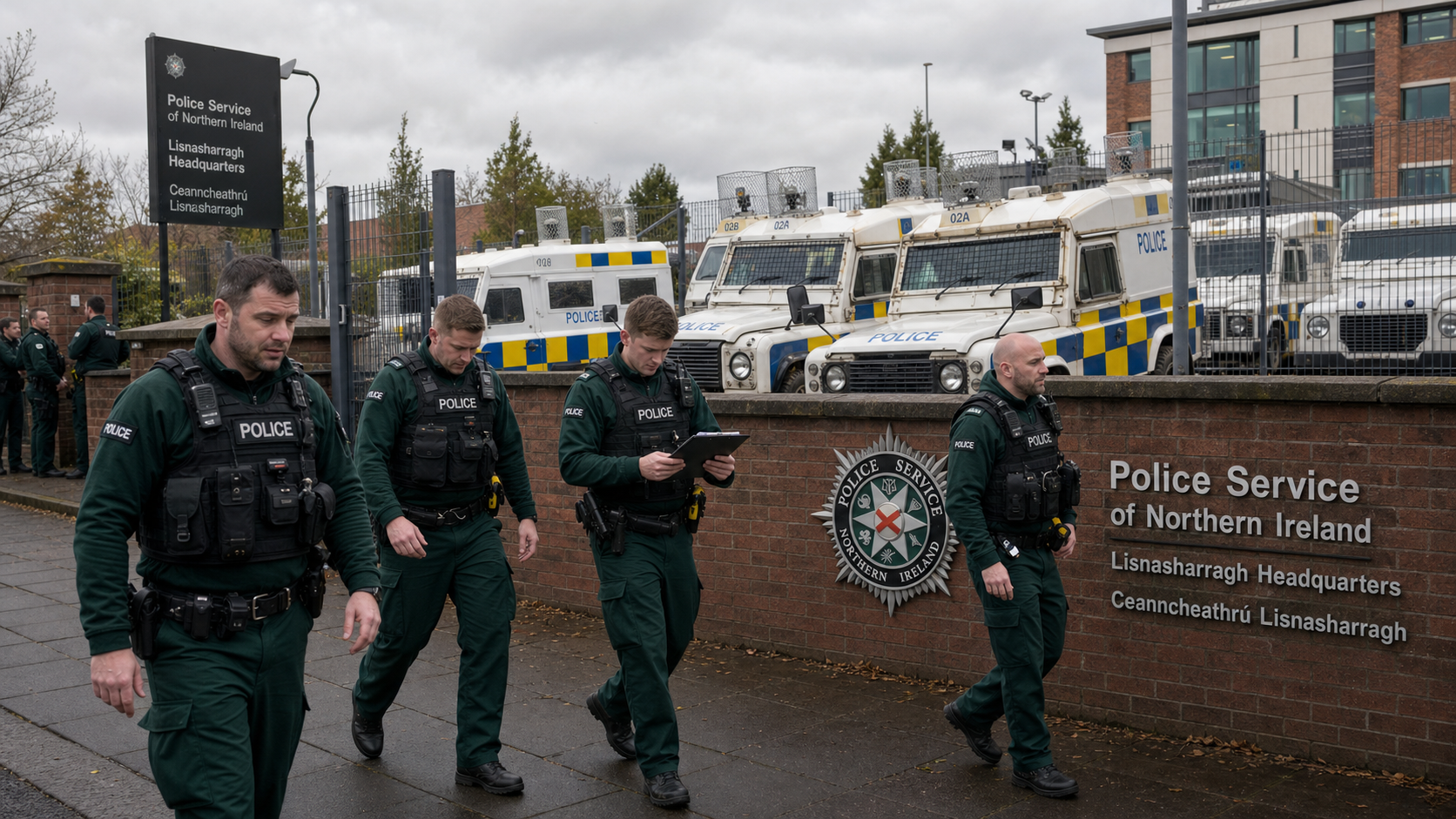
A damning report by His Majesty's Inspectorate of Constabulary and Fire and Rescue Services has concluded that chronic budget reductions and a prolonged recruitment freeze have severely hampered the PSNI's ability to keep people safe in Northern Ireland. The force is now heavily dependent on officer overtime and the cancellation of rest days to meet operational demand, raising serious concerns about staff fatigue, burnout, and long-term sustainability. The Police Federation for Northern Ireland has described the current situation as "unsustainable" and is demanding urgent financial intervention from both Stormont and Westminster.
Background
The PSNI has been operating under significant financial pressure for more than a decade, with successive budget settlements that have failed to keep pace with the demands placed on the force. Northern Ireland presents a uniquely complex policing environment — a society still managing the legacy of the Troubles, with a persistent dissident republican threat, ongoing community tensions around the marching season, and the full range of modern policing challenges including organised crime, cybercrime, and domestic abuse.
The recruitment freeze that has been in place for several years has resulted in a significant reduction in officer numbers, with the PSNI now operating with considerably fewer officers than it had at its peak. The force has attempted to manage this reduction through a combination of civilianisation — replacing sworn officers with civilian staff in roles that do not require police powers — and the increased use of overtime. But both strategies have their limits, and the HMICFRS report suggests those limits have been reached.
The inspectorate conducts regular assessments of police forces across England, Wales, and Northern Ireland, examining their efficiency, effectiveness, and legitimacy. Its reports carry significant weight with both the police service and the politicians who control its funding, and a critical assessment of this kind typically generates pressure for a response.
Key Developments
The HMICFRS report, published on Saturday 12 July, identifies several specific areas of concern. The force's reliance on officer overtime and cancelled rest days to maintain operational capacity is described as unsustainable, with inspectors warning that the resulting fatigue and burnout are affecting both individual officers and the quality of policing delivered to the public. The report notes a significant deficit in the number of detectives available to investigate serious crime, with the shortfall having a direct impact on the force's ability to bring offenders to justice.
Mental health-related absences are identified as a particular concern, with the report noting that the rate of such absences in the PSNI is significantly higher than in comparable forces. The inspectorate links this directly to the operational pressures officers are under, including the demands of policing a complex security environment and the personal toll of working in a force that is chronically under-resourced.
The report states that chronic financial pressures are "impacting the PSNI's operational capacity and its ability to keep people safe," a formulation that is unusually direct for an inspectorate report and reflects the seriousness of the inspectors' concerns. The Police Federation for Northern Ireland has welcomed the report's findings, describing the current situation as "unsustainable" and calling for immediate action.
Why It Matters
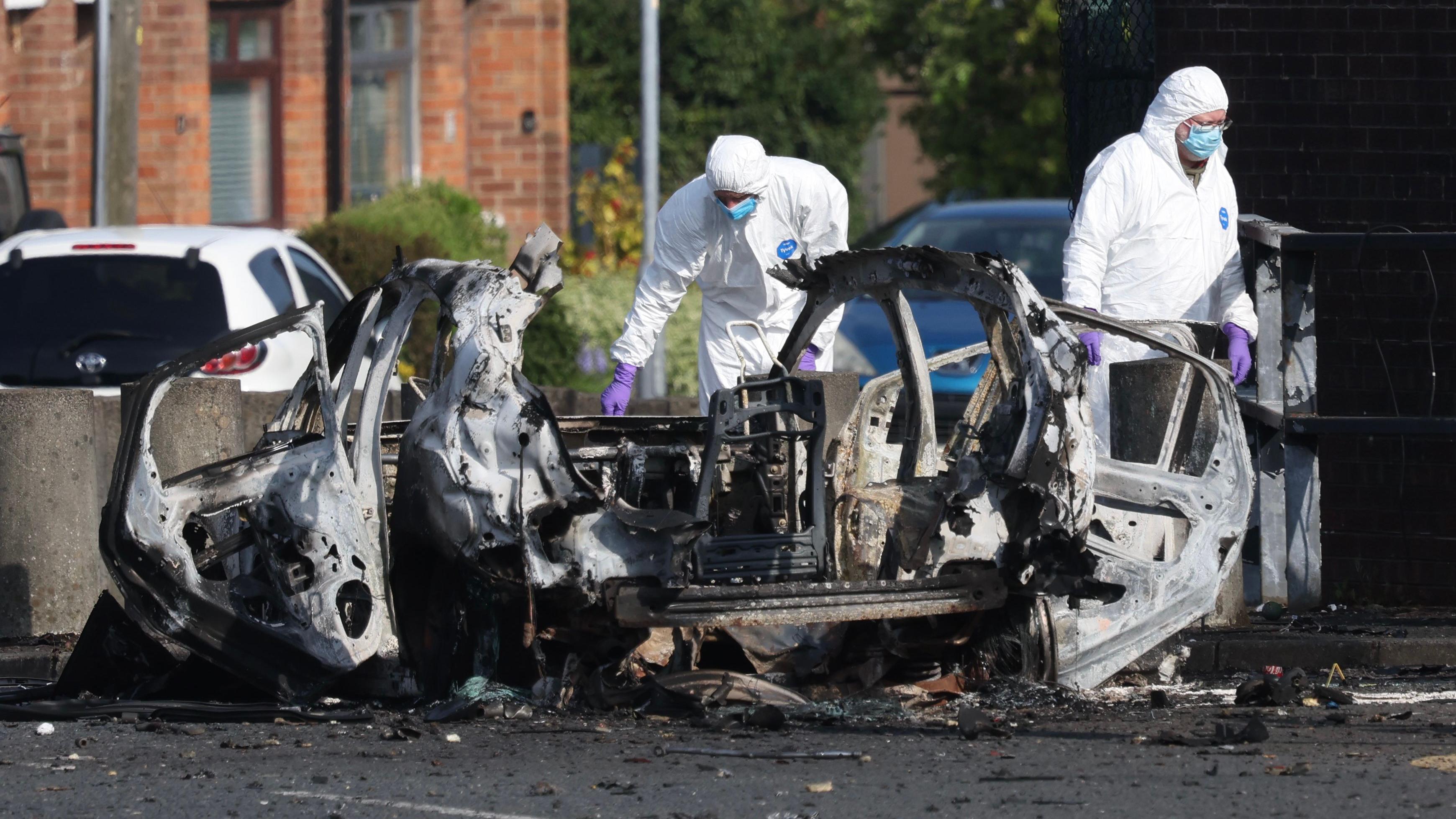
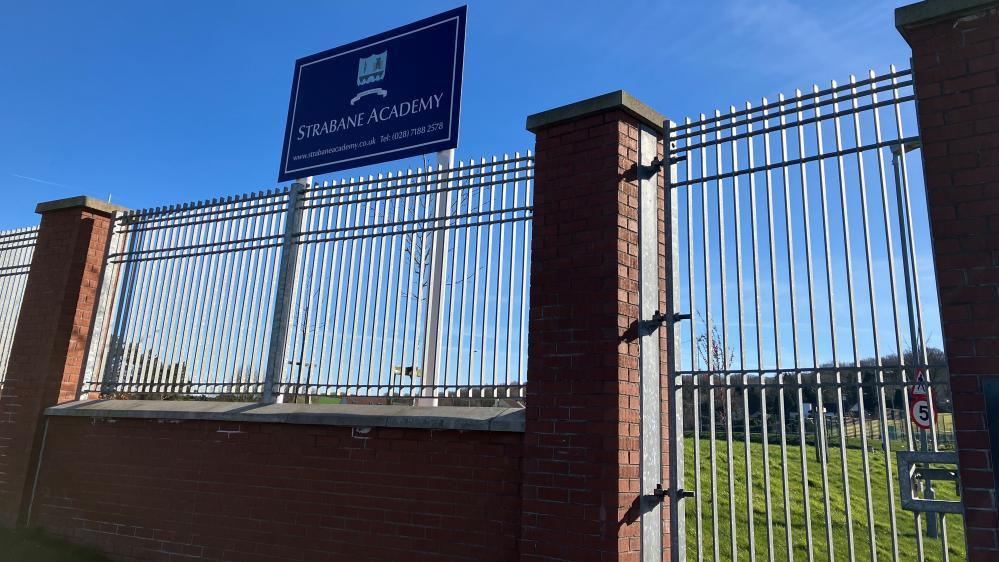
The HMICFRS report matters because it provides independent, authoritative confirmation of what PSNI officers and their representatives have been saying for years: that the force is being asked to do too much with too little. The political response to such reports is often to acknowledge the concerns while deferring action, but the combination of the inspectorate's findings and the current security environment — with the Dunmurry car bomb, the arson attacks in Coalisland and Limavady, and the ongoing threat from dissident republicans — makes that response harder to sustain.
The detective deficit is particularly concerning. Serious crime investigations — murders, sexual offences, organised crime — require experienced detectives who cannot be replaced by overtime or civilian staff. A shortage of detectives means that some serious crimes will take longer to investigate, that some offenders will remain at large for longer, and that some victims will wait longer for justice. The human cost of that deficit is real and significant.
The mental health crisis within the PSNI is also a matter of serious concern. Officers who are suffering from stress, anxiety, or depression are less effective in their work and more likely to make mistakes that have consequences for the public and for the force's reputation. The high rate of mental health-related absences is both a symptom of the pressure the force is under and a cause of further operational difficulties.
Local Impact
The impact of the PSNI's resource constraints is felt across Northern Ireland, but it is particularly acute in areas where demand for policing is highest. In Belfast, where the force is managing the aftermath of civil disorder, the demands of the marching season, and the ongoing dissident threat, the pressure on officers is especially intense. In rural areas, where police stations have been closed and response times have increased, communities feel the impact of reduced officer numbers in a different but equally significant way.
The Policing Board for Northern Ireland, which has oversight of the PSNI, is expected to discuss the HMICFRS report at its next meeting and to seek a response from the Chief Constable on the specific concerns raised. The Board has the power to make recommendations to the Secretary of State and the Stormont Executive on policing funding, and the report is likely to strengthen its hand in those discussions.
What's Next
The PSNI is expected to publish a formal response to the HMICFRS report within weeks, setting out the steps it intends to take to address the concerns raised. The Police Federation has called for an emergency meeting with the Justice Minister and the Secretary of State for Northern Ireland to discuss the funding situation. The Stormont Executive will face pressure to find additional resources for the PSNI in its next budget round, though the competing demands on the Executive's finances make that a difficult ask. Westminster's role in funding the PSNI — through the block grant and specific security-related allocations — will also come under scrutiny.