Dunmurry Car Bomb Condemned as "Attack on Us All" as PSNI Launches Attempted Murder Investigation
Political leaders from across Northern Ireland's divided political landscape have issued a rare joint condemnation of a car bomb attack outside a police station in Dunmurry, south-west Belfast, which the PSNI is treating as attempted murder. A hijacked vehicle containing an explosive device was detonated near the station in the early hours of Saturday 11 July, causing significant damage but no injuries. The attack has intensified concerns about the ongoing threat from dissident republican groups and the resource pressures facing the PSNI.
Background
Dunmurry, a suburban area straddling the boundary between Belfast and Lisburn, has been the scene of security incidents before, but the detonation of a car bomb outside a police station represents a significant escalation in the threat level. The area, which includes both nationalist and unionist communities, sits on the edge of the greater Belfast conurbation and is served by the PSNI's Lisburn and Castlereagh district command.
Dissident republican groups — primarily the New IRA and Continuity IRA — have maintained a persistent, if diminished, capacity to carry out attacks against police and security targets in Northern Ireland. While the frequency and scale of such attacks has declined significantly since the height of the Troubles, the threat has never been fully extinguished. The PSNI has consistently warned that the dissident threat remains "severe" in Northern Ireland, meaning an attack is considered highly likely.
The timing of the attack — on the eve of the Twelfth of July, the most significant date in the loyalist calendar — adds a further dimension of concern. Security forces had already deployed significant resources to police the Orangefest parades across Northern Ireland, and the car bomb attack placed additional strain on an already stretched PSNI operation.
Key Developments
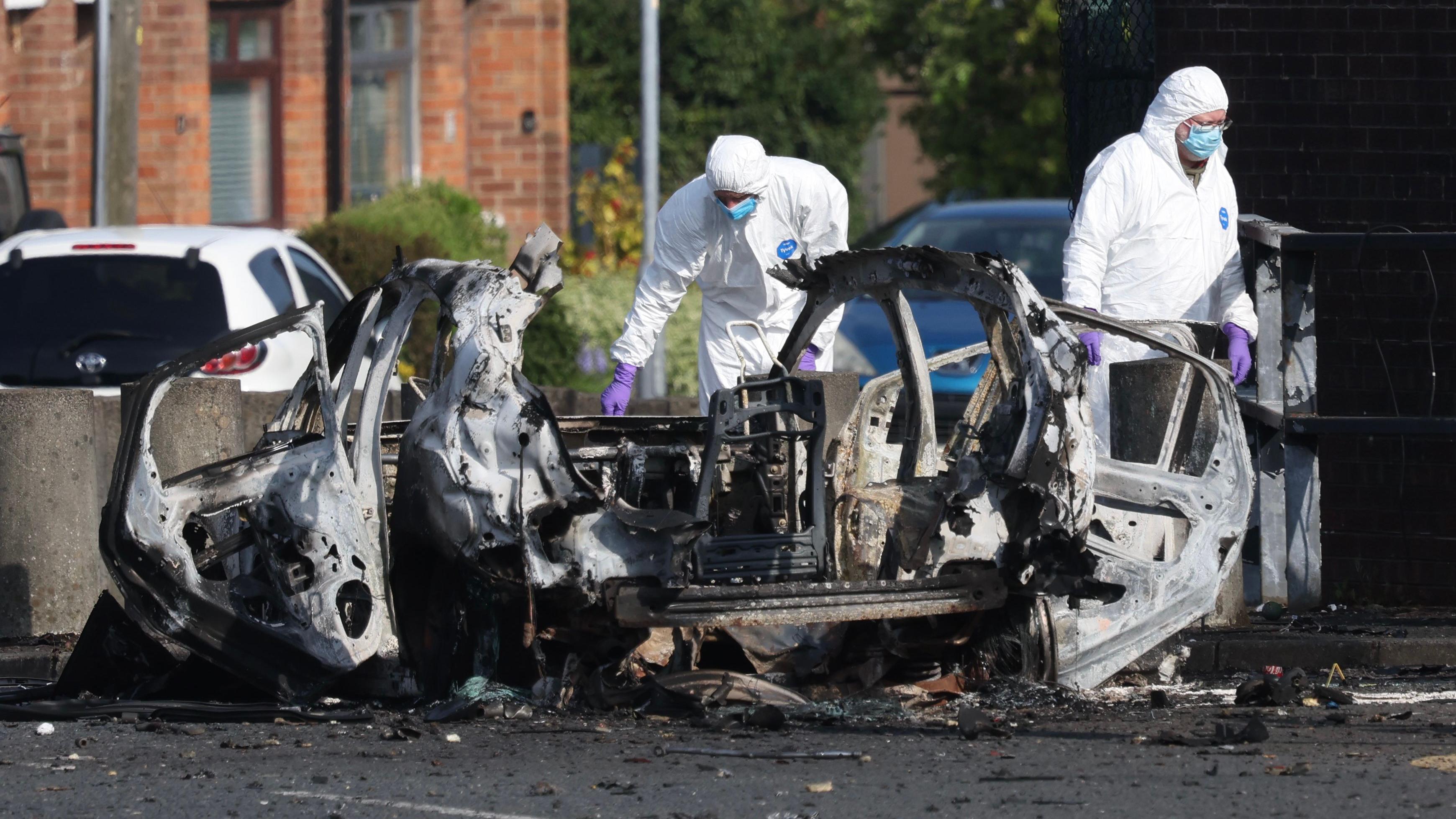
The attack occurred in the early hours of Saturday 11 July, when a vehicle was hijacked and driven to the vicinity of Dunmurry police station. The device was detonated, causing damage to the station and surrounding area. No officers or members of the public were injured, a fact that investigators attributed partly to the timing of the attack and partly to the rapid response of PSNI officers who had been alerted to the suspicious vehicle.
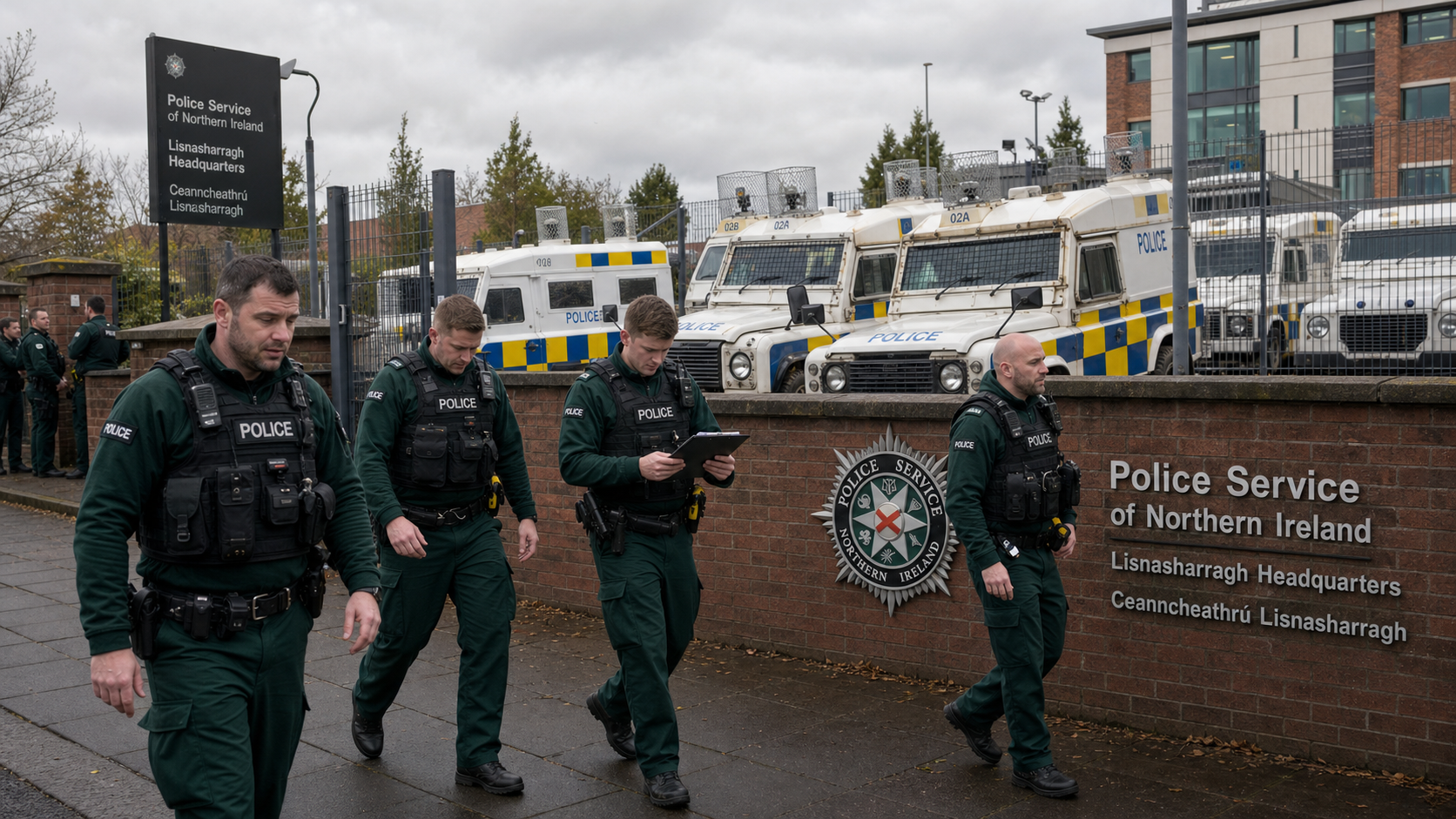
Chief Constable Jon Boutcher was unequivocal in his response, stating that the attack was not merely directed at the police but was "an attack on the community and on progress in Northern Ireland." His framing of the incident as an assault on the peace process itself — rather than simply a criminal act — reflects the PSNI's consistent approach to dissident republican violence, which seeks to deny such groups any political legitimacy.
First Minister Michelle O'Neill and deputy First Minister Emma Little-Pengelly issued a joint statement condemning the attack as "futile and reckless," a formulation that emphasises the political isolation of those responsible. The joint statement from the leaders of Sinn Féin and the DUP — parties that represent the two largest traditions in Northern Ireland — carries particular symbolic weight, demonstrating that the attack has united rather than divided the political mainstream.
Why It Matters
The Dunmurry car bomb is significant for several reasons beyond the immediate security threat. It demonstrates that dissident republican groups retain the capability and the intent to carry out attacks against police targets, even as their political support has dwindled to negligible levels. The attack comes at a moment when the PSNI is already under significant pressure — from budget cuts, recruitment freezes, and the demands of policing a complex and divided society — and adds to the operational burden on a force that is, by its own admission, stretched.
The political response is also instructive. The speed and unanimity of the condemnation from across the political spectrum — including from Sinn Féin, whose historical relationship with republican paramilitarism is complex — reflects how thoroughly the peace process has changed the political landscape. Twenty years ago, such a joint statement would have been unthinkable. Today, it is the expected response, and its absence would be the story.
For the communities of Dunmurry and south-west Belfast, the attack is a reminder that the normalisation of life in Northern Ireland remains incomplete. The vast majority of people in the area want nothing to do with political violence, but they live with its consequences — the disruption, the fear, and the damage to the area's reputation and economic prospects.
Local Impact
The immediate impact of the attack was felt in the Dunmurry area, where residents were evacuated from their homes during the security operation and roads were closed for several hours. Local businesses in the vicinity of the police station suffered disruption, and the psychological impact on residents — particularly those who lived through the worst years of the Troubles — should not be underestimated.
The PSNI's Lisburn and Castlereagh district command will face increased operational demands in the aftermath of the attack, with additional resources likely to be deployed to the Dunmurry area. The attack also has implications for the broader policing of south-west Belfast, an area that includes communities with complex relationships with the police and where trust-building has been a long-term priority.
What's Next
The PSNI's investigation into the Dunmurry attack is expected to be a priority for the force's serious crime branch, with forensic examination of the scene and analysis of CCTV footage likely to be central to the inquiry. The Police Service has appealed for anyone with information about the attack or the hijacking of the vehicle to come forward. Arrests are possible in the coming days and weeks as the investigation develops. The incident is also likely to feature in discussions at Stormont about the adequacy of PSNI funding and the resources available to counter the dissident republican threat.