Private Health Insurance Costs Skyrocketing in Ireland as Families Face Hundreds More Per Year in Premium Increases
Private health insurance premiums in Ireland are rising at rates that are significantly outpacing general inflation, with families facing increases of hundreds of euros per year as the country's three main insurers — VHI, Laya Healthcare, and Irish Life Health — pass on the costs of rising healthcare utilisation, increased hospital charges, and growing demand for mental health and chronic disease management services, prompting warnings from health economists that coverage is being pushed out of reach for middle-income families who cannot afford to go without insurance but are struggling to afford the premiums.
Background
Private health insurance occupies a unique and somewhat paradoxical position in the Irish healthcare system. Ireland has a universal public health system — the HSE — that is theoretically available to all citizens, but the reality is that the public system is under such pressure that many people feel they cannot rely on it for timely access to specialist care. The result is a two-tier system in which those who can afford private insurance get faster access to consultants, shorter waiting times for procedures, and access to private hospitals, while those who cannot afford insurance must rely on the public system with its long waiting lists.
Approximately half of the Irish population holds private health insurance, a proportion that is high by international standards and reflects both the inadequacy of the public system and the cultural expectation that health insurance is a necessity rather than a luxury. The insurance market is dominated by three providers — VHI, which is state-owned, Laya Healthcare, and Irish Life Health — and is regulated by the Health Insurance Authority.
The community rating system, which requires all insurers to charge the same premium for the same level of cover regardless of age or health status, is a distinctive feature of the Irish market that provides important protections for older and sicker policyholders. However, it also means that premium increases affect all policyholders equally, regardless of their individual risk profile.
Key Developments
The Irish Times reported this weekend that private health insurance premiums are rising at rates that are causing significant financial strain for many families. The increases, which have been running at several times the rate of general inflation for the past two years, reflect a combination of factors: rising hospital charges, increased utilisation of health services following the post-pandemic catch-up in elective procedures, growing demand for mental health services, and the increasing cost of new medical technologies and treatments.
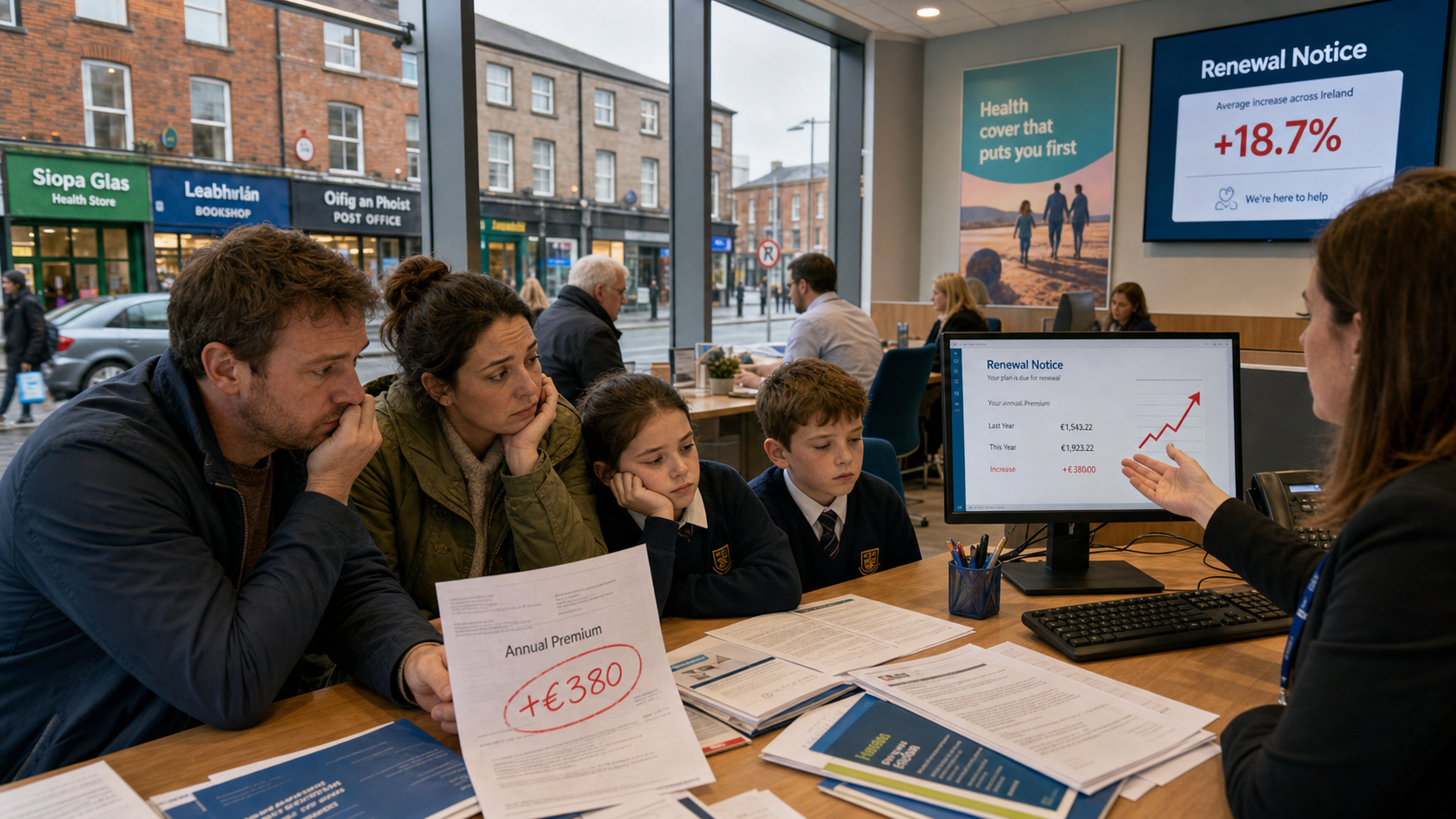
For a family of four with a mid-range health insurance plan, the annual premium increase over the past two years has been in the range of €400 to €600 — a significant additional cost at a time when families are already under pressure from rising mortgage rates, energy costs, and the general cost of living. For older policyholders, who typically hold more comprehensive plans, the increases have been even larger in absolute terms.
Health economists have warned that the premium increases are creating a situation in which middle-income families — those who earn too much to qualify for a medical card but not enough to absorb significant insurance cost increases without difficulty — are being squeezed out of the private insurance market. If this trend continues, it could lead to a significant increase in the number of people relying on the public system, further increasing pressure on an already strained HSE.
Why It Matters
The rising cost of private health insurance matters because it is a symptom of a deeper dysfunction in the Irish healthcare system. The fact that so many people feel they need private insurance to access timely healthcare is itself an indictment of the public system's capacity. A well-functioning universal health system should be able to provide timely access to specialist care for all citizens, regardless of their ability to pay for private insurance.
The Sláintecare reform programme, which was designed to move Ireland towards a single-tier health system with universal access, has been slow to deliver on its promises. The waiting lists for public outpatient appointments, which run into months or years for many specialties, are the primary driver of demand for private insurance, and until those waiting lists are addressed, the demand for insurance will remain high and the pressure on premiums will continue.
The mental health dimension of the premium increases is particularly concerning. The growing demand for mental health services — driven by the post-pandemic increase in anxiety, depression, and other conditions — is one of the fastest-growing cost drivers for insurers. The inadequacy of public mental health services, which have been chronically underfunded for decades, means that many people are turning to private providers for therapy and psychiatric care, and the cost of those services is being reflected in insurance premiums.
Local Impact
In Dublin, Cork, Galway, and other urban centres where the cost of living is highest, the premium increases are being felt most acutely by families who are already stretched by housing costs. For many families, the decision about whether to maintain health insurance has become a genuine financial dilemma — a choice between the security of coverage and the immediate financial relief of cancelling a policy that costs thousands of euros per year.
In rural areas, where access to public health services is often more limited than in urban centres, the pressure to maintain private insurance is even greater. A family in a rural county that is a long distance from the nearest public hospital may feel that private insurance is not a luxury but a necessity, regardless of the cost.
What's Next
The Health Insurance Authority is expected to publish its annual report on the private health insurance market in the autumn, which will provide a comprehensive picture of the premium trends and their impact on coverage rates. The Department of Health is expected to address the issue in the context of Budget 2027, with some form of tax relief on health insurance premiums — which currently exists but has not kept pace with premium increases — likely to be on the agenda. The Sláintecare implementation office will also be under pressure to demonstrate progress on reducing public waiting lists, which is the only sustainable long-term solution to the premium inflation problem.