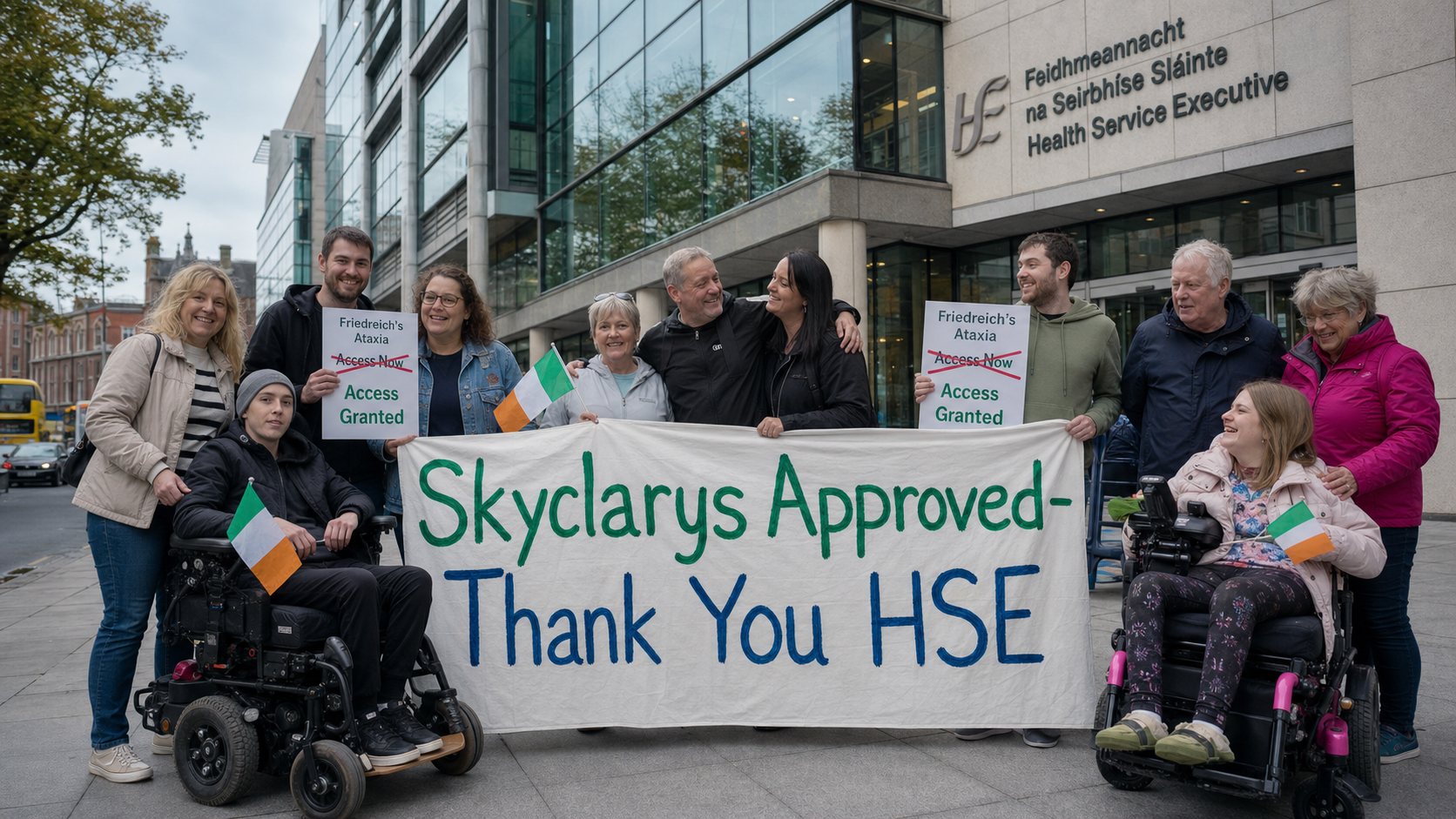
Paudie Coady to Return to School with a Smile as Skyclarys Approval Brings Hope to Friedreich's Ataxia Families
A Cork teenager with Friedreich's ataxia will walk back through the school gates this Friday with renewed hope, after the Health Service Executive approved the drug Skyclarys — a decision that ends a two-year campaign by his father Craig Coady and delivers a lifeline to approximately 200 patients across Ireland living with the progressive neurological condition.
Background
Friedreich's ataxia is a rare, inherited degenerative condition that progressively damages the spinal cord, peripheral nerves, and cerebellum, robbing patients of their coordination, balance, and, in many cases, their ability to speak clearly. In Ireland, around 200 people live with the diagnosis, making it one of the most common inherited ataxias in the country, yet one that has historically received limited therapeutic attention from pharmaceutical developers.
The Coady family from Cork became one of the most prominent voices in the campaign to secure access to Skyclarys — the brand name for omaveloxolone, developed by Biogen — after their son Rory died from the condition in September 2025 at just 13 years of age. His brother Paudie, who also has Friedreich's ataxia, continued to deteriorate without access to the drug, which had been approved by the European Medicines Agency but remained unreimbursed by the HSE due to cost concerns and questions about the strength of clinical evidence.
Craig Coady's campaign drew national attention when Paudie made a direct social media appeal for the medication, a moment that resonated deeply with the Irish public and intensified political pressure on the Department of Health. The family's story became emblematic of a broader frustration among rare disease patients in Ireland, who frequently face lengthy delays between European drug approval and HSE reimbursement decisions.
Key Developments
The HSE confirmed on Monday, 25 August, that it had approved Skyclarys for reimbursement following a substantially improved financial offer from Biogen. The pharmaceutical company had previously submitted a price that the HSE Drugs Group deemed too high relative to the clinical evidence base, but a revised offer — described by sources close to the negotiations as significantly lower — cleared the final hurdle.
Minister for Health Jennifer Carroll MacNeill moved swiftly after the announcement, requesting that the HSE and Biogen immediately begin the administrative work required to finalise the rollout of the treatment to eligible patients. Skyclarys is licensed for patients aged 16 and older, meaning Paudie Coady, who is of eligible age, will be among the first in Ireland to access the drug through the public health system.
Craig Coady described the approval as providing "a bit of light" for his family after an extraordinarily difficult period. Speaking to reporters in Cork, he said the decision came too late for Rory but would make a tangible difference to Paudie's quality of life and his ability to engage with education and daily activities. The drug does not cure Friedreich's ataxia, but clinical trials have demonstrated that it slows the physical deterioration associated with the condition, including its impact on vocal cords, coordination, and cardiac function.
Why It Matters
The approval of Skyclarys is significant not only for the 200 or so Irish patients who stand to benefit, but as a marker of how the HSE's rare disease reimbursement process functions under public and political pressure. Ireland has historically been among the slower European countries to reimburse newly approved rare disease therapies, a pattern that has drawn sustained criticism from patient advocacy groups and opposition politicians alike.
This case is the third time in recent years that a high-profile public campaign — driven by a family's direct advocacy rather than formal lobbying — has accelerated an HSE reimbursement decision. Unlike the Republic's approach to some other rare disease drugs, where negotiations have dragged on for three or four years post-EMA approval, the Skyclarys decision came within a more compressed timeframe, partly because of the visibility of the Coady family's campaign. For context, the average time between EMA approval and HSE reimbursement for rare disease drugs in Ireland has been approximately 22 months over the past five years, compared to a European median of around 16 months. The Skyclarys decision, while still delayed by patient advocates' standards, represents a modest improvement on that average.
The case also raises questions about the adequacy of the HSE's rare disease framework and whether families should need to mount public campaigns to access approved medicines. Several advocacy groups have called for a dedicated fast-track pathway for conditions affecting fewer than 500 patients in Ireland.
Local Impact
For the Coady family in Cork, the approval translates into something immediate and tangible: Paudie will return to school on Friday, 28 August, with a sense of optimism that has been absent for some time. His father described the prospect as "something we didn't dare hope for" during the darkest months of the campaign. Cork University Hospital, which manages a significant proportion of the country's Friedreich's ataxia caseload, is expected to be among the first centres to begin prescribing Skyclarys under the new reimbursement arrangement. The HSE's South/South West Hospital Group has indicated that clinical teams are ready to begin the prescribing process as soon as the administrative framework is in place. For families in Munster and beyond, the approval removes a financial barrier that had previously forced some patients to seek access through compassionate use programmes or, in some cases, to go without treatment entirely.
What's Next
The HSE and Biogen are expected to finalise the reimbursement agreement within the coming weeks, with prescriptions anticipated to begin issuing before the end of September 2026. The Department of Health has indicated that it will monitor the rollout closely and that Minister Carroll MacNeill intends to receive a progress report within 30 days of the agreement being signed. Patient advocacy groups, including Ataxia Ireland, have welcomed the decision but have signalled that they will continue to press for systemic reform of the rare disease reimbursement pathway to prevent future families from enduring the same prolonged wait.