Over 284,000 People Waiting for Primary Care Appointments as HSE Data Reveals Scale of Community Health Crisis
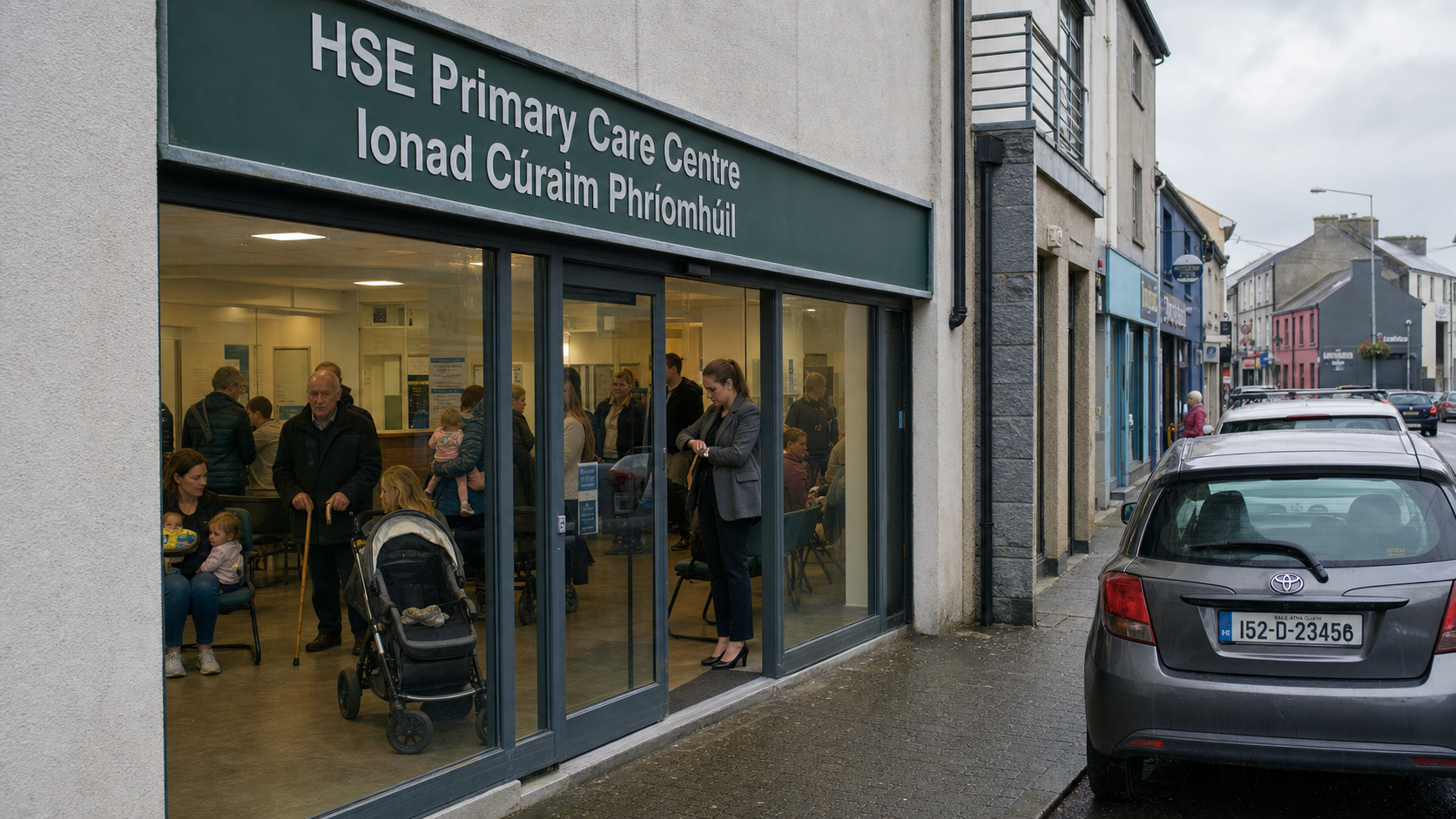
More than 284,000 people in Ireland are waiting for initial appointments across primary and community care services — with over 40% of those waiting being children, and nearly one in three patients having waited for more than a year — according to new HSE data that reveals the full scale of a community health crisis that exists largely in the shadow of the more visible acute hospital waiting list problem.
Background
Ireland's health system has been grappling with waiting list crises for decades, but the focus of public and political attention has typically been on the acute hospital sector — the queues for inpatient procedures, outpatient appointments, and emergency department treatment that have been a persistent feature of the Irish healthcare landscape. The community and primary care sector, which provides services including audiology, dietetics, occupational therapy, ophthalmology, physiotherapy, podiatry, and psychology, has received less attention, despite the fact that the waiting lists in this sector are, in many ways, equally severe and equally damaging to the health and wellbeing of those affected.
The HSE's primary and community care services are intended to provide the first line of response to health needs that do not require hospital treatment — the kind of early intervention that can prevent conditions from deteriorating to the point where hospital care becomes necessary. When these services are overwhelmed, the consequences are felt not only by the individuals who are waiting, but by the acute hospital sector, which ends up treating conditions that could have been managed more effectively and more cheaply in the community.
The data revealed in response to a parliamentary question provides the most comprehensive picture yet of the scale of the waiting list problem in the primary and community care sector. The figures, which cover services across the country, paint a picture of a system that is struggling to meet demand despite significant investment in recent years.
Key Developments
The HSE data reveals that more than 284,000 people are waiting for initial appointments across primary and community care services. Of these, over 120,640 — more than 40% — are children, a figure that is particularly alarming given the evidence that early intervention in childhood health conditions produces significantly better outcomes than delayed treatment. Nearly one in three patients across these services has been waiting for more than a year, with some waiting for two years or more.
Physiotherapy carries the largest waiting list, with 90,003 individuals awaiting an initial assessment. Occupational therapy, speech and language therapy, and psychology services also have significant backlogs, with children's services particularly affected. In the Midlands, approximately two-thirds of patients waiting for dietetics have been waiting for more than a year. In Waterford and Wexford, nearly 64% of those on the physiotherapy list have waited over 52 weeks.
The HSE has stated that increasing access to these services is a priority for the 2026 National Service Plan, with measures including the recruitment of 202 additional staff. A joint national programme — the Long Waiters Initiative — has been implemented to address backlogs in physiotherapy, occupational therapy, and speech and language therapy, with the goal of removing 80,000 long-term waiters from the lists. Despite these efforts, officials acknowledge that rising demand and service complexity continue to place sustained pressure on the system.
Sinn Féin health spokesperson David Cullinane described the figures as "a national scandal." "We have 284,000 people waiting for basic community health services, and 40% of them are children," he said. "This is not a new problem — it has been building for years — but the scale of it is shocking. The government needs to treat this as the emergency it is."
Why It Matters
The primary and community care waiting list crisis matters because it affects some of the most vulnerable people in Irish society. Children waiting for occupational therapy or speech and language therapy are children whose development is being compromised by the delay. Adults waiting for physiotherapy are adults whose conditions are deteriorating, whose quality of life is diminishing, and who may ultimately require more intensive and expensive treatment as a result of the delay. Older people waiting for audiology or ophthalmology services are older people whose independence and social engagement are being undermined.
The crisis also matters because it is, in large part, a preventable one. The evidence is clear that investment in primary and community care — in the services that catch health problems early and manage them in the community — reduces the demand on acute hospital services and produces better health outcomes at lower cost. Ireland has been slow to make this investment, and the waiting list figures are the consequence of that failure.
For comparison, the Republic's community care waiting lists are significantly longer than those in Northern Ireland, where the NHS model provides a different framework for primary care delivery. The contrast is not flattering for the HSE, and it raises questions about the structural adequacy of the Irish primary care model.
Local Impact
Across Ireland, the impact of the primary care waiting lists is felt in every community. In Dublin, where the population is largest and the demand for services is greatest, the waiting lists are longest in absolute terms. In rural areas — in counties like Leitrim, Roscommon, and Donegal — the waiting lists are compounded by the difficulty of accessing services that may be located far from where patients live. For families in these areas, a referral to a community physiotherapist or occupational therapist can mean a journey of an hour or more each way, adding to the burden of an already difficult situation.
For children with special educational needs, the waiting lists for occupational therapy, speech and language therapy, and psychology services have a direct impact on their ability to access appropriate educational support. Schools across Ireland have reported that children are arriving without the assessments and supports they need, placing additional pressure on teachers and special needs assistants who are already stretched.
What's Next
The HSE's Long Waiters Initiative is expected to make progress on reducing the longest waits over the coming months, with a target of removing 80,000 long-term waiters from the lists by the end of 2026. Budget 2027 will be a crucial moment for the primary and community care sector, with health advocacy groups calling for a significant increase in funding for community services. The Sláintecare reform programme, which is intended to shift the balance of Irish healthcare from acute hospital care to primary and community care, remains the long-term framework for addressing the waiting list crisis, but its implementation has been slower than planned.