Over 15 Million Under Fire Weather Alerts as Critical Wildfire Conditions Grip Central US
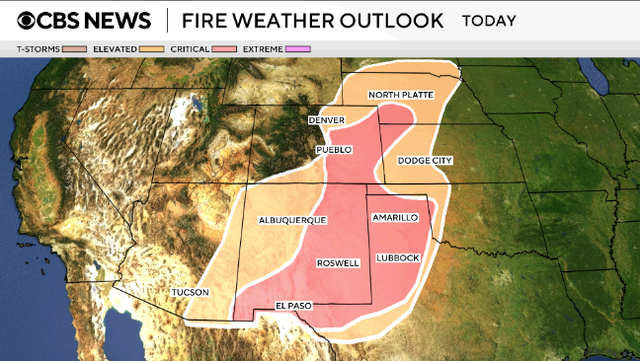
The National Weather Service issued critical fire weather warnings on April 24, 2026, placing more than 15 million people across the central United States under elevated wildfire risk as a powerful weather system brought high temperatures, very low humidity, and wind gusts of up to 60 mph to a broad swath of the country stretching from Colorado and New Mexico through Kansas, Nebraska, Oklahoma, and Texas.
Scope of the Threat
The most severe "critical" fire weather conditions were concentrated across parts of Colorado, Kansas, Nebraska, New Mexico, Oklahoma, and Texas, where the combination of drought-parched vegetation, low relative humidity, and powerful winds created conditions for rapid and potentially uncontrollable fire spread. Forecasters warned that any fire ignited under these conditions could spread faster than firefighters could contain it.
The warnings came just one day after a series of tornadoes struck northern Oklahoma, compounding the region's severe weather burden. Emergency managers across the affected states urged residents to avoid any outdoor burning and to report fires immediately.
Florida and Georgia Wildfires
The fire weather alerts in the central US coincided with an already active wildfire situation in the Southeast. More than 100 separate wildfires were reported burning across Florida and Georgia, fuelled by record-high drought conditions and strong winds. The fires have destroyed homes and forced hundreds of residents to evacuate, with state emergency management agencies coordinating resources across both states.
The Southeast fires are being exacerbated by the same drought conditions that prompted the USDA to declare disaster areas in Mississippi and Louisiana earlier this week, underscoring the breadth of the drought emergency gripping the southern United States.
Why It Matters
The convergence of critical fire weather across the central US and active wildfires in the Southeast represents one of the most significant multi-region fire weather events of the 2026 season. Climate scientists have noted that the combination of early-season heat, persistent drought, and strong wind events is consistent with long-term trends toward more intense and geographically widespread wildfire seasons in the United States.
The economic and human costs of the 2026 wildfire season are already mounting, with property losses in Florida and Georgia running into the hundreds of millions of dollars and the potential for further escalation if the central US fire weather threat materialises into major blazes.
What's Next
The National Weather Service was expected to update fire weather outlooks through the weekend. Residents in the affected regions were urged to monitor local emergency management alerts and have evacuation plans ready. Federal firefighting resources were being pre-positioned in anticipation of potential large fire starts across the central US.
Sources: CBS News; The Watchers; WTHR