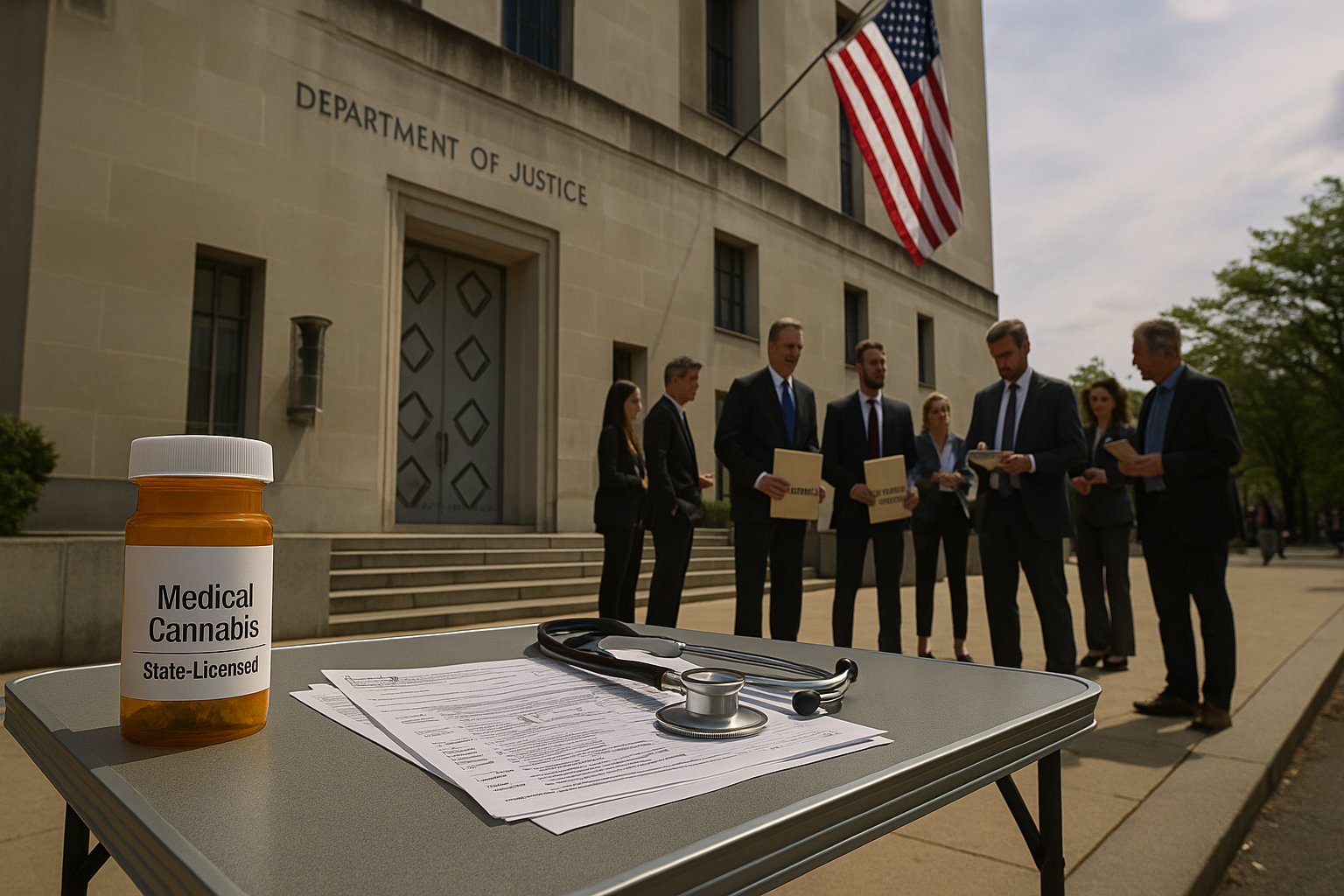
Trump Administration Reclassifies Medical Marijuana as Schedule III, Opening Door to Research and Tax Relief
Acting Attorney General Todd Blanche signed an order on April 23, 2026, immediately reclassifying FDA-approved marijuana products and state-licensed medical marijuana from Schedule I to Schedule III of the Controlled Substances Act — a landmark shift in federal drug policy that will ease research restrictions and deliver major financial relief to the medical cannabis industry.
Background
The reclassification follows President Trump's December 2025 executive order directing the Department of Justice to expedite the rescheduling of marijuana. For decades, marijuana had been classified as a Schedule I substance alongside heroin and LSD, a designation that implied no accepted medical use and imposed severe barriers on federally funded research. Schedule III substances — which include ketamine, anabolic steroids, and Tylenol with codeine — are recognised as having legitimate medical applications.
Key Developments
The immediate reclassification applies specifically to FDA-approved marijuana products and products regulated under state medical marijuana licences. It does not legalise recreational marijuana at the federal level, nor does it affect the sentences of those incarcerated for marijuana possession.
For state-licensed medical marijuana businesses, the change delivers a substantial financial benefit: they will no longer be subject to IRS Code Section 280E, which had previously barred them from deducting standard business expenses such as rent and payroll. The reclassification also opens the door to improved banking access, which had long been restricted due to federal drug laws.
Researchers will benefit significantly as well. Under Schedule I, obtaining a federal licence to study marijuana was an onerous process. The shift to Schedule III removes that barrier, potentially accelerating clinical trials and medical studies into cannabis's therapeutic applications.
In parallel, the DOJ and DEA initiated an expedited administrative hearing process to consider the broader rescheduling of all marijuana — not just FDA-approved products — from Schedule I to Schedule III. A new hearing is scheduled to begin on June 29, 2026.
Why It Matters
The reclassification represents the most significant shift in federal marijuana policy in decades and is expected to have wide-ranging implications for the cannabis industry, the medical research community, and state governments that have long operated medical marijuana programmes in a legal grey zone. Some analysts suggest the move could also carry political benefits for the administration ahead of midterm elections, appealing to younger and libertarian-leaning voters.
Critics, including anti-legalisation group Smart Approaches to Marijuana, condemned the decision, arguing that today's marijuana is more dangerous than previously understood and that the tax relief amounts to a windfall for what they called "the new Big Tobacco."
What's Next
The June 29 administrative hearing will determine whether the broader rescheduling of all marijuana — beyond just medical products — moves forward. Legal challenges from anti-legalisation advocates are expected, and Congress may also weigh in on the policy change in the coming months.
Sources: US Department of Justice; NPR; CNBC


