Oireachtas Committee Declares Homelessness a 'Human Catastrophe' as Eviction Ban Returns to Dáil
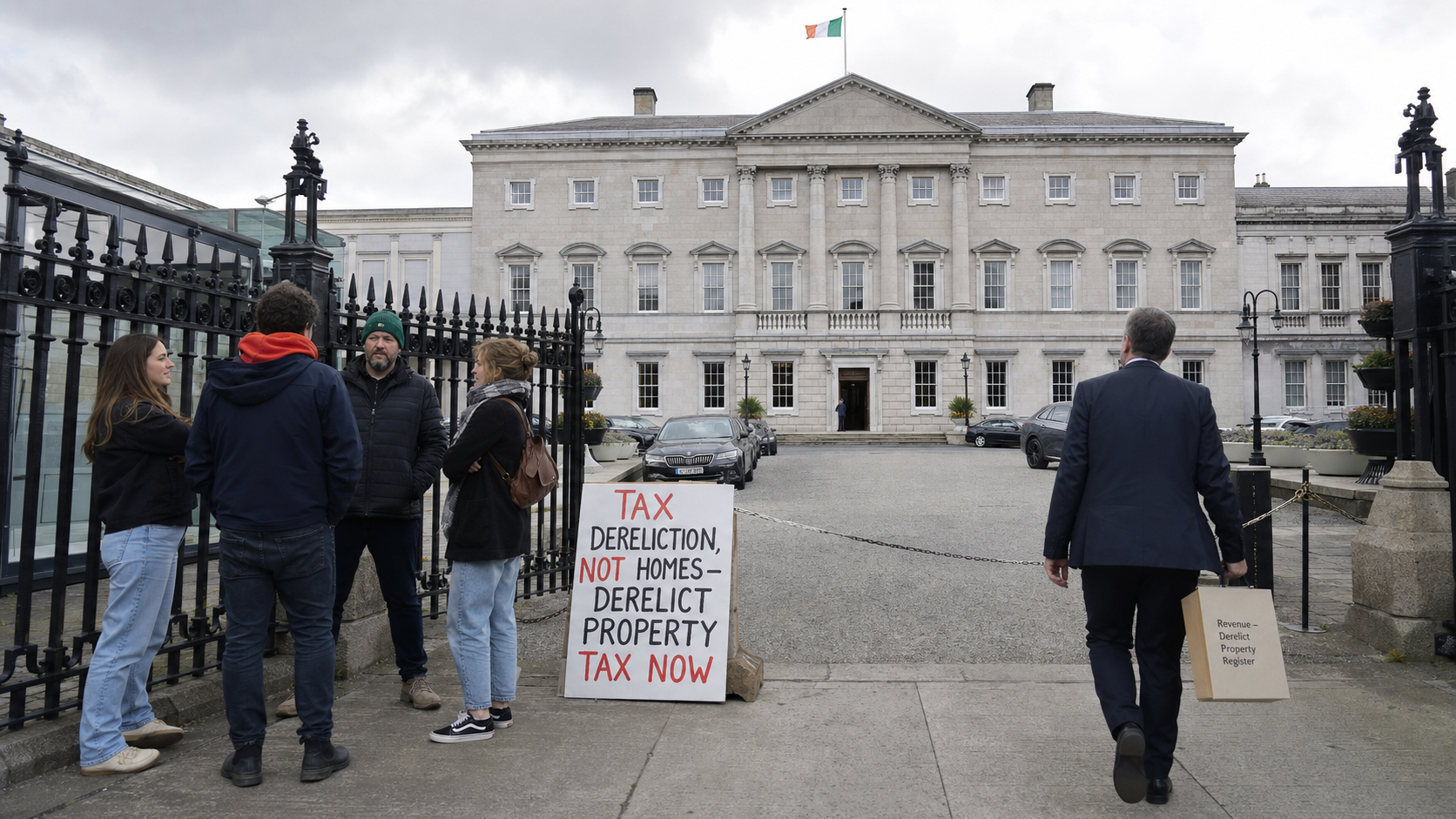
Ireland's Oireachtas Housing Committee has issued its starkest assessment yet of the country's housing emergency, describing the homelessness crisis as a "human catastrophe" and calling on the Government to reinstate an emergency eviction ban as the number of people in emergency accommodation surpasses 15,000 for the first time on record.
Background
The housing crisis has dominated Irish political discourse for the better part of a decade, but the scale of the emergency has accelerated sharply in the past eighteen months. The most recent figures from the Department of Housing show 15,124 people in emergency accommodation nationally, a figure that includes 4,200 children. The committee's intervention comes as a private member's bill proposing a temporary eviction ban returns to the Dáil floor, backed by Sinn Féin, the Social Democrats, and a number of independent TDs.
The committee, chaired by Fine Gael TD Emer Higgins, heard evidence from Focus Ireland, the Simon Community, and the Peter McVerry Trust over two days of hearings this week. All three organisations described conditions in emergency accommodation as deteriorating, with families spending an average of fourteen months in hotels and bed-and-breakfast settings before securing longer-term housing.
Key Developments
The committee's interim report, published on Thursday, contains twelve recommendations, the most contentious of which is a call for an emergency eviction ban covering no-fault terminations. The Government has previously resisted such a measure, arguing that it would deter landlords from entering or remaining in the rental market. However, the committee found that the current rate of landlord exits — estimated at 4,500 properties per year — is already occurring without any such ban in place.
Focus Ireland chief executive Pat Dennigan told the committee that the organisation was now supporting more than 13,000 people in crisis, a figure that has doubled since 2020. He described the situation as "a failure of policy at every level" and called for a dedicated emergency housing fund of at least €500 million to be ring-fenced in the next supplementary budget.
The Simon Community's national director Wayne Stanley pointed to the particular vulnerability of families with children, noting that 47 per cent of children in emergency accommodation are under the age of five. "These are children who have never known a stable home," he told the committee. "The developmental consequences of that are profound and long-lasting."
The eviction ban bill, introduced by Sinn Féin housing spokesperson Eoin Ó Broin, passed its first stage in the Dáil on Wednesday evening by 81 votes to 74, with several Government backbenchers abstaining rather than voting against. The bill would prohibit no-fault evictions for a period of twelve months, with a review mechanism built in.
Why It Matters
The committee's language marks a significant escalation in the political framing of the housing crisis. The phrase "human catastrophe" carries weight precisely because it comes from a cross-party body that includes Government TDs. It signals that the political consensus around the Government's Housing for All strategy — which emphasised supply-side measures over demand-side protections — is fracturing under the weight of the evidence.
The return of the eviction ban debate is particularly significant given that a previous ban, introduced during the energy crisis of 2022-23, was allowed to lapse amid industry pressure. The current political arithmetic in the Dáil is tighter than it was then, and the Government cannot rely on comfortable majorities to defeat the bill at subsequent stages. The abstentions among Government backbenchers on Wednesday suggest that the whip system is under strain on this issue.
For the 15,000 people currently in emergency accommodation, the committee's report offers a measure of political validation, but the practical question of when and how housing will be delivered remains unanswered. The report acknowledges that even if all recommended measures were implemented immediately, the pipeline of social and affordable housing would not be sufficient to address the backlog within the current Dáil term.
Local Impact
The crisis is felt acutely in Dublin, where 9,200 of the 15,124 people in emergency accommodation are located. Cork city has seen a 34 per cent increase in homeless presentations in the past year, with the Simon Community's Cork service reporting that its emergency beds have been at capacity every night since February. In Galway, the Western Region Homeless Action Team has flagged a shortage of family emergency accommodation, with some families being placed in hotels as far away as Athlone. Limerick's Novas organisation has called for the urgent activation of vacant council-owned properties in the city centre.
What's Next
The eviction ban bill returns to the Dáil for its second stage debate next Tuesday. The Government is expected to publish a counter-proposal focused on enhanced tenant protections short of a full ban. The Housing Committee's full report, including minority views from Government members, is due to be published by the end of June. Minister for Housing James Browne has said he will respond formally to the committee's recommendations within four weeks.