Northern Ireland's Hospital Waiting Lists Hit Record 542,000 as Half a Million Patients Wait More Than a Year for Consultant
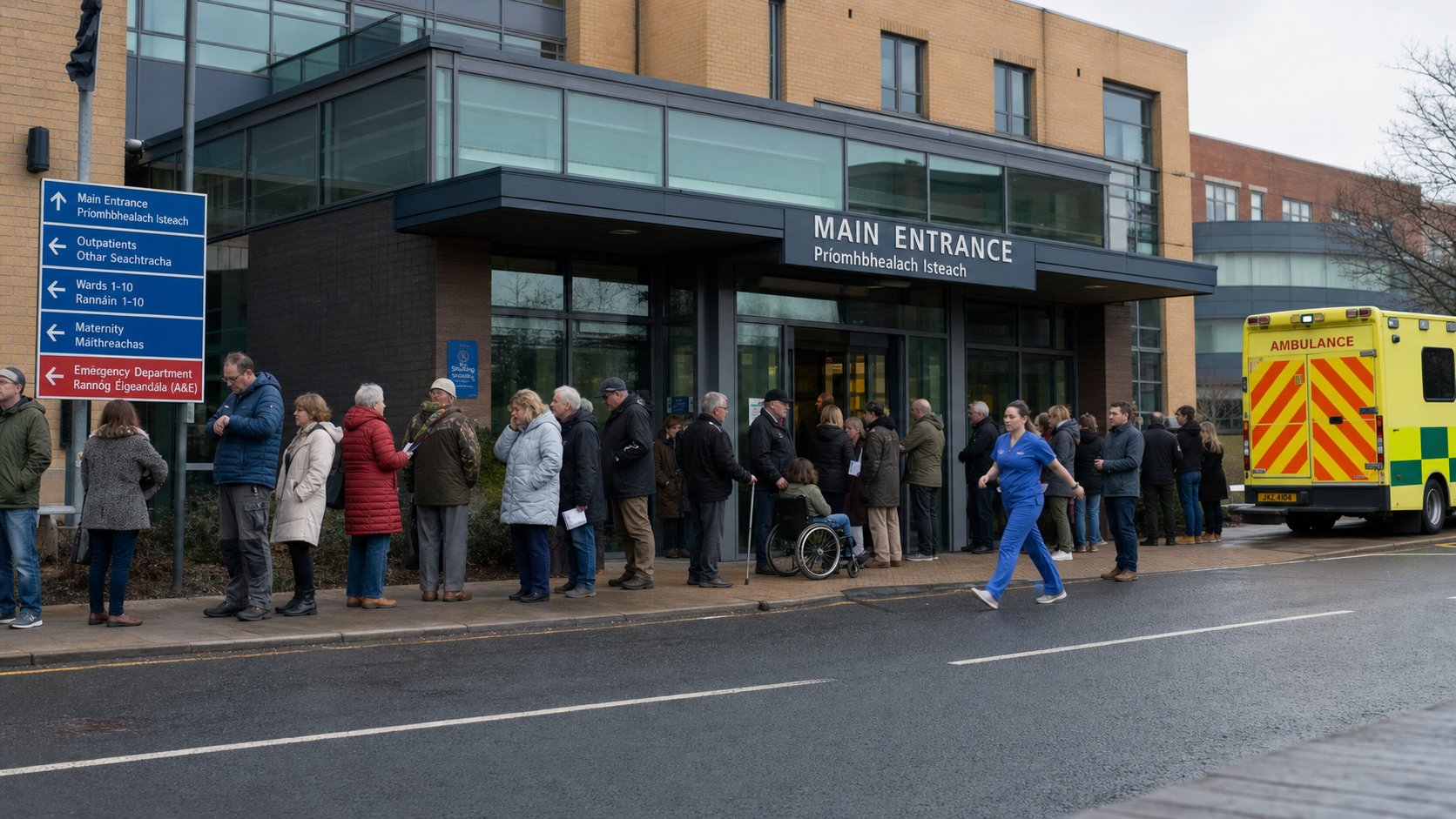
Northern Ireland's hospital waiting lists have reached a record high of 542,451 patients waiting for consultant-led outpatient appointments, with more than 55 per cent of those patients — approximately 298,000 people — having waited longer than a year for an appointment that official targets say should be provided within nine weeks, in a crisis that health professionals are describing as the most severe in the history of the devolved health service.
Background
Northern Ireland's health service has been struggling with waiting list pressures for many years, but the scale of the current crisis represents a qualitative shift from the chronic difficulties of previous decades. The combination of an ageing population, rising rates of chronic disease, the legacy of the Covid-19 pandemic, and years of underinvestment in health infrastructure has created a situation in which the gap between demand and capacity has become, in the words of one senior clinician, "structurally unbridgeable without a fundamental change in approach."
The official targets for waiting times in Northern Ireland require that 50 per cent of patients be seen within nine weeks of referral, with no patient waiting longer than 52 weeks. Current data shows that over 85 per cent of patients wait longer than nine weeks, while 55 per cent wait longer than a year. The most extreme cases involve waits of up to 305 weeks — nearly six years — for certain specialties. These figures place Northern Ireland significantly behind the rest of the United Kingdom in terms of waiting time performance, and far behind the Republic of Ireland's HSE targets, which are themselves under significant pressure.
The specialties with the longest waiting lists are Ear, Nose and Throat, followed by gynaecology, ophthalmology, and general surgery. In addition to the 542,451 patients waiting for outpatient consultations, more than 225,000 people are waiting for diagnostic tests — a figure that compounds the overall picture of a health service struggling to meet the needs of its population.
Key Developments
The Department of Health has characterised the latest figures as a "meaningful representation" of the current landscape, noting that the data collection process has been standardised across all health trusts following the adoption of the Encompass electronic patient record system. The standardisation has, in some cases, made the figures appear worse than previous data suggested, because it has captured patients who were previously not being counted consistently.
There have been some areas of progress. Under the guidance of Professor Mark Taylor, efforts to address the backlog have produced a 62 per cent reduction in endoscopy waiting lists as of October 2025, and the number of patients waiting more than four years for key procedures had been halved since March 2025. But these improvements are dwarfed by the overall scale of the problem, and the Department of Health has acknowledged that the current trajectory is not sustainable.
The budget deadlock at Stormont has been a significant factor in the health service's inability to address the waiting list crisis. The Executive's Programme for Government had earmarked up to £215 million to tackle waiting lists, but more than £73 million of that funding was diverted to cover the Department of Health's operational deficit — a decision that has been criticised by health professionals and patient groups as robbing Peter to pay Paul.
Why It Matters
The waiting list crisis in Northern Ireland is not an abstract statistical problem — it represents real suffering for real people. A patient waiting five years for an ENT appointment is not just inconvenienced; they may be living with chronic pain, hearing loss, or a condition that is deteriorating while they wait. A patient waiting two years for a gynaecology appointment may be managing a condition that is affecting their quality of life, their ability to work, and their mental health. The human cost of the waiting list crisis is immense, and it falls disproportionately on those who cannot afford to pay for private treatment — the people who depend most on the public health service. Northern Ireland is the only UK jurisdiction that has not fully implemented a comprehensive "Referral to Treatment" tracking system, which would allow for a more transparent, end-to-end view of the patient journey and make it easier to identify and address bottlenecks in the system.
Local Impact
The waiting list crisis affects patients across all five health and social care trusts in Northern Ireland. In the Belfast Trust, which serves the greater Belfast area including North and West Belfast, the pressure on acute services is particularly intense, with the Royal Victoria Hospital and the Belfast City Hospital both operating at or above capacity for extended periods. In the Western Trust, which serves Derry and the surrounding area, the waiting list figures are among the worst in the region, reflecting the historical underinvestment in health infrastructure in the north-west. In the Southern Trust, which covers Armagh, Newry, and the surrounding area, the closure of services at Daisy Hill Hospital in Newry has added to the pressure on the trust's remaining facilities. The Northern Trust, covering Antrim and the north-east, and the South Eastern Trust, covering Down and the Ards Peninsula, face similar challenges.
What's Next
The Department of Health is expected to publish its next quarterly waiting time statistics in October. The NI Health Minister has announced an independent reconfiguration committee to scrutinise hospital service changes, which is expected to report before the end of the year. The Stormont Health Committee will hold hearings on the waiting list crisis in October, with the chief executives of all five health trusts expected to give evidence. The budget talks between the NI Secretary and the Executive parties are expected to include a specific discussion of health funding, with the waiting list crisis likely to be a central argument for additional Westminster support.