Northern Ireland Waiting Lists Hit Record 542,000 as No Health Trust Meets Targets and Some Patients Wait Six Years
Northern Ireland's hospital waiting lists have reached a record high of 542,451 patients waiting for a first consultant-led outpatient appointment, with no Health and Social Care trust meeting its ministerial waiting time targets and some patients facing waits of up to 305 weeks — nearly six years — for certain specialties. The figures, which represent the most comprehensive picture of waiting list lengths since all five trusts adopted the Encompass electronic patient record system, have prompted renewed calls for emergency investment in the health service and for a resolution of the Stormont budget deadlock that has prevented the Executive from funding waiting list reduction measures.
Background
Northern Ireland's health service has been grappling with a waiting list crisis for over a decade, but the scale of the problem has reached unprecedented levels in 2026. The region's five Health and Social Care trusts — Belfast, South Eastern, Southern, Western, and Northern — are responsible for delivering hospital and community health services to a population of approximately 1.9 million people, and all five are operating under severe financial and capacity constraints that have made it impossible to meet the government's waiting time targets.
The ministerial targets require that 50 per cent of patients should be seen within nine weeks of referral, with no patient waiting longer than 52 weeks. The current data shows that over 85 per cent of patients have waited longer than the nine-week target, and more than 55 per cent have waited for a period exceeding 52 weeks. The average wait time for a consultant appointment exceeds one year, and in some specialties — including ears, nose and throat, gynaecology, and ophthalmology — the waits are significantly longer, with some patients facing waits of up to 305 weeks, or nearly six years.
The waiting list crisis has been exacerbated by the Stormont budget deadlock, which has prevented the Executive from funding the waiting list reduction measures that were promised in the Programme for Government. The Executive had earmarked up to £215 million for waiting list reduction, but over £73 million of this funding was diverted to address the Department of Health's financial deficit, leaving the waiting list reduction programme significantly underfunded.
Key Developments
The figures published this week represent the first full picture of waiting list lengths since all five trusts collectively adopted the Encompass electronic patient record system, which was rolled out across Northern Ireland between June and September 2025. The Encompass system has improved the accuracy and completeness of waiting list data, and the record high of 542,451 patients partly reflects the fact that the new system has captured patients who were previously not recorded on the waiting list. However, health officials have acknowledged that the underlying demand for services has also increased significantly, driven by an ageing population, rising rates of chronic disease, and the backlog created by the Covid-19 pandemic.
In addition to the 542,451 patients waiting for outpatient appointments, more than 225,000 patients are currently waiting for diagnostic tests, including MRI scans, CT scans, and endoscopies. The endoscopy waiting list has seen some improvement — a 62 per cent reduction was reported as of October 2025 — but the overall diagnostic waiting list remains at a level that health officials describe as deeply concerning. Professor Mark Taylor, who was appointed in July 2025 to lead a team dedicated to reducing waiting lists, has indicated that progress is being made in some areas but that the scale of the challenge requires sustained investment over several years.
The Department of Health has been in contact with the UK Government about the implications of the Stormont budget deadlock for the waiting list reduction programme, and has indicated that any resolution of the budget dispute that includes additional funding for health will be used in part to address the waiting list crisis. The UK Government's £1.5 billion package, which includes £1.25 billion in core funding for the Executive over three years, would provide some additional resources for health, but the Department has warned that the scale of the waiting list problem requires a level of investment that goes beyond what is currently on offer.
Why It Matters
The waiting list crisis matters because it represents a fundamental failure of the health system to meet the needs of the people it is supposed to serve. A patient waiting 305 weeks for an ENT appointment is not receiving the care they need, and the consequences of that delay — in terms of deteriorating health, reduced quality of life, and increased demand on other parts of the health system — are real and significant. The fact that no trust in Northern Ireland is meeting its waiting time targets is a damning indictment of the state of the health service, and the failure to resolve the Stormont budget deadlock has made it impossible to fund the measures that would begin to address the problem.
The comparison with the Republic of Ireland is instructive. The HSE's waiting list crisis is also severe, but the Republic has been able to fund a range of waiting list reduction measures — including the National Treatment Purchase Fund, which pays for patients to be treated in private hospitals — that have had some impact on the backlog. Northern Ireland lacks an equivalent mechanism, and the absence of a functioning budget has prevented the Executive from developing one. The result is a health service that is falling further behind with each passing month.
Local Impact
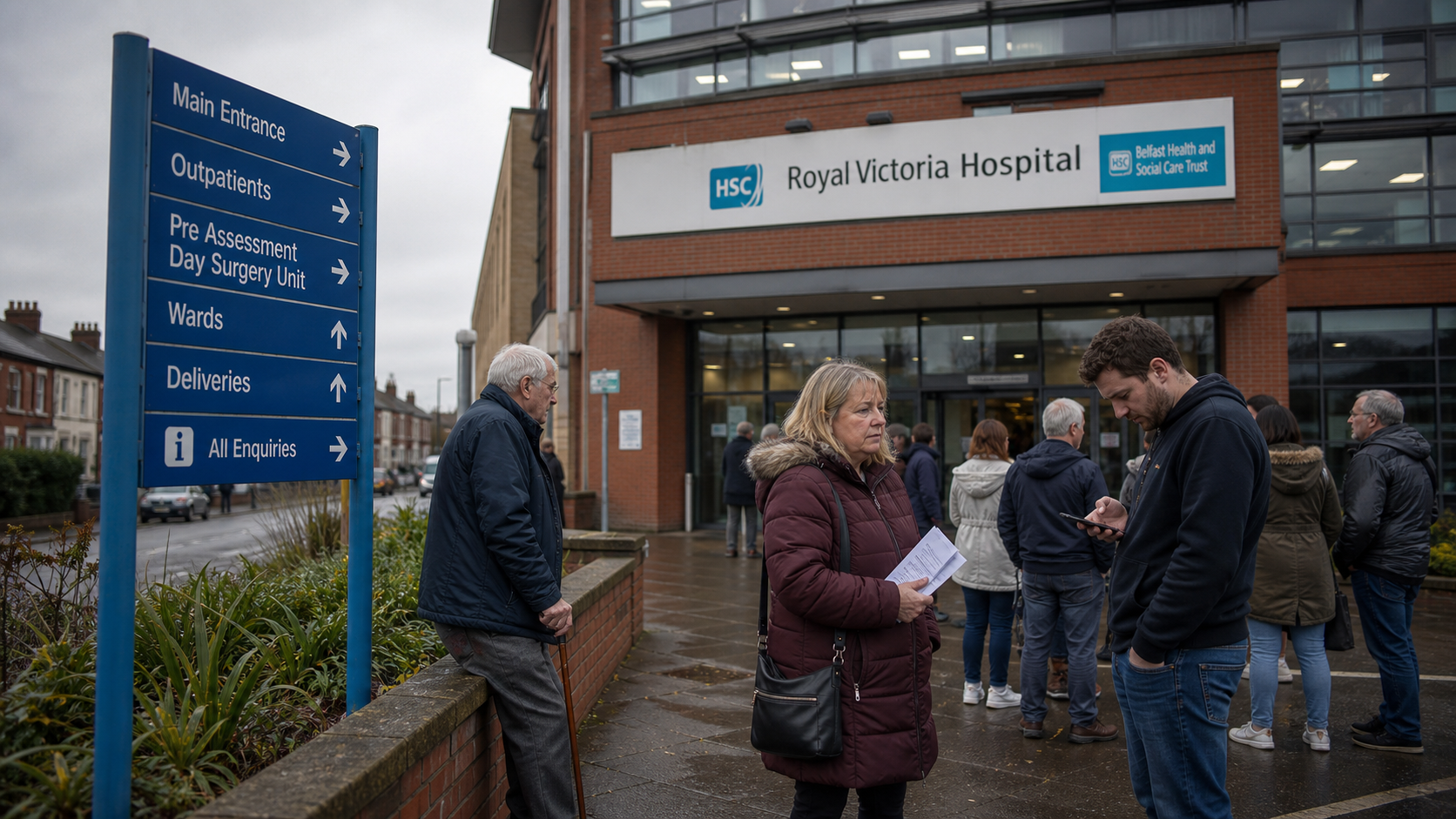
The waiting list crisis is being felt across all five trust areas, but the impact is particularly acute in the Western Health and Social Care Trust, which covers Derry, Fermanagh, and the surrounding area. The Western Trust has consistently had the longest waiting times of any trust in Northern Ireland, reflecting the challenges of delivering services to a geographically dispersed population with limited transport infrastructure. In the Belfast Trust, which covers the capital and its immediate hinterland, the waiting lists are also at record levels, with the Royal Victoria Hospital, the Belfast City Hospital, and the Mater Hospital all reporting significant backlogs in a range of specialties. In the Southern Trust, which covers Armagh, Down, and the surrounding area, the planned temporary closure of the Daisy Hill Hospital maternity unit in Newry — due to a failure to recruit sufficient consultant obstetricians — has added to the pressure on an already stretched service.
What's Next
The Department of Health is expected to publish a new waiting list reduction plan before the end of October, setting out the specific measures that will be taken to address the backlog in the most critical specialties. The plan will be contingent on the resolution of the Stormont budget deadlock, and the Department has indicated that it will not be possible to make meaningful progress on waiting list reduction without additional funding from the UK Government. Professor Mark Taylor's team will continue its work on identifying efficiencies and innovative approaches to waiting list management, and the Department has indicated that it will consider the use of independent sector capacity — including private hospitals — to supplement NHS provision in the most pressured specialties. The Stormont Assembly's Health Committee is expected to hold a special session on the waiting list crisis before the end of October, at which the Department of Health and the five trust chief executives will be asked to account for the current situation and to set out their plans for improvement.