Northern Ireland Launches New Plan to End Violence Against Women and Girls
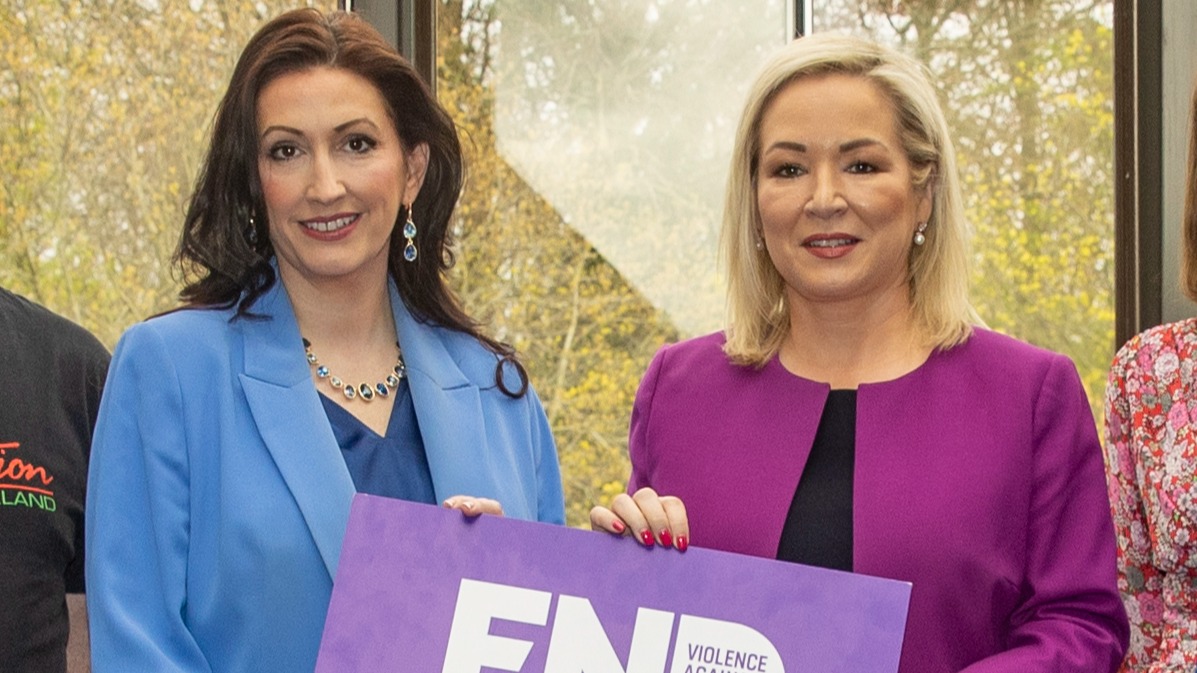
First Minister Michelle O'Neill and deputy First Minister Emma Little-Pengelly have jointly launched Northern Ireland's new 2026-2028 delivery plan aimed at ending violence against women and girls, with an additional £2 million in funding — but advocacy groups are warning that strategic commitments must be matched by concrete action and proper resourcing if the plan is to make a real difference.
The plan, unveiled on 22 April 2026 at an event attended by survivors, government stakeholders, and partner organisations, outlines a series of strategic actions designed to tackle the root causes of gender-based violence, improve support services for victims, and hold perpetrators accountable. The cross-party nature of the launch — with both ministers from different political traditions — signals a rare moment of political unity on one of Northern Ireland's most pressing social challenges.
Background
The scale of the challenge is stark. Research indicates that a staggering 98% of women in Northern Ireland have experienced at least one form of violence or abuse in their lifetime, with half of those women experiencing their first incident before the age of 11. Within the past year alone, seven out of ten women reported experiencing some form of violence or abuse. Domestic abuse incidents have doubled since 2004, with the Police Service of Northern Ireland responding to a call every 16 minutes.
The new delivery plan is a continuation of the EVAWG Strategic Framework established in 2024 and forms part of a seven-year strategy that has now received a total investment of £7 million since its inception. The urgency of the initiative is underscored by a devastating statistic: 30 women have been killed in Northern Ireland since 2020, with seven of those deaths occurring since the strategy first launched. First Minister Michelle O'Neill described the levels of violence as an "epidemic" and a "scourge of our society."
There is also a stark disparity in how safe men and women feel in public spaces. Only 27% of female respondents reported feeling safe in a park or open space after dark, compared to 68% of male respondents — a disparity that amounts to what campaigners describe as a gender-based curfew on women's freedom of movement.
Key Developments
A central aspect of the next phase is tackling misogyny in young men, including working with young boys and men on behaviours, coercive control, and understanding healthy relationships through training delivered in schools, sporting organisations, and hospitals. Deputy First Minister Emma Little-Pengelly stressed that prevention is key to tackling the underlying causes of violence before it starts, and criticised online platforms, referring to social media as an "absolute sewer" due to its role in promoting misogynistic attitudes.
Belfast City Council is supporting the strategy through its Local Change Fund, which has provided almost £255,000 to 50 community and voluntary groups for projects delivered between summer 2025 and April 2026. The plan promotes a "whole society" approach, encouraging government departments, community organisations, and the public to play a role in prevention and ensuring safety.
However, Women's Aid Federation Northern Ireland has raised serious concerns about implementation. The organisation highlights that key protective legislation — including the Domestic Abuse & Civil Proceedings Act 2021 and the Protection from Stalking Act (NI) 2022 — remains incompletely implemented due to a lack of resources. WAFNI has also flagged that its own core funding of £147,000 was cut by the Department of Health in 2023, leaving it as the only Women's Aid federation in the UK and Ireland without state funding.
Why It Matters
The EVAWG strategy represents a genuine attempt to address one of Northern Ireland's most entrenched social problems. The cross-party commitment from both the First Minister and deputy First Minister is significant in a political context where consensus is hard-won. MPs on the Northern Ireland Affairs Committee have called for improved coordination and information sharing on VAWG across all four UK nations, and Northern Ireland's framework is being watched as a potential model for UK-wide policy development.
Yet the gap between strategic ambition and operational reality remains a serious concern. WAFNI has urged the government to move beyond strategic documents to concrete action, calling for the urgent reinstatement of core funding for specialist services and the full ratification and implementation of the Istanbul Convention — the international gold standard framework for tackling gender-based violence.
Local Impact
For communities across Belfast and Northern Ireland, the plan's success will be measured in lives protected and changed. The Local Change Fund's investment in 50 community and voluntary groups reflects the understanding that tackling gender-based violence requires grassroots engagement as much as top-down policy. Women's organisations in Belfast have long been at the forefront of this work, often with limited resources, and the additional £2 million in funding — while welcome — must be directed where it is most needed: to the frontline services that support survivors and their families every day.
What's Next
The 2026-2028 delivery plan will be implemented across Northern Ireland, with progress monitored by the Executive Office. Community organisations and statutory bodies will work together to deliver training, awareness campaigns, and support services for those affected by gender-based violence. The official plan is available at The Executive Office, with further analysis from Women's Aid Federation Northern Ireland.