Northern Ireland Economy Faces Sub-1% Growth as Windsor Framework Burdens and Skills Shortages Bite
Northern Ireland's economy is on course for growth of less than 1% in 2026, with business groups describing the performance as 'weak and uneven' and identifying a combination of global volatility, high energy costs, above-target inflation, Windsor Framework administrative burdens, and persistent skills shortages as the primary headwinds facing local firms — a sobering assessment that stands in sharp contrast to the more positive picture emerging from the Republic of Ireland's domestic economy.
Background
Northern Ireland's economy has historically underperformed relative to the rest of the United Kingdom, a gap that reflects a combination of structural factors including a large public sector, a relatively small private sector, limited foreign direct investment, and the legacy of the Troubles. The peace process and the Good Friday Agreement created the conditions for significant economic improvement, and the province did experience a period of catch-up growth in the years following the Agreement. However, the structural challenges have proved persistent, and Northern Ireland continues to have lower productivity, lower wages, and higher rates of economic inactivity than most other UK regions.
The Windsor Framework, which replaced the Northern Ireland Protocol following negotiations between the UK and EU governments, was intended to resolve the trade frictions that had complicated Northern Ireland's economic position since Brexit. While the Framework has addressed some of the most acute problems — particularly around the movement of goods from Great Britain to Northern Ireland — it has introduced new administrative requirements that many businesses find burdensome. The requirement to complete additional paperwork, to comply with EU regulations in some areas, and to navigate a complex dual regulatory environment has added costs and complexity for firms trading across the Irish Sea.
The skills shortage facing Northern Ireland businesses is a long-standing structural problem that has been exacerbated by Brexit, which reduced the flow of workers from EU countries, and by the pandemic, which prompted significant numbers of workers to leave the labour market. The shortage is particularly acute in sectors including construction, hospitality, healthcare, and technology, and it is constraining the ability of businesses to grow even when demand conditions are favourable.
Key Developments
The latest economic assessment from Northern Ireland's business representative bodies projects growth of under 1% for 2026, a figure that represents a significant downgrade from earlier forecasts. The assessment identifies several key factors driving the weak performance: global economic uncertainty, which is dampening demand for Northern Ireland's exports; high energy costs, which are particularly burdensome for manufacturing and food processing businesses; above-target inflation, which is squeezing consumer spending and business margins; and the ongoing challenges of the Windsor Framework.
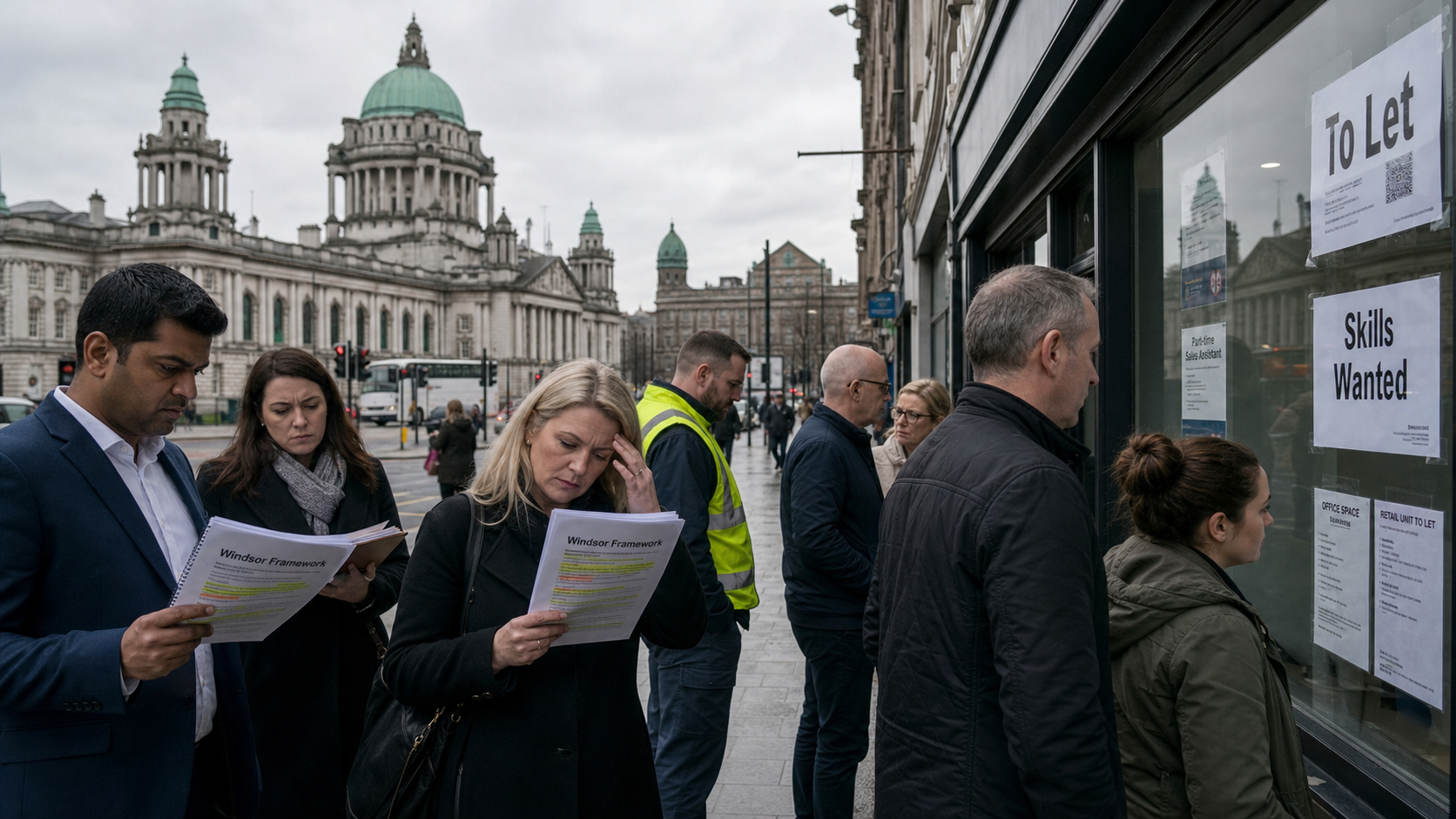
Nearly half of local firms surveyed by business groups reported ongoing difficulties with the administrative requirements of the Windsor Framework, including additional paperwork, regulatory compliance costs, and uncertainty about the rules governing specific product categories. The dual regulatory environment — in which Northern Ireland businesses must comply with both UK and EU regulations in some areas — is described by many firms as a significant competitive disadvantage relative to businesses in Great Britain or the Republic of Ireland.
The skills shortage is manifesting in a particularly concerning way: recruitment activity is now focused primarily on replacing departing staff rather than on expansion. This means that even businesses that are performing well and that have the demand to grow are unable to do so because they cannot find the workers they need. The situation is particularly acute in the construction sector, where the shortage of skilled tradespeople is constraining the delivery of housing and infrastructure projects.
Why It Matters
The weakness of Northern Ireland's economic performance matters for several reasons. At the most fundamental level, it means that living standards in Northern Ireland are not improving at the rate that would be needed to close the gap with the rest of the UK and with the Republic of Ireland. The productivity gap between Northern Ireland and the UK average has been a persistent feature of the economic landscape for decades, and the current period of weak growth is doing nothing to close it.
The contrast with the Republic of Ireland's domestic economy — which is growing at over 4% annually — is particularly striking. The two economies are deeply interconnected, with significant cross-border trade and investment flows, but the divergence in their growth rates reflects the very different structural positions of the two jurisdictions. Northern Ireland's dependence on the public sector, its limited foreign direct investment, and the complications of its post-Brexit regulatory position all contribute to a structural disadvantage that is difficult to address in the short term.
Local Impact
For businesses and workers across Northern Ireland, the weak economic outlook translates into real constraints on wages, investment, and opportunity. In Belfast, the city's ambitions for economic regeneration — centred on the Titanic Quarter, the city centre, and the emerging tech and creative sectors — are being hampered by the skills shortage and by the uncertainty created by the Windsor Framework. In the agri-food sector, which is one of Northern Ireland's most important industries, the combination of high energy costs and regulatory complexity is squeezing margins and threatening the viability of some smaller producers. In the construction sector, the shortage of skilled workers is delaying housing and infrastructure projects across the province.
What's Next
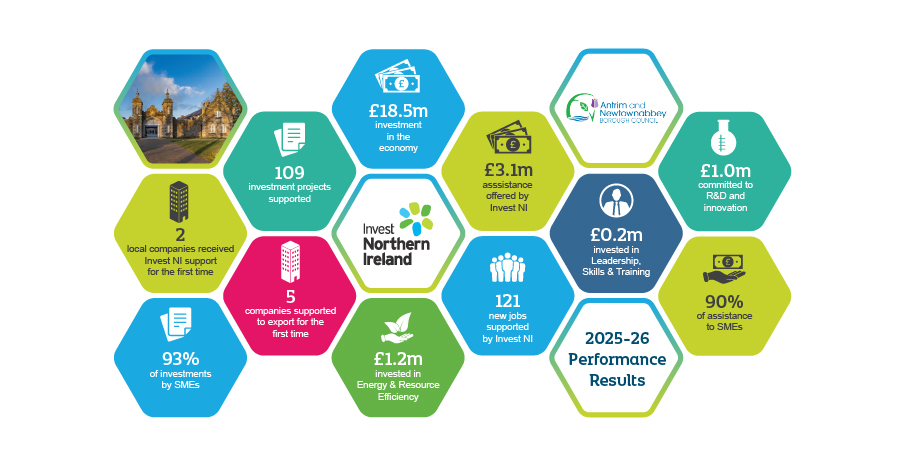
The Northern Ireland Executive's economic strategy is expected to be reviewed in light of the latest growth projections, with the Department for the Economy under pressure to identify new measures to stimulate investment and address the skills shortage. The Windsor Framework Joint Committee, which oversees the implementation of the Framework, is scheduled to meet later this month, and Northern Ireland business representatives are expected to use the meeting to press for further simplification of the administrative requirements. Invest NI, the economic development agency, is also expected to announce a series of new initiatives aimed at attracting foreign direct investment to Northern Ireland in the coming months.