NI Special Schools at Capacity as Education Authority Warns of Unsustainable SEN Demand Surge
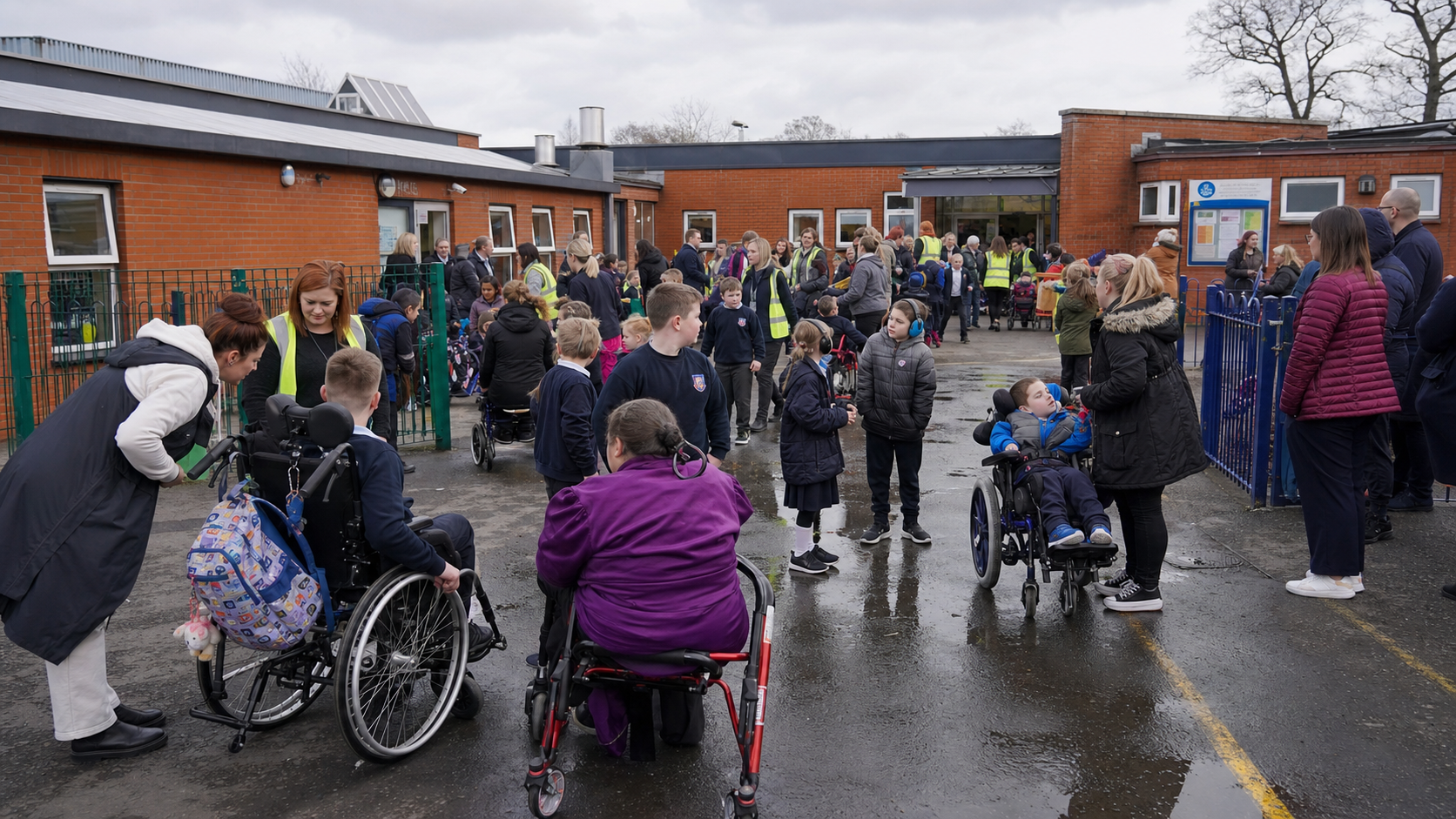
The Education Authority has confirmed that all special schools in Northern Ireland are at or near capacity as demand for special educational needs places has surged by more than 50% over the past five years, placing the system under severe and growing strain. While the authority confirmed that over 4,400 places have been secured for the September 2026 intake and that fewer than five children remain without a confirmed placement, it has warned that the current approach — characterised by last-minute scrambles to find places for children with complex needs — is fundamentally unsustainable and requires significant structural change.
Background
The provision of education for children with special educational needs is one of the most significant challenges facing the Northern Ireland education system. The number of children identified as having SEN has grown dramatically over the past decade, driven by a combination of factors including improved diagnostic practices, greater awareness of conditions such as autism spectrum disorder and ADHD, and genuine increases in the prevalence of some conditions. The result has been a demand for specialist educational provision that has consistently outpaced the capacity of the system to respond.
Special schools in Northern Ireland cater for children with the most complex needs — those who require a level of specialist support that cannot be provided in a mainstream setting, even with additional resources. These schools are staffed by highly trained professionals and equipped with specialist facilities, and they play a critical role in ensuring that children with the most significant disabilities and learning difficulties receive an education that meets their needs. The fact that all of these schools are now at or near capacity is a serious indicator of the pressure the system is under.
The Education Authority, which is responsible for managing school places across Northern Ireland, has been working to address the capacity crisis through a combination of infrastructure investment and the expansion of specialist provision within mainstream schools. Construction projects at 115 schools have created 192 new places specifically within special schools, and approximately 30% of mainstream schools are now equipped with specialist SEN provision classes. These measures have helped to manage the immediate pressure, but the authority has been clear that they are not sufficient to address the underlying structural challenge.
Key Developments
The Education Authority confirmed on Friday that it had secured over 4,400 school places for children with SEN for the September 2026 intake, with fewer than five children still awaiting a confirmed placement as of mid-August. The authority indicated that plans were in place to finalise these remaining placements, and that all children would have a confirmed school place before the start of term. While this outcome represents a significant logistical achievement, the authority was candid about the difficulty of the process and the unsustainability of the current approach.
At Knockavoe School, one of the special schools facing the most acute pressure, the nursery intake was temporarily paused to accommodate a second primary one class due to high demand and physical accommodation constraints. The authority has acquired additional land adjacent to the school to facilitate future site expansion, but the immediate pressure required a difficult operational decision that illustrates the kind of trade-offs being made across the system. The authority has emphasised that sustained investment in special school capacity and the continued growth of specialist classes in mainstream settings are the key requirements for the future, but acknowledged that the pace of investment has not kept up with the pace of demand growth.
The BBC reported on Friday that the authority anticipates a reduced need for primary and post-primary schools in the coming years due to declining birth rates — a demographic shift that will create opportunities to repurpose some school buildings for SEN provision. However, the authority cautioned that this demographic dividend is some years away and that the immediate challenge of meeting current demand requires urgent action.
Why It Matters
The failure to provide adequate special educational needs provision is not simply an educational issue — it has profound implications for the health, wellbeing, and life chances of some of the most vulnerable children in Northern Ireland. Children with complex needs who do not receive appropriate educational support are at significantly greater risk of poor outcomes across a range of measures, including mental health, social development, and long-term employment prospects. The families of these children face enormous stress and uncertainty when they cannot secure a school place, and the annual scramble for SEN places is a source of anxiety that affects thousands of families across the six counties.
The capacity crisis also has implications for the broader education system. When special schools are full, children who would benefit from specialist provision are sometimes placed in mainstream settings that are not equipped to meet their needs, placing additional pressure on mainstream teachers and support staff and potentially affecting the educational experience of other pupils. The expansion of specialist provision within mainstream schools is a positive development, but it requires sustained investment in training, staffing, and facilities that has not always been forthcoming.
Local Impact
The SEN capacity crisis affects families across Northern Ireland, but its impact is felt most acutely in areas where the concentration of children with complex needs is highest and where the distance to the nearest special school is greatest. In rural areas of Fermanagh, Tyrone, and Armagh, families may face long daily journeys to access specialist provision, adding to the practical challenges of caring for a child with significant needs. In Belfast, where several special schools are located, the pressure on places is intense, with schools in areas including North Belfast and East Belfast operating at or above their stated capacity. The Education Authority's investment in new places and in specialist provision within mainstream schools is welcome, but the pace of change needs to accelerate significantly if the system is to keep up with demand.
What's Next
The Education Authority will continue to work with the Department of Education to develop a long-term strategy for SEN provision that addresses both the immediate capacity crisis and the structural challenges that have allowed it to develop. The authority has indicated that it will publish an updated SEN strategy in the coming months, setting out its plans for expanding capacity and improving the quality of provision across the system. The Stormont budget crisis, which is affecting all departments including education, creates significant uncertainty about the resources that will be available to implement any new strategy, and the outcome of the budget negotiations with the UK government will be a critical factor in determining what is achievable.